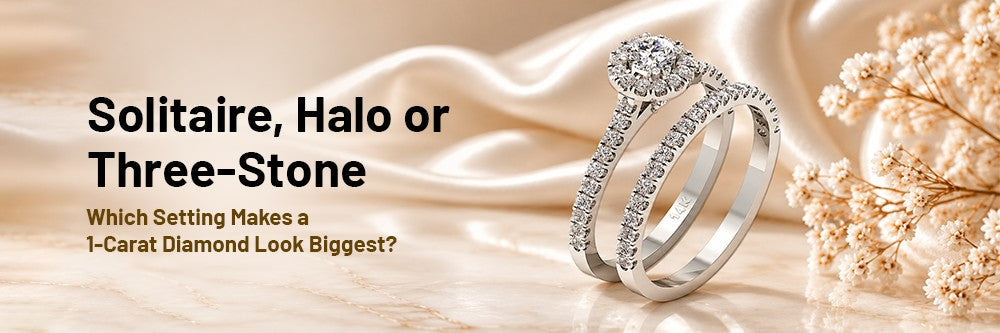
One carat is the number people say out loud. It is the ring size of cultural legend, the figure in the movie and the line on the wish list. It is also, quietly, a measurement of weight and not of size, and that gap between what a diamond weighs and how large it appears is where all the interesting decisions live.
Two rings with the same stone can look wildly different. A setting can double the visual drama or strip it back to a single clean point of light. So the real question has two parts: which stone to buy, and how to frame it. Here is how the main options compare when the diamond is one carat.
What Does a One-Carat Diamond Actually Measure?
A well-cut round one-carat diamond measures about 6.4 millimetres across. That is smaller than many people picture, and it is perfectly normal. On an average finger, it reads as clear, elegant and unmistakably a diamond, though it does not take over the hand.
Be careful with the phrase 1 carat diamond ring, because it can mean two different things. It may describe a single centre stone of one carat, or it may describe the total carat weight of all the diamonds in the ring, including side stones and the halo.
A ring labelled one carat total weight might have a centre stone of half that size. Always ask for the centre stone weight separately, and read it on the certificate.
Which Setting Makes a 1-Carat Diamond Look Biggest?
The short answer is a halo. A ring of small diamonds around the center stone extends the sparkling surface outward, so the whole top of the ring appears larger than the stone alone.
The longer answer is that bigger does not always mean better, and the best choice depends on how you want the ring to feel. A halo adds size, a three-stone adds width and presence, and a solitaire adds clarity and calm. Each approach is valid, and each answers a different wish.
How Does a Halo Make a Diamond Look Larger?
A halo works by borrowing space. The ring of small stones, usually a single circle of pave diamonds, sits flush against the center diamond and catches light in the same way. Your eye reads the whole cluster as one large, glittering surface.
A one-carat center with a halo can present a footprint closer to that of a noticeably heavier stone, which is why halos are so popular with buyers who want impact within a set budget.
The effect also flatters the center diamond. Surrounding stones bounce light toward it and soften any slight tint. Some halos are hidden beneath the stone, visible only from the side, which adds a flash of sparkle without changing the profile from above.
What Does a Solitaire Do Better In the Halo Vs. Solitaire Engagement Ring Debate?
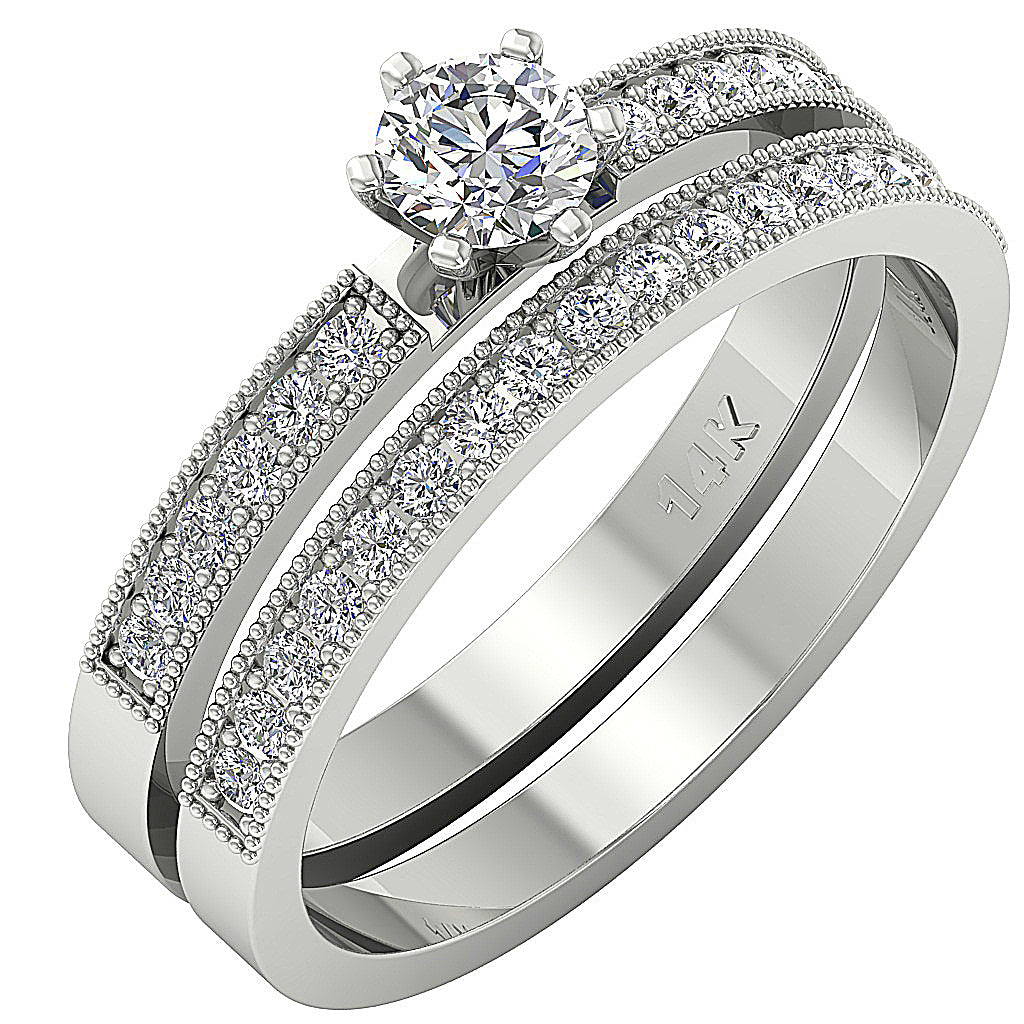
In the halo vs solitaire engagement ring debate, the solitaire wins on purity. A single stone on a slim band is the cleanest possible design, and it puts every dollar into the diamond. Nothing competes with the stone, so its cut, color and clarity show without distraction.
Solitaires are also the easiest to live with. There are fewer stones to loosen, less crevice for dirt to collect and almost nothing to snag. They age gracefully and suit almost any wardrobe.
The honest drawback is their size. With nothing around it, a one-carat solitaire looks exactly like what it is, which suits people who value restraint and disappoints people who expected more.
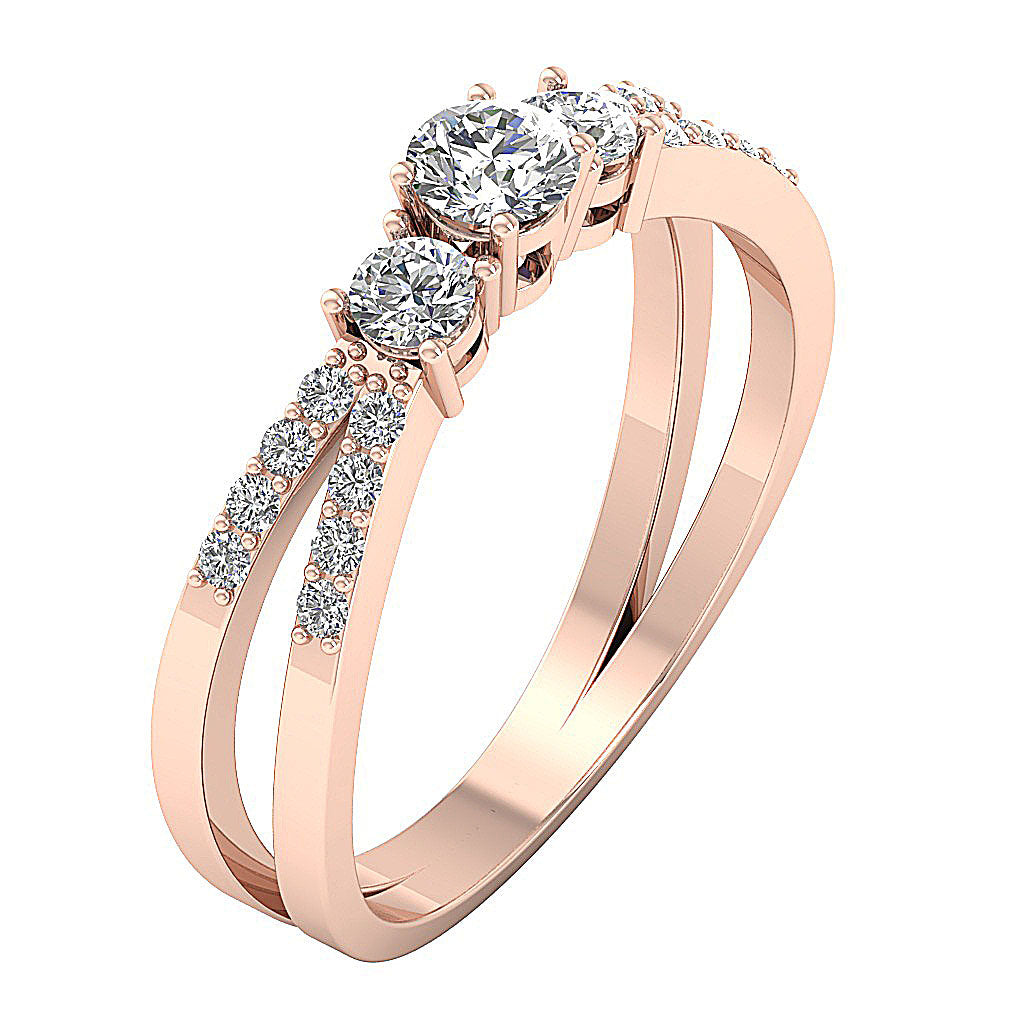
What Does a Three-Stone Setting Add?
A three-stone ring places a center diamond between two smaller stones. The side stones add width across the finger, so the ring looks more substantial from every angle. The center diamond itself does not look larger, but the overall presence of the ring usually does.
The design is often described as a symbol of past, present and future, though plenty of people now make up their own meaning for the trio: two partners and the life they share, a family, a friendship. The side stones can be round, tapered baguettes or any shape that suits the center, and some buyers use colored gemstones for personal significance.
Do Diamond Shape and Band Width Change the Effect?
Both change it significantly, sometimes more than the setting does. Elongated shapes such as oval, pear and marquise spread their weight across a longer outline, so they look larger face-up than a round diamond of the same carat. Emerald and radiant cuts show a broad, open table that reads as generous. A round stone, in contrast, is the most compact way to carry one carat.
Band width and height matter too. A slim, delicate band makes the center stone look bigger by contrast, while a thick band can overpower it. A low setting keeps the diamond close to the finger, which reduces visual height and makes the stone appear to spread. Small hands and slim fingers also amplify scale, since the diamond is measured against its surroundings.
Cut quality sits underneath all of this. A diamond cut too deep hides weight under the surface and appears smaller than its carat suggests. A well-proportioned one uses its weight where the eye can see it.
Does a Bezel Setting Change the Halo Vs. Solitaire Engagement Ring Decision?
Sometimes it does. A bezel wraps the diamond in a thin rim of metal, which gives a smooth, modern outline and protects the stone's edge. The rim adds a hair of visual width, though far less than a halo.
It suits almost anyone who wants a solitaire's calm with extra security, and it keeps snagging to an absolute minimum. The trade-off is that the metal covers a sliver of the diamond, so slightly less light enters from the sides.
What are the Practical Trade-Offs Of Each Setting?
Halos are the most demanding. The tiny stones need periodic checks, because small prongs wear and pave diamonds can loosen. They are harder to clean, and resizing needs care so the pattern stays intact. Some also find the look more ornate than they expected.
Three-stone rings carry more diamonds, so they cost more than a solitaire with the same center, and the side stones need matching in color and quality. Their wide profile can catch on sleeves and gloves.
Solitaires are the lowest maintenance and usually the least expensive, since the budget concentrates in one stone. The trade is visual impact, and for many people that is a trade worth making.
Whichever style you pick, have the prongs inspected once a year. It takes a few minutes and protects the diamond.
How Do You Choose the Right Setting For Your Life?
Begin with your hands, not the catalog. Do you type all day, climb, cook, lift or care for children? An active routine favors a low solitaire or a protective bezel. A quieter routine gives you more freedom to wear a taller halo.
Then think about what the ring is supposed to say. Some people want a ring that announces itself across a table. Others want something understated that only the wearer notices. Neither choice is more romantic or more serious. Many couples today also buy rings for each other, or buy their own, and the best ring is simply the one that fits the person wearing it.
Finally, consider the budget honestly. A lab-grown one-carat diamond often costs far less than a natural one of the same grade, and that saving can buy a halo or a better cut while still keeping the total sensible. Diamond For Good carries both natural and lab-grown options, so you can compare designs side by side.
What Should You Check Before You Buy a 1 Carat Diamond Ring?
Confirm the center stone weight, not just the total. Ask for an independent certificate from a lab such as GIA or IGI, and look at the cut grade first.
Check the metal and the band width, and then confirm the return policy and resizing terms. Try the ring on, if you can, and look at it from above and from the side, in daylight.
In case you are buying the diamond ring online, take a closer look at the product photos and compare them closely to the final product received on purchase.
Wrapping Up: Which Setting Wins for Diamond Rings?
For pure visual size, the halo wins. For width and story, the three-stone wins. For clarity, comfort and low upkeep, the solitaire wins. The right answer depends on the person who will wear the ring, and on whether they want to be looked at or looked into.
Diamond for Good offers beautiful diamond rings in a range of styles, settings, and carat sizes so that you can pick the one that suits you best.
Frequently Asked Questions
Is a solitaire or a halo better for a one-carat diamond?
It depends on your priorities. A halo adds size and sparkle but needs more regular upkeep, while a solitaire offers clean simplicity, easier cleaning, and usually a lower overall price.
What size is a one-carat round diamond?
A well-cut one-carat round diamond measures roughly 6.4 millimeters across. Elongated shapes such as oval or pear usually look larger face-up because they spread their weight across a longer outline.
Does a three-stone ring make the center diamond look larger?
Not the center stone itself. The side diamonds add width, so the whole ring looks bigger and more substantial, which many wearers prefer to a single stone on its own.
Are halo engagement rings harder to maintain?
Slightly. Tiny pave stones and prongs need regular inspection, and cleaning takes a little more care. Have a jeweler check the setting once a year to keep every diamond secure.

Leave a comment
This site is protected by hCaptcha and the hCaptcha Privacy Policy and Terms of Service apply.