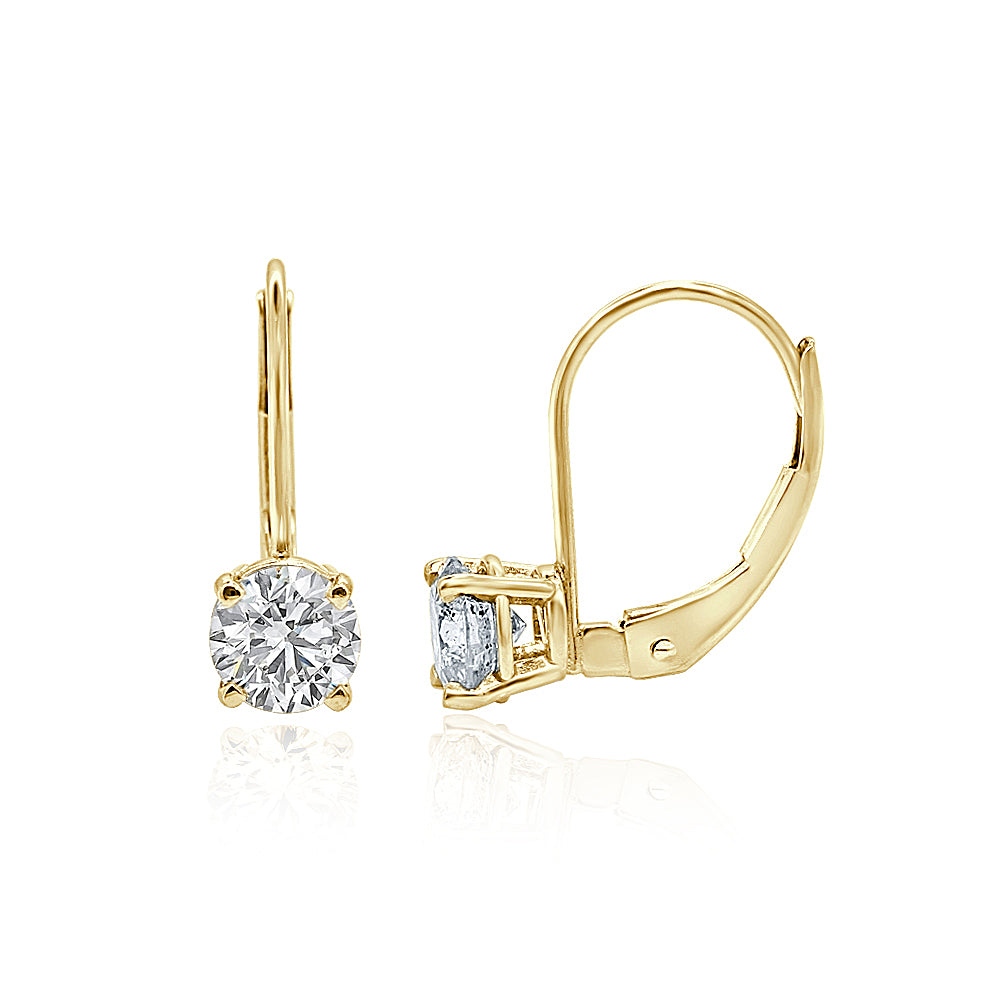
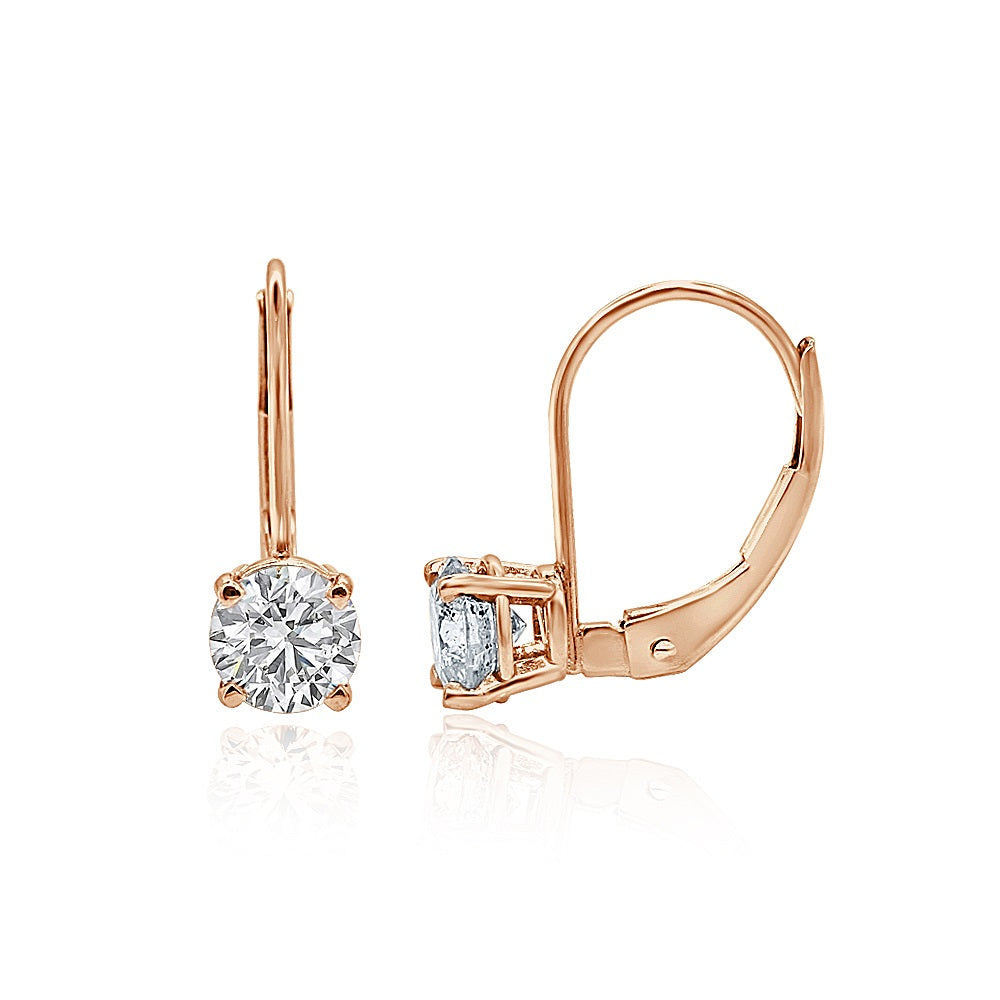
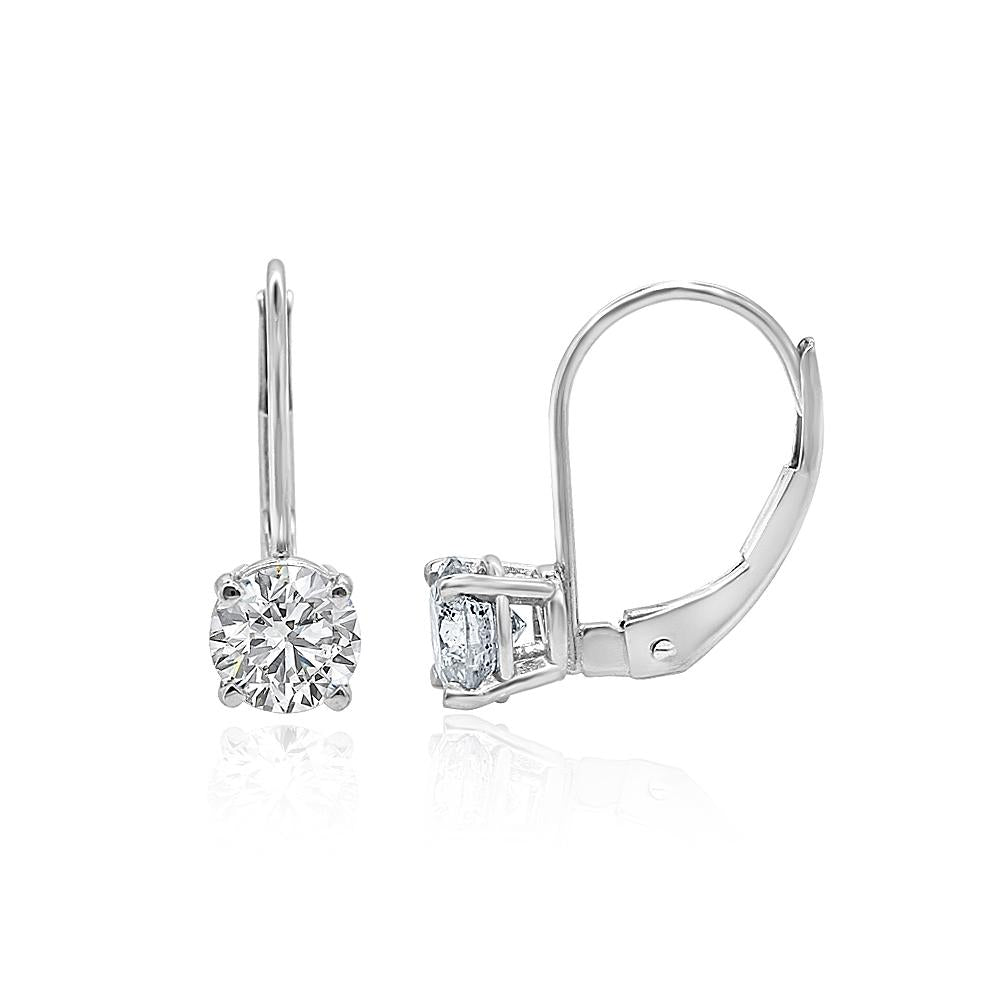
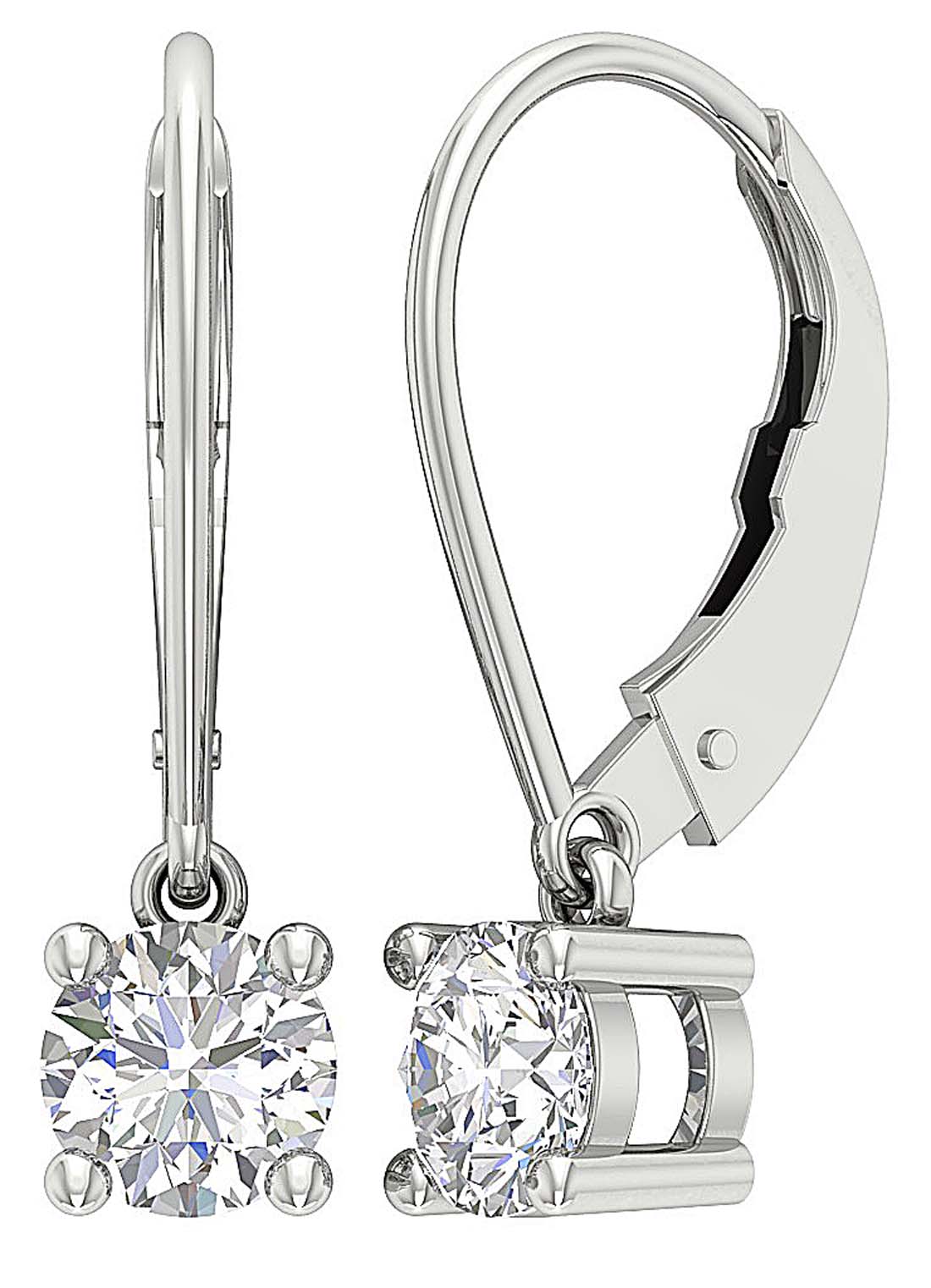
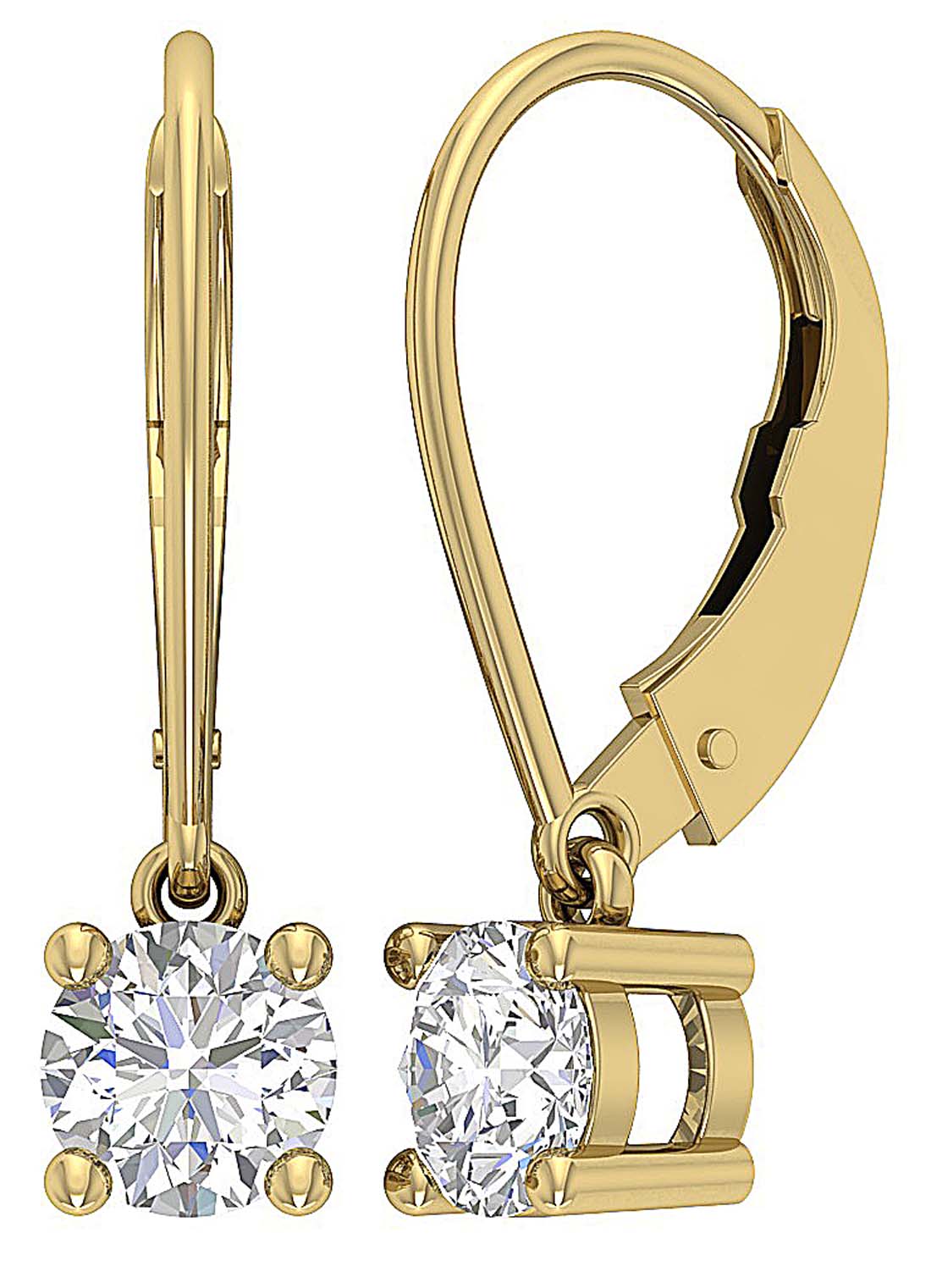
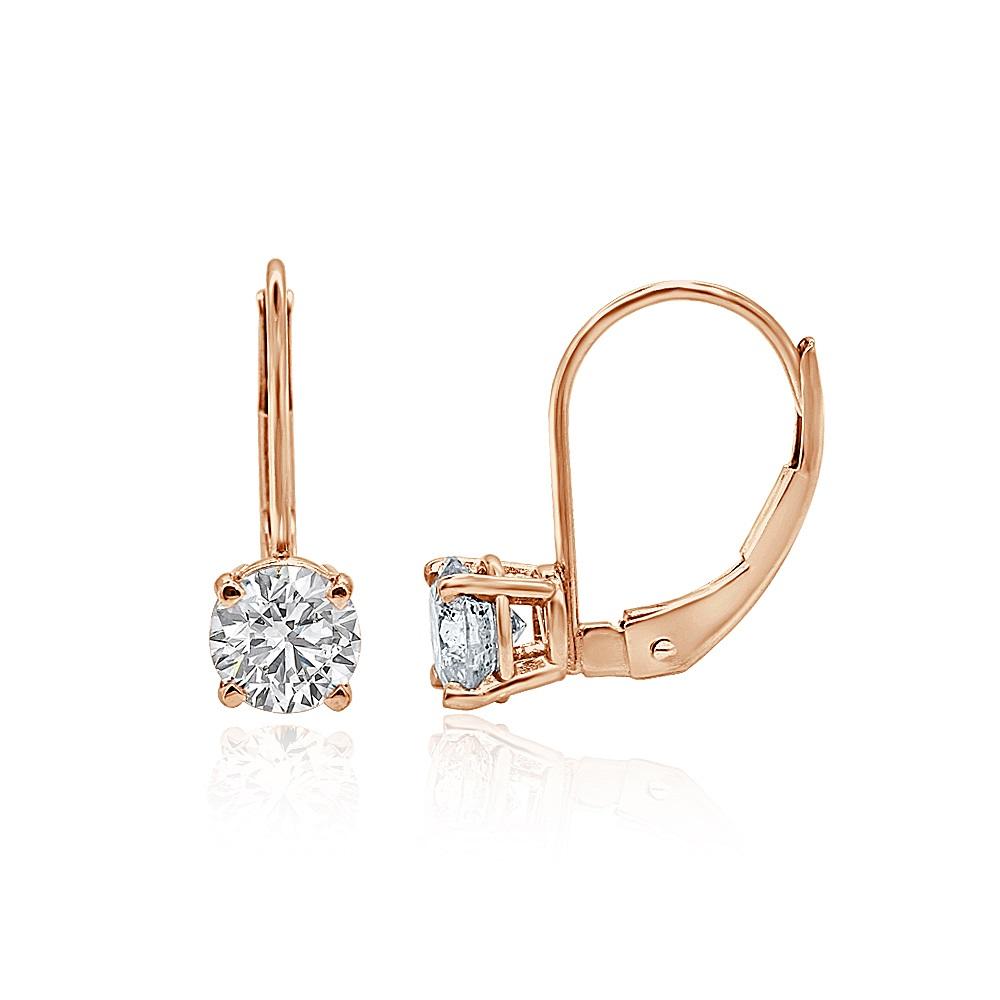
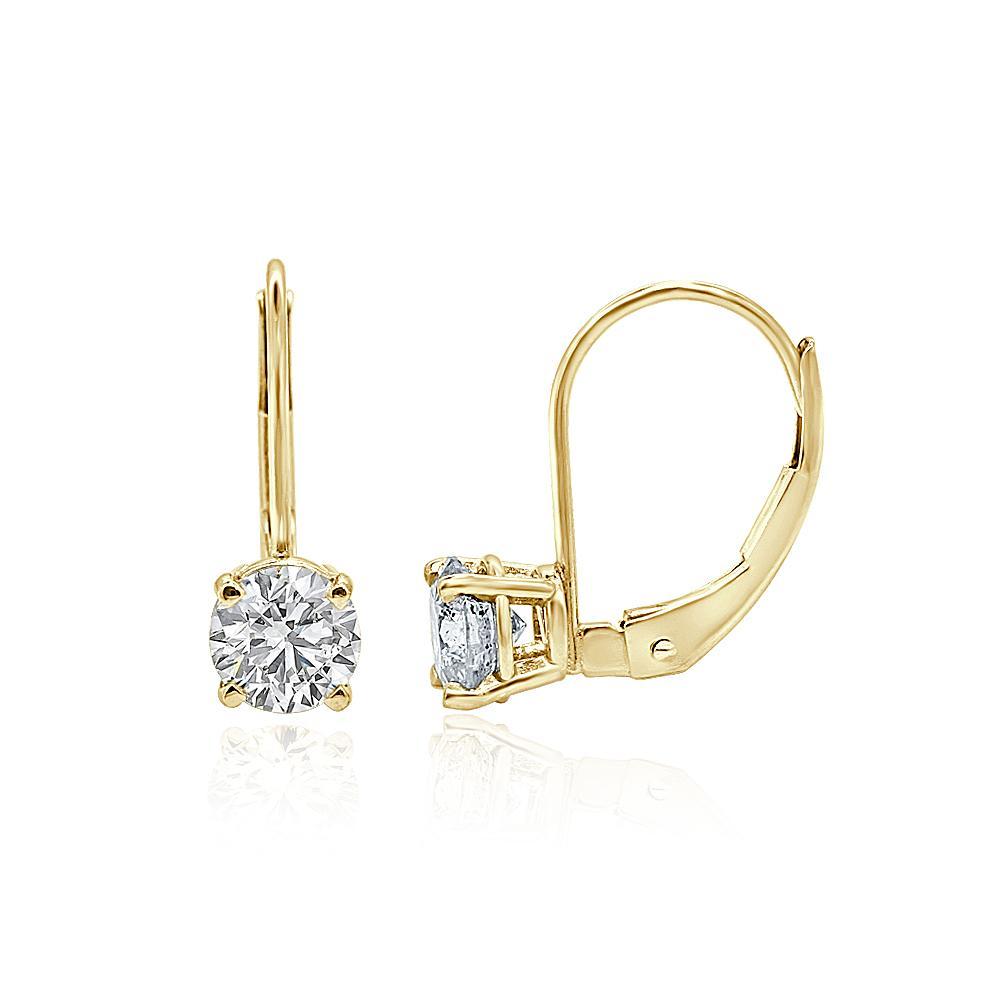
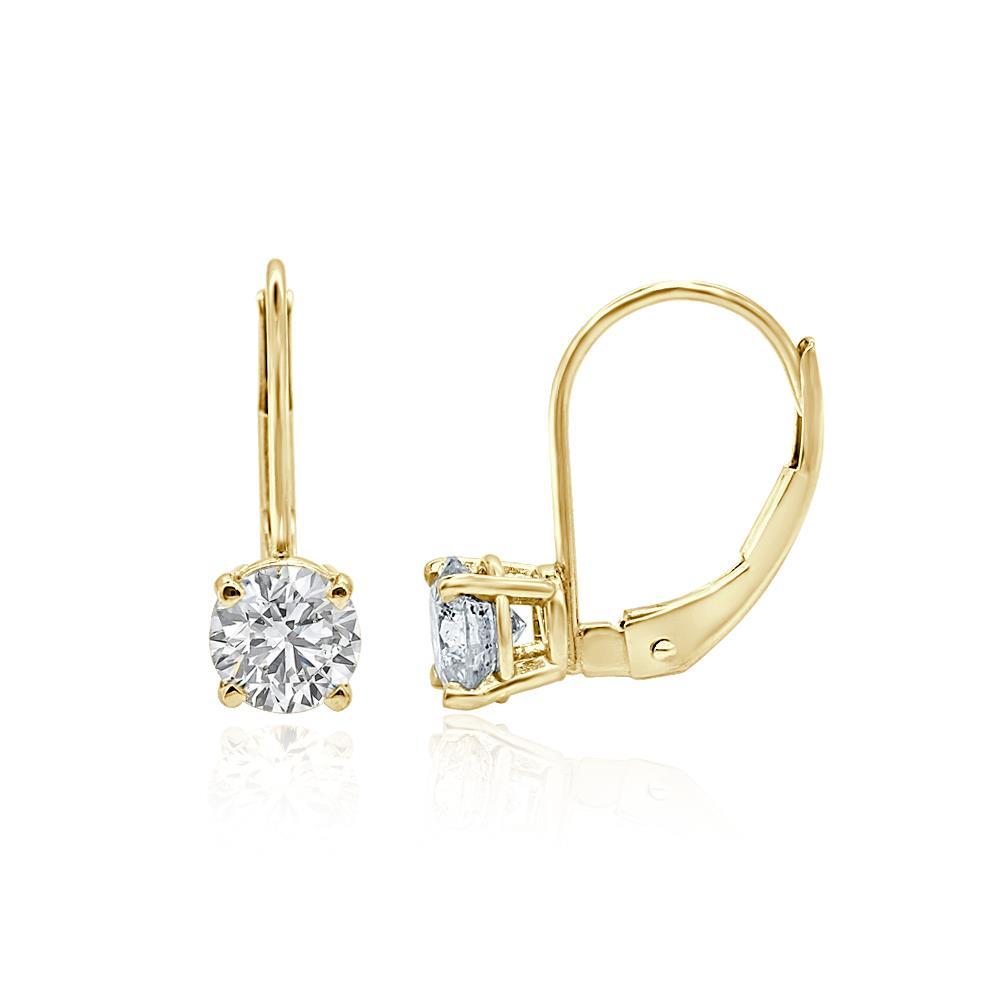
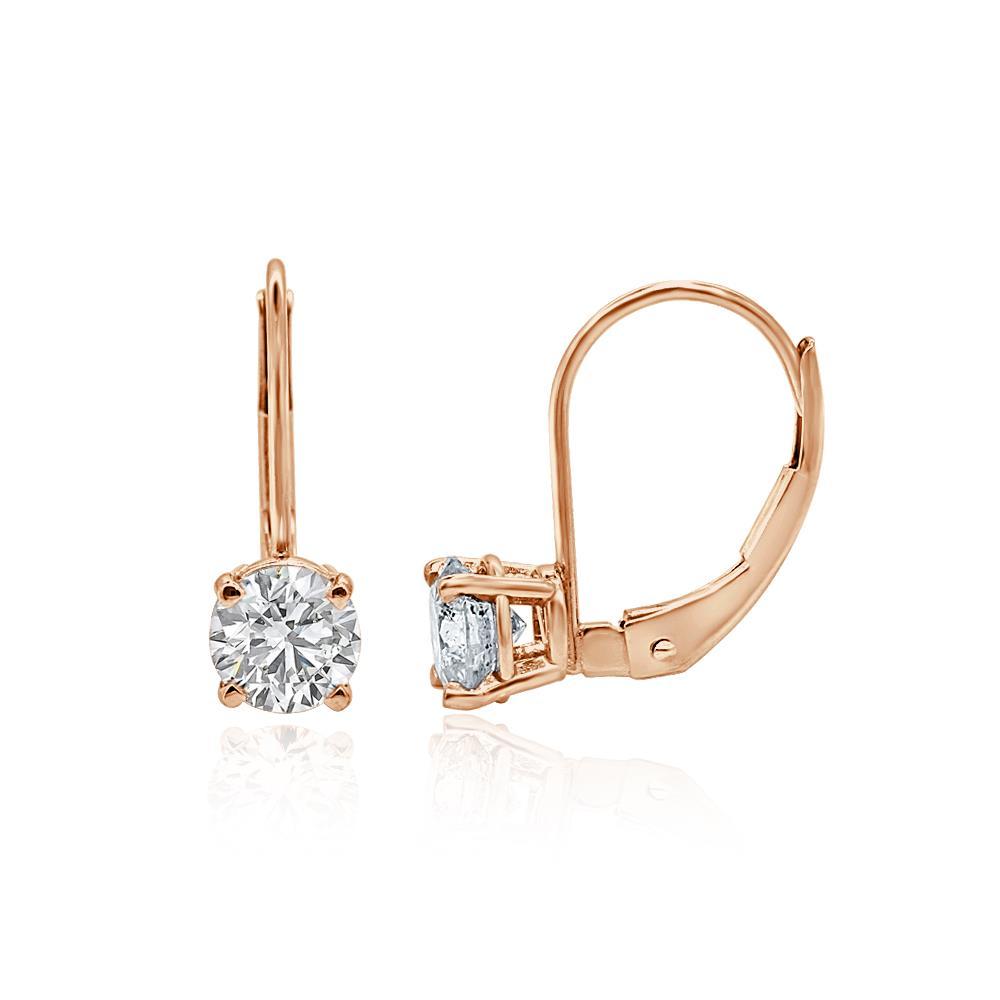
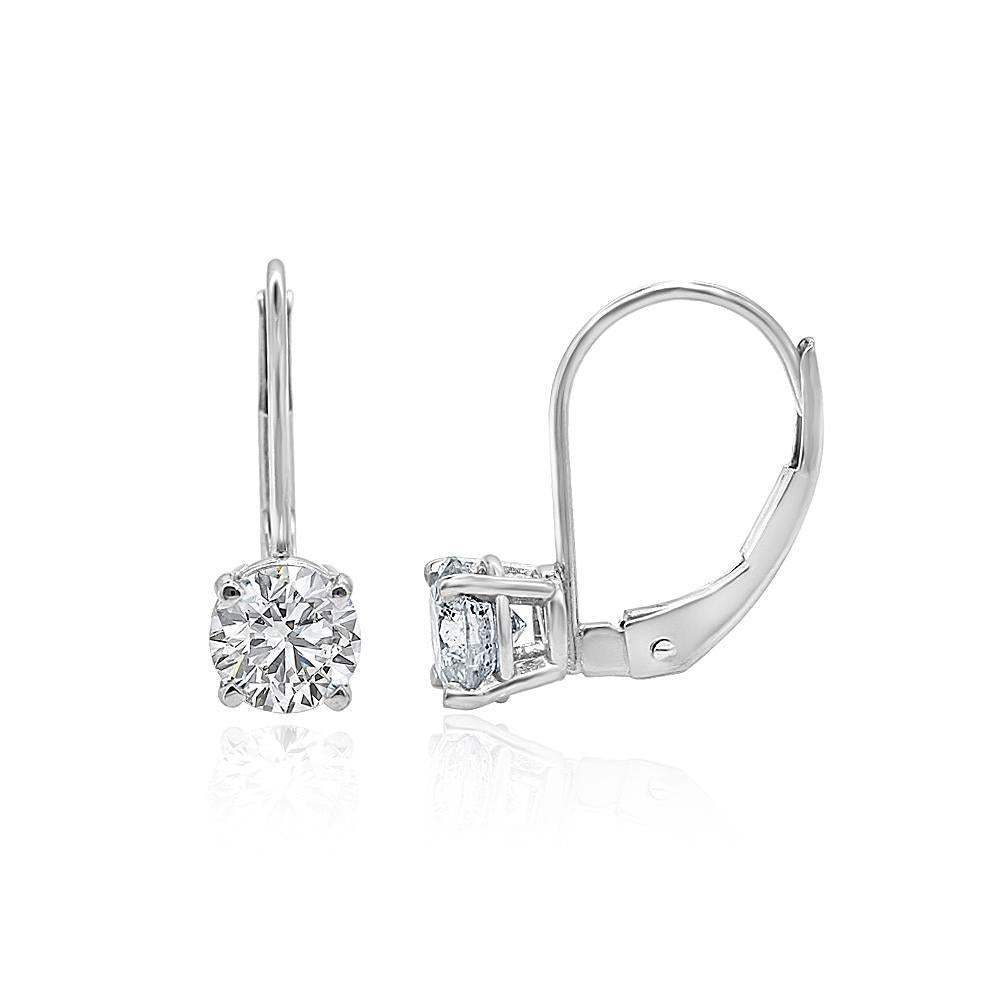
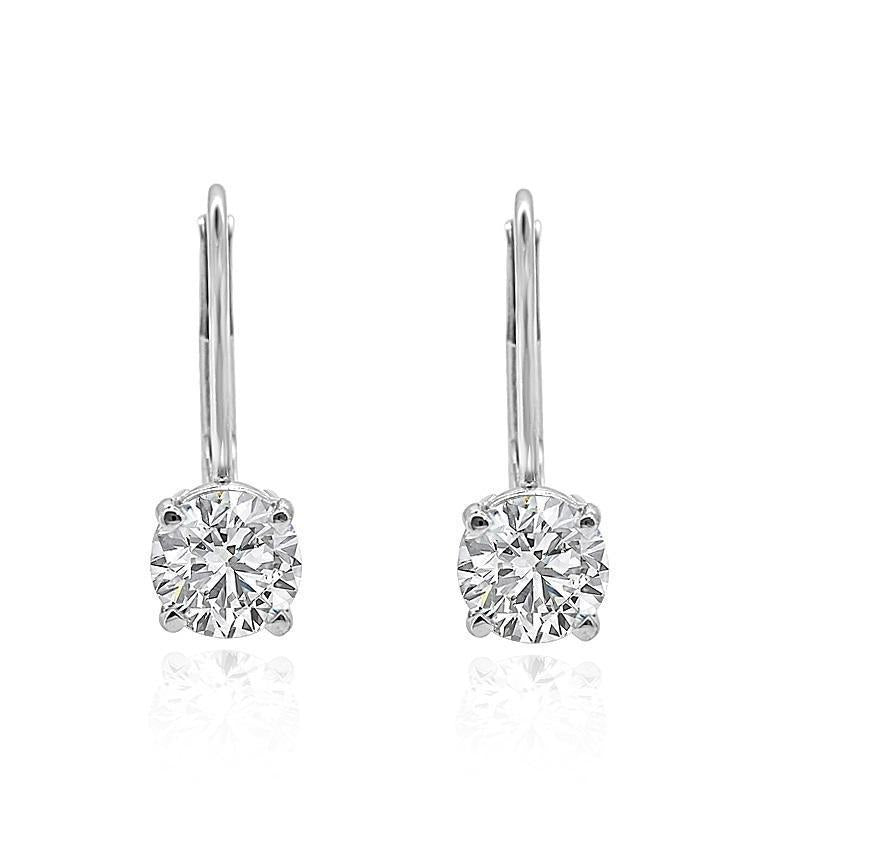
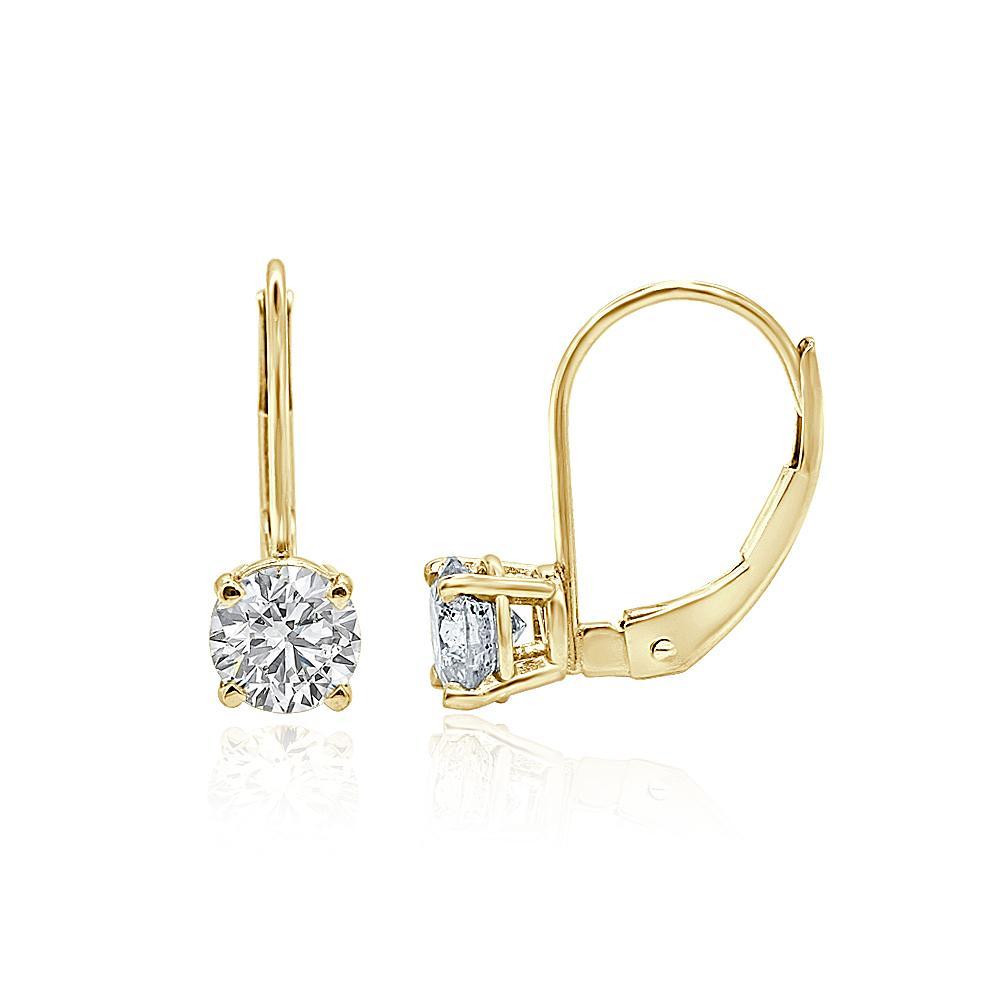
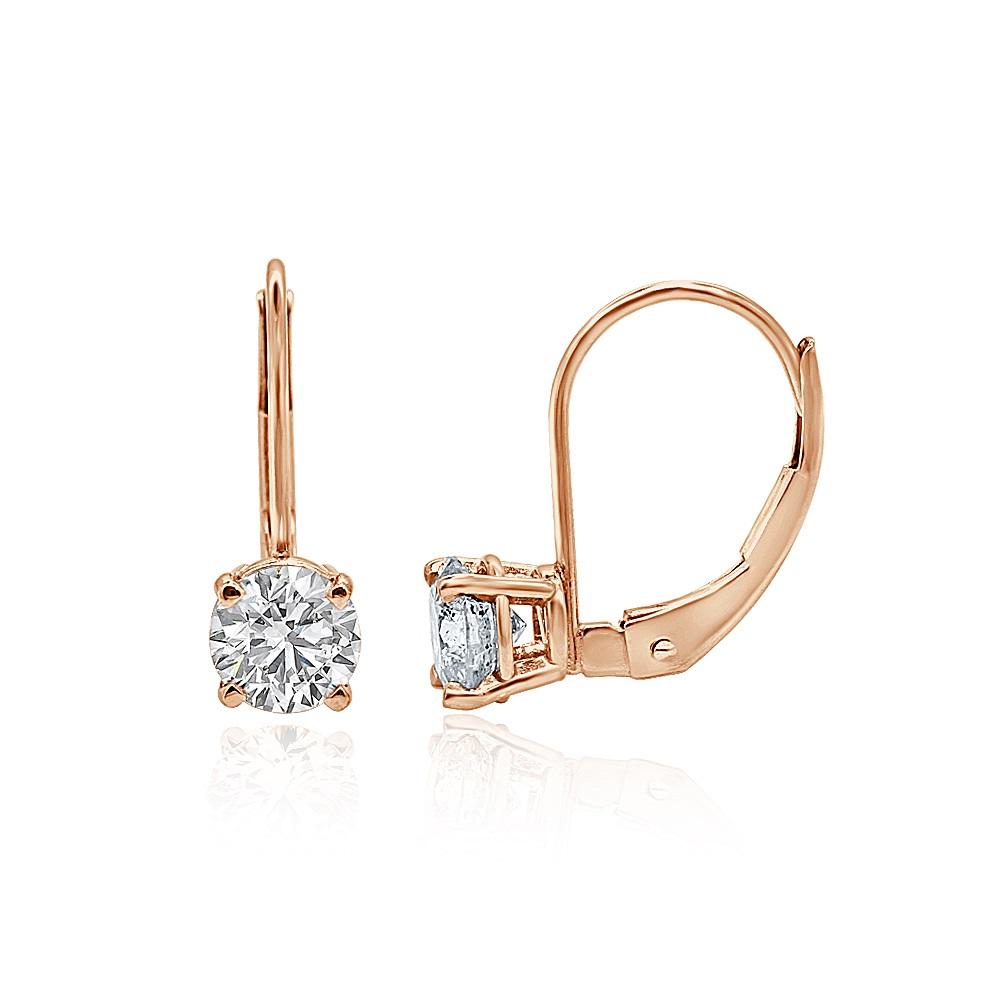
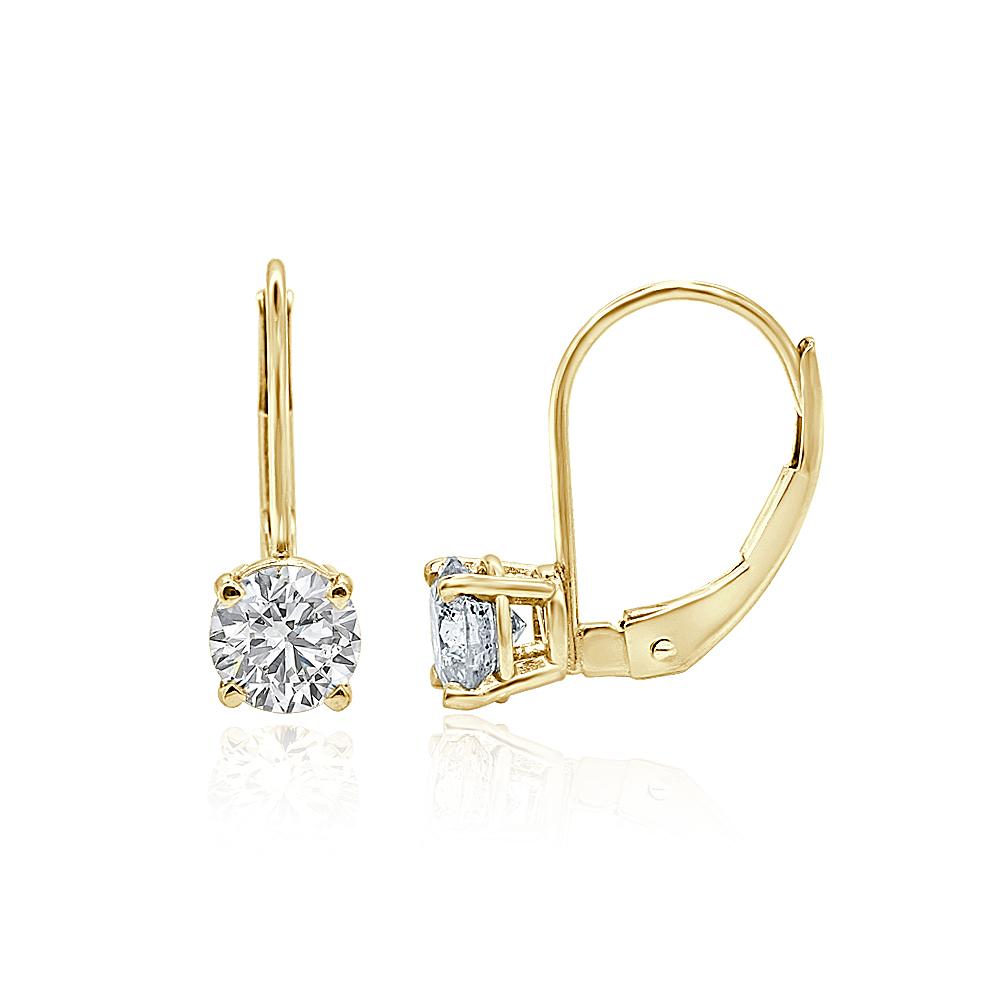
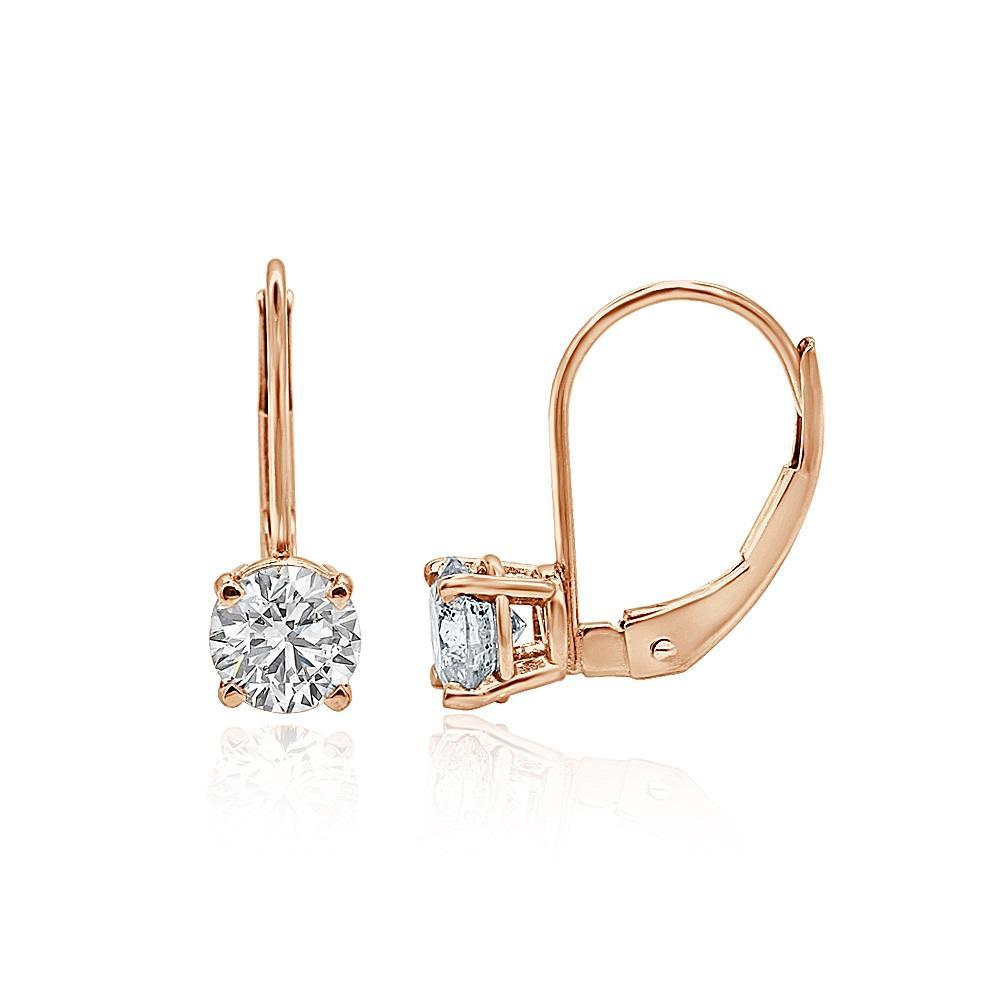
Leverback Diamond Earrings
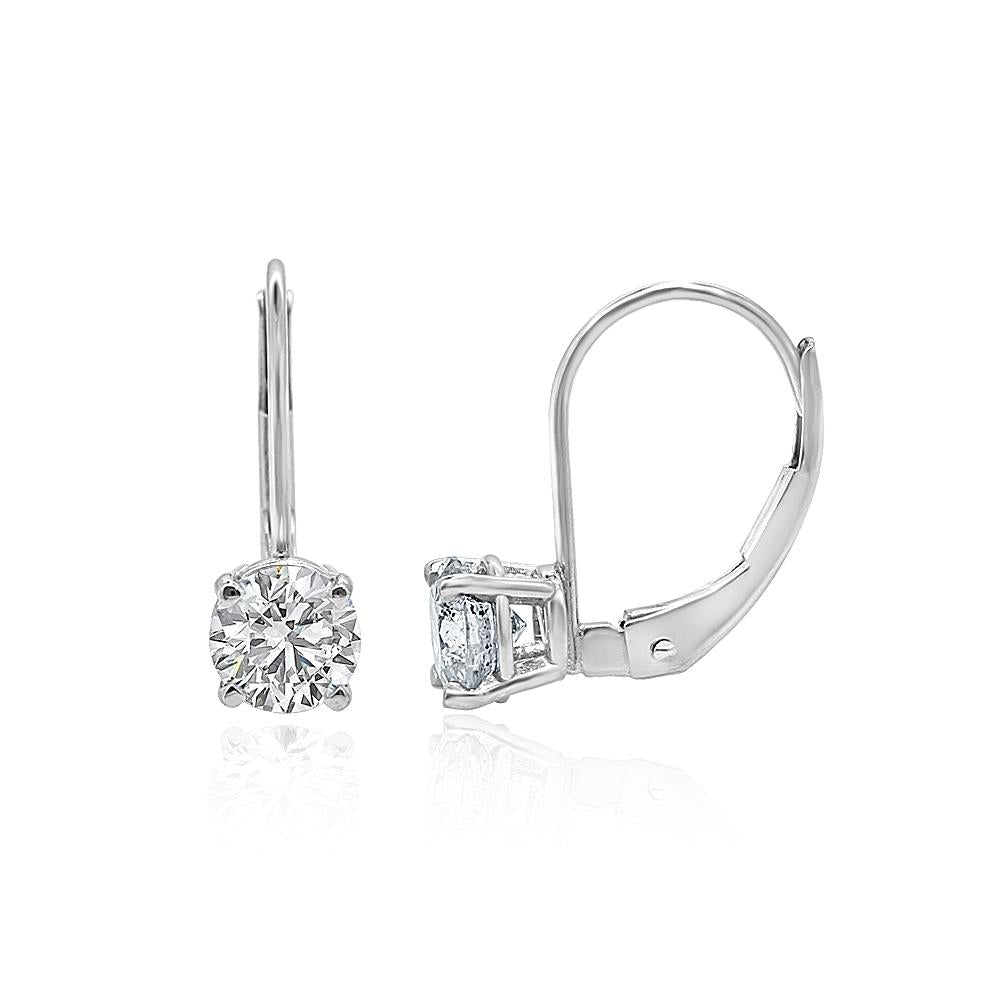
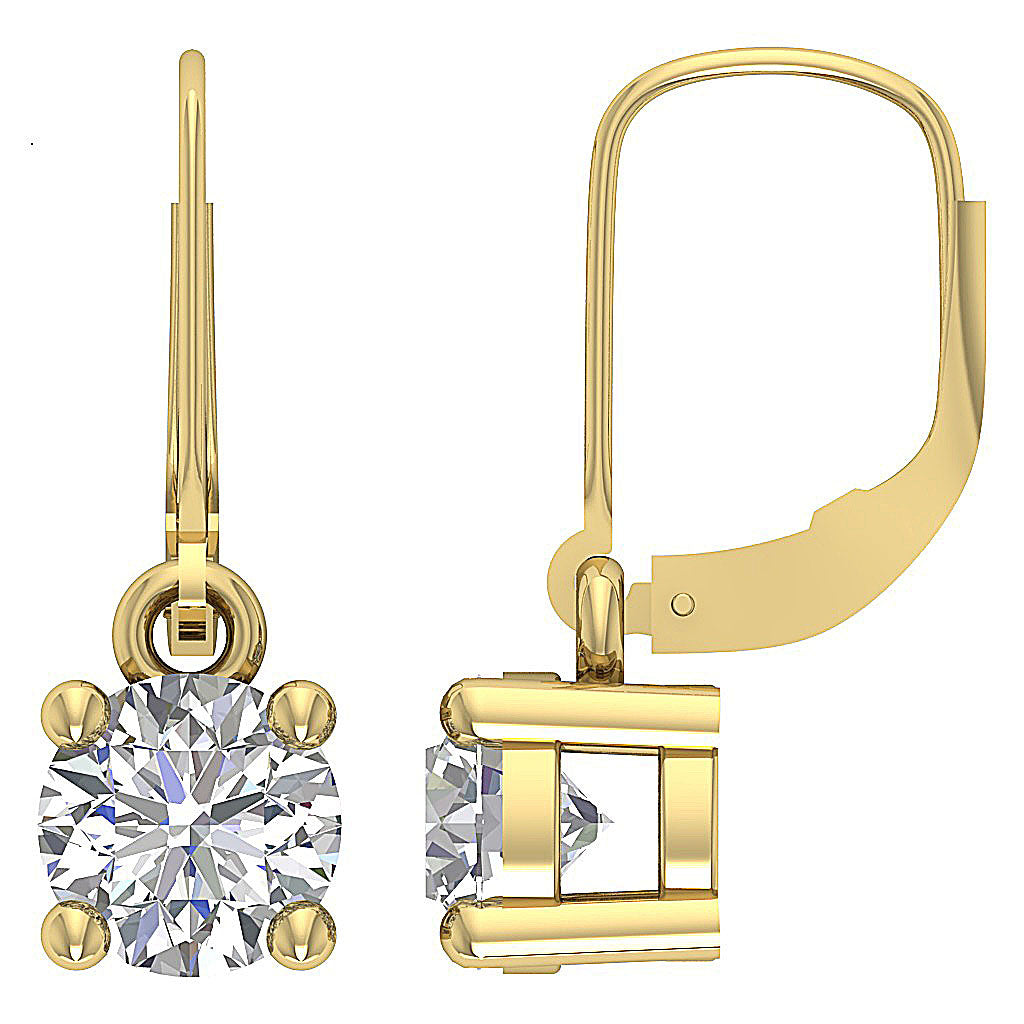
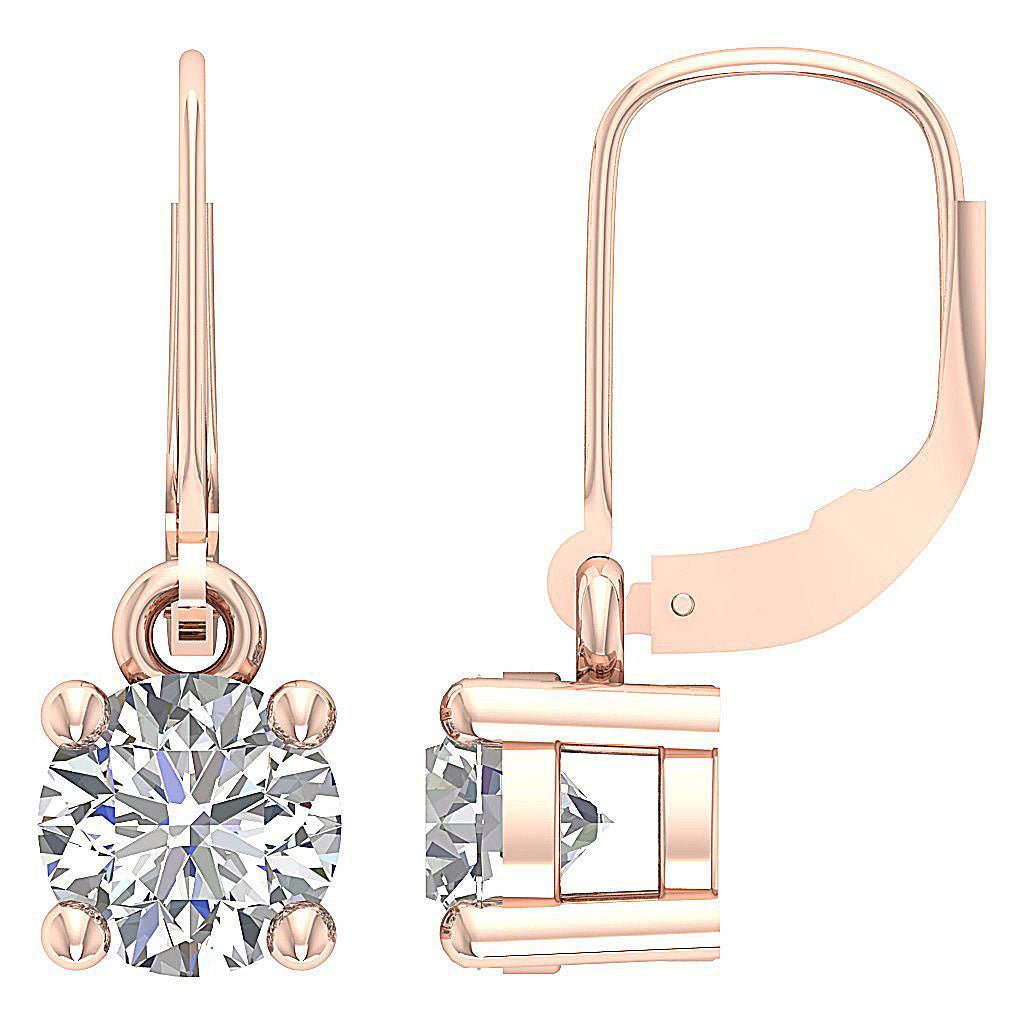
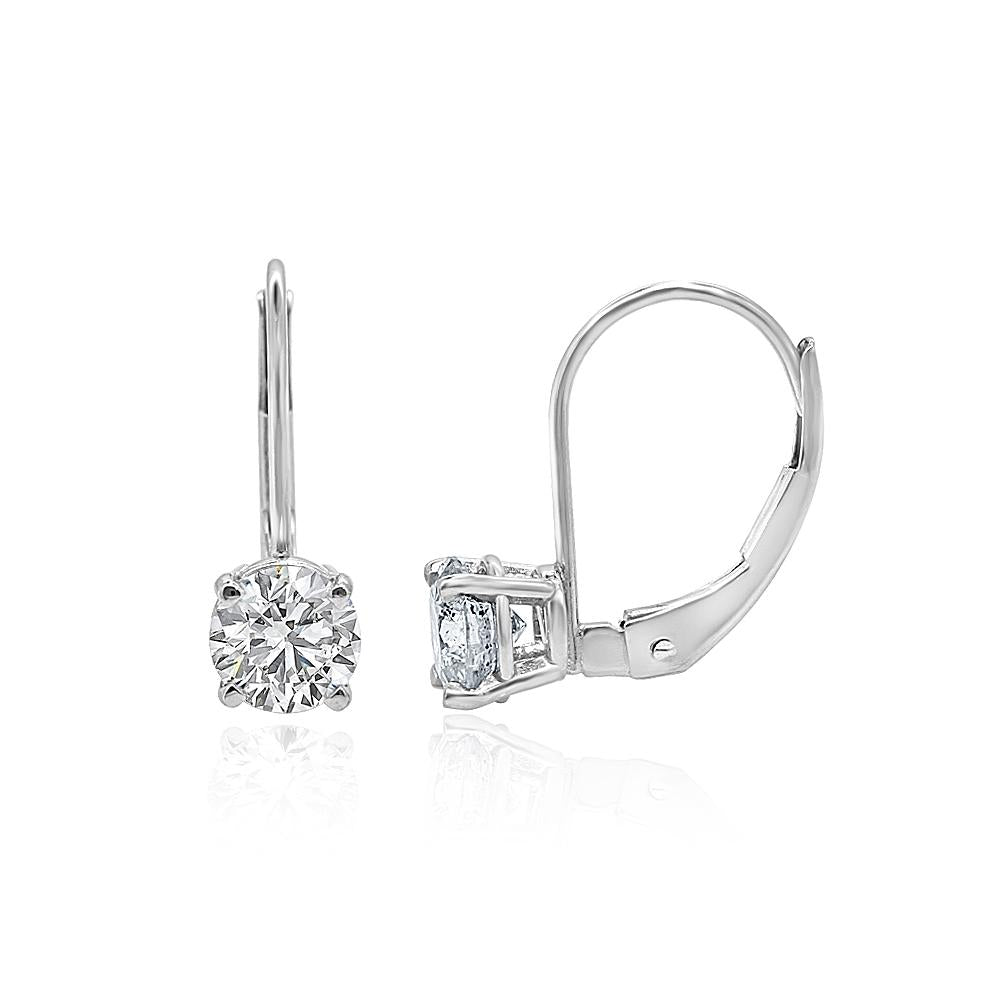
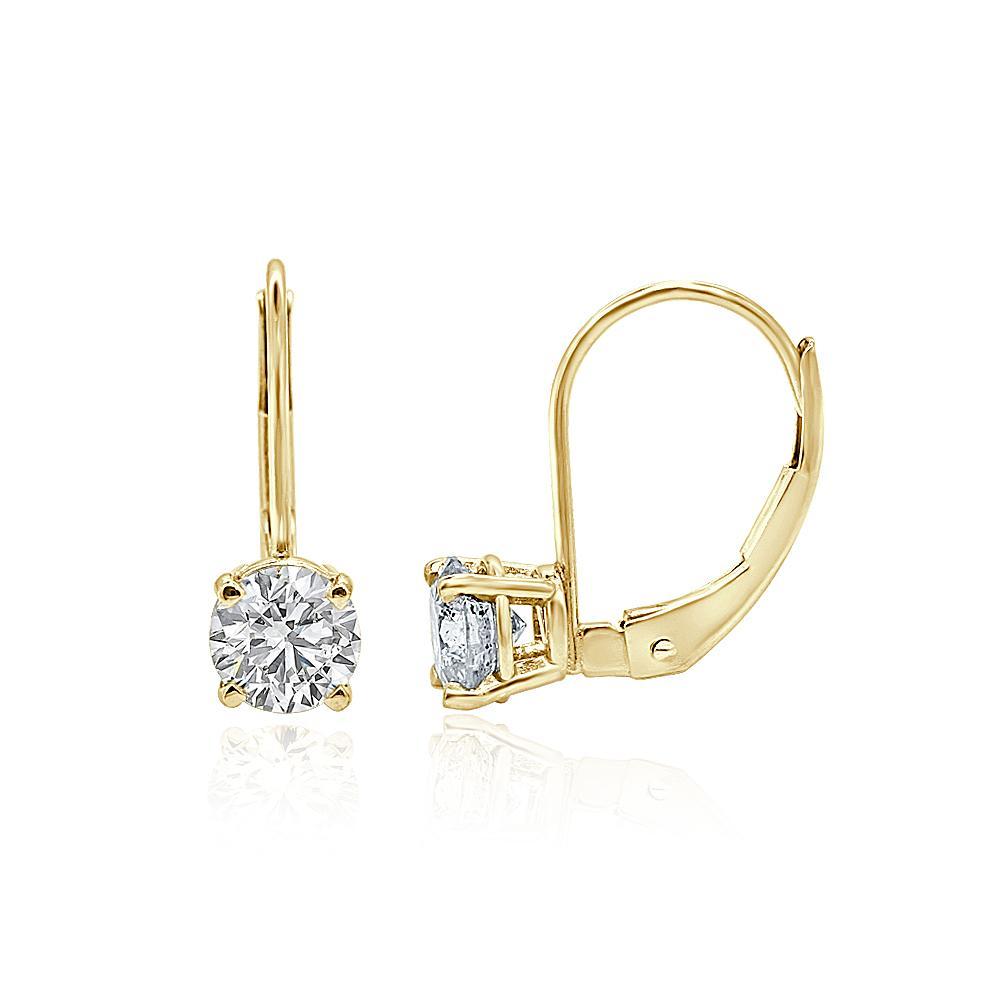
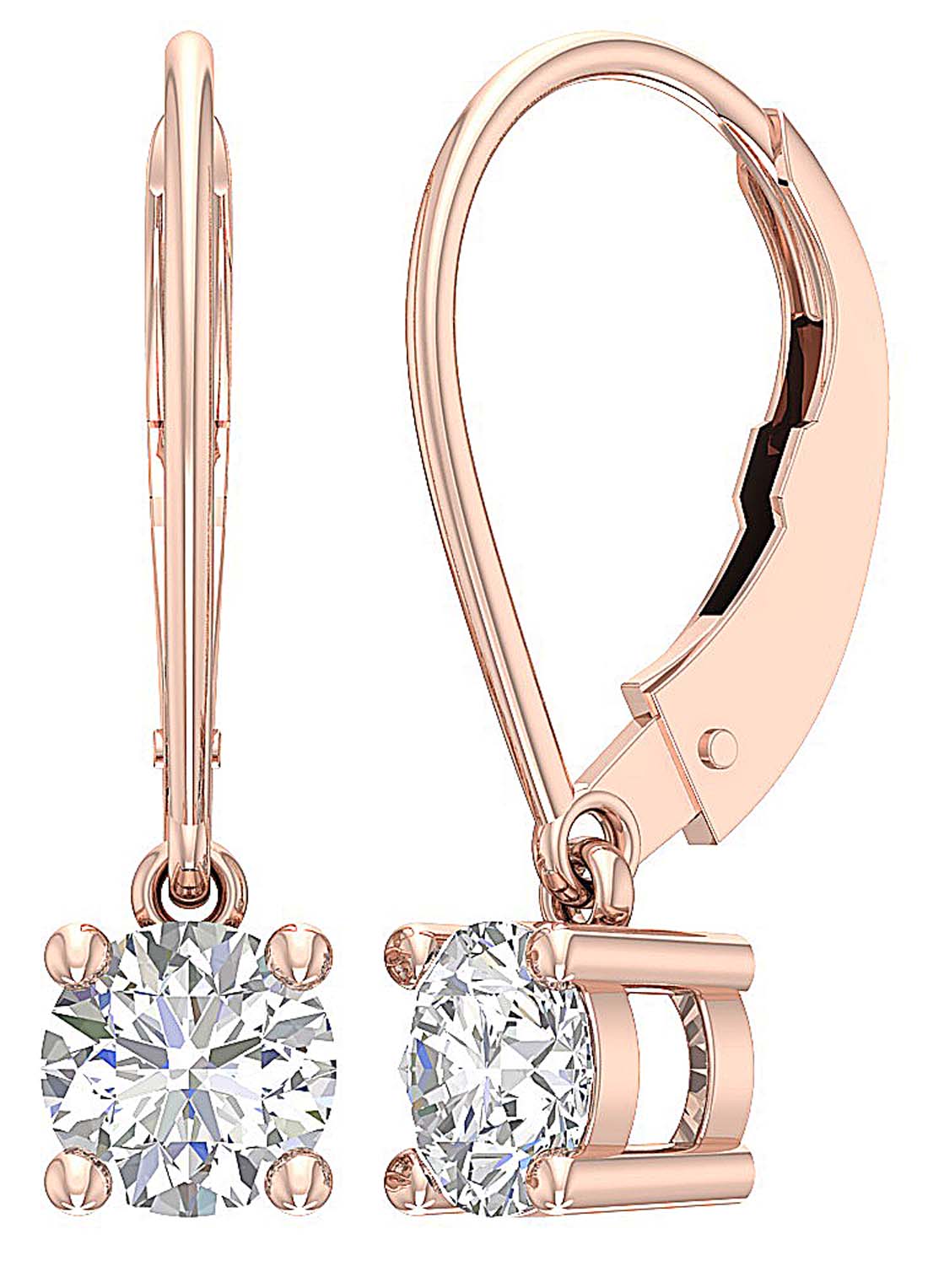
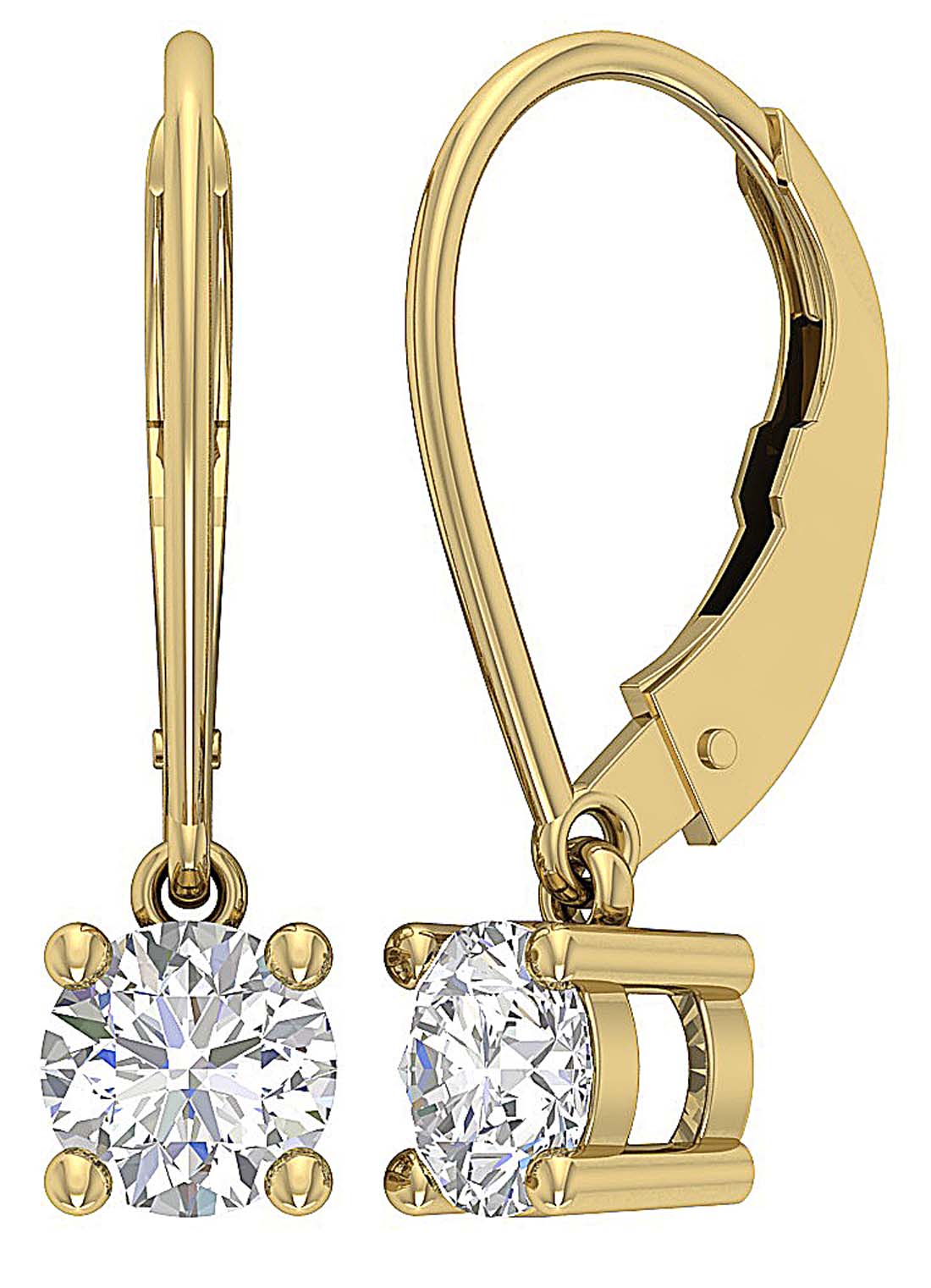
A lever back combines a hinged closure with the ease of a traditional earring post. A small lever folds down behind the earlobe and locks against the post, creating a secure hold without the repeated twisting required by a screw back. Open it with one deliberate movement, slide the earring into place, and close the lever until it clicks securely.
The mechanism is particularly appealing on diamond earrings that need reliable security without sacrificing convenience. It gives the back of the earring a little more structure while keeping the front focused entirely on the stone.
How the Mechanism Works in Leverback Earrings
Once closed, the hinged lever rests behind the earlobe and provides a broader point of contact than a simple friction clutch. That can make the closure feel more substantial, particularly when supporting a heavier diamond or a more substantial earring design.
Its other advantage is simplicity. A lever back opens and closes with a single hinged motion, rather than requiring the several rotations of a screw back. For someone who removes earrings regularly, that difference can make everyday wear considerably more convenient.
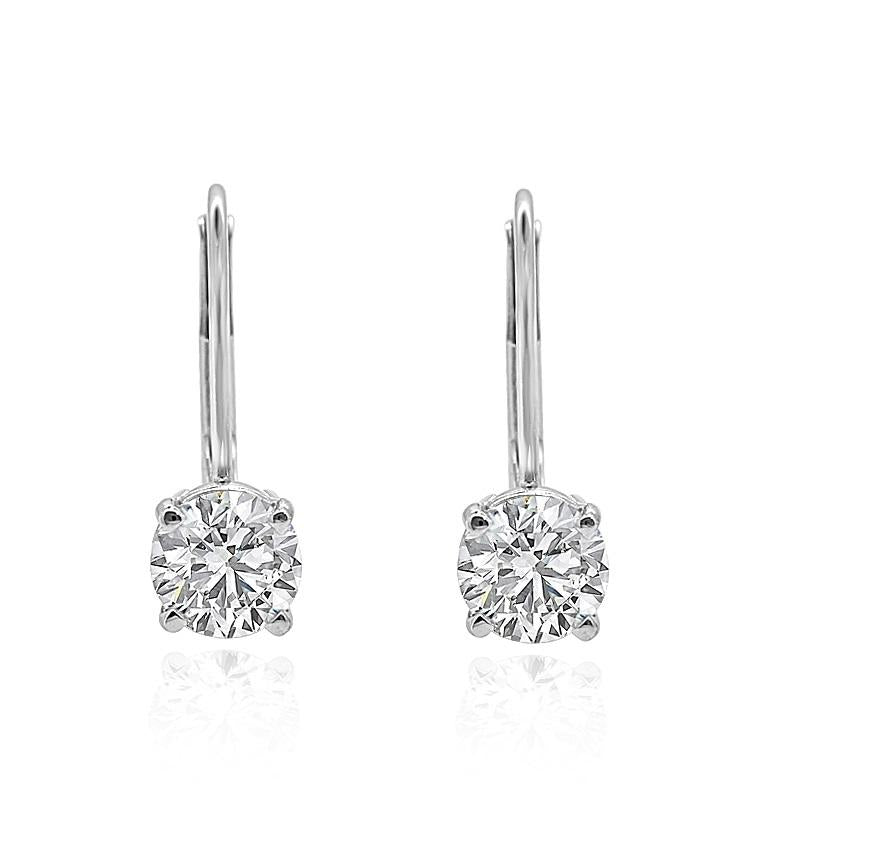
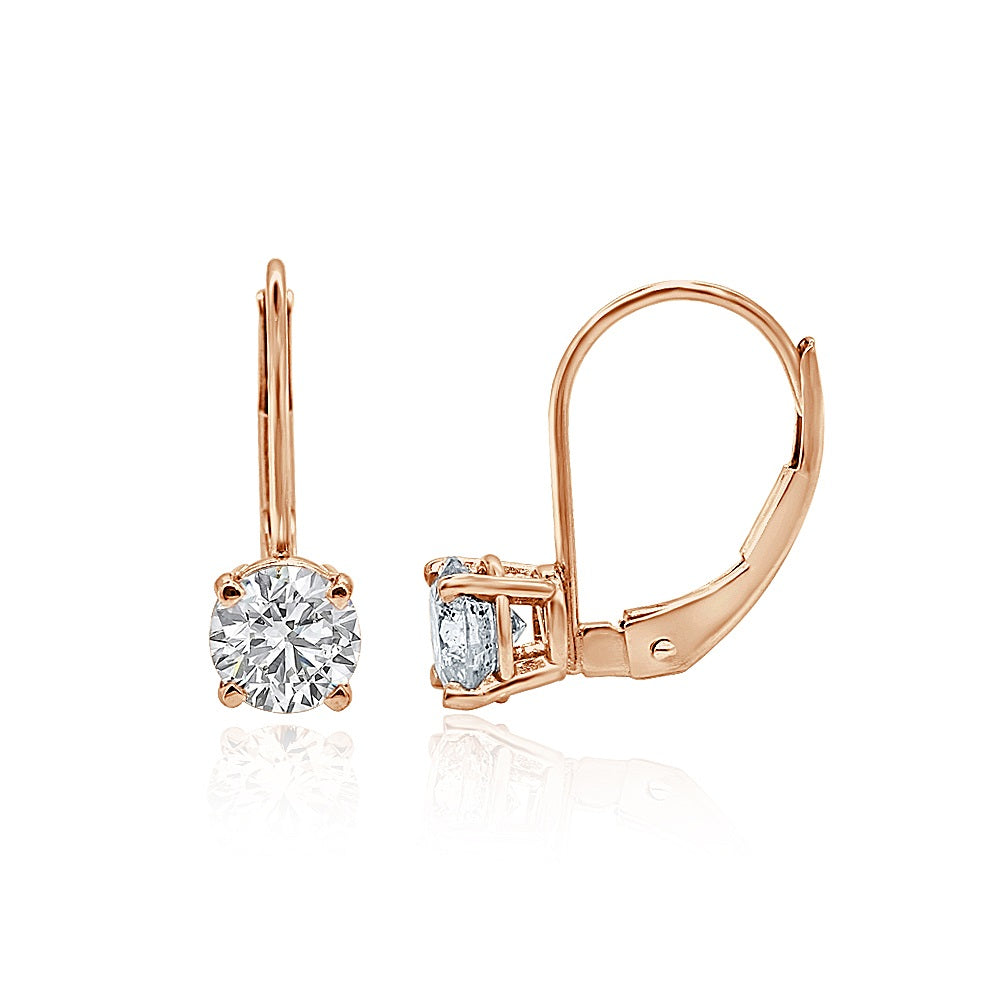
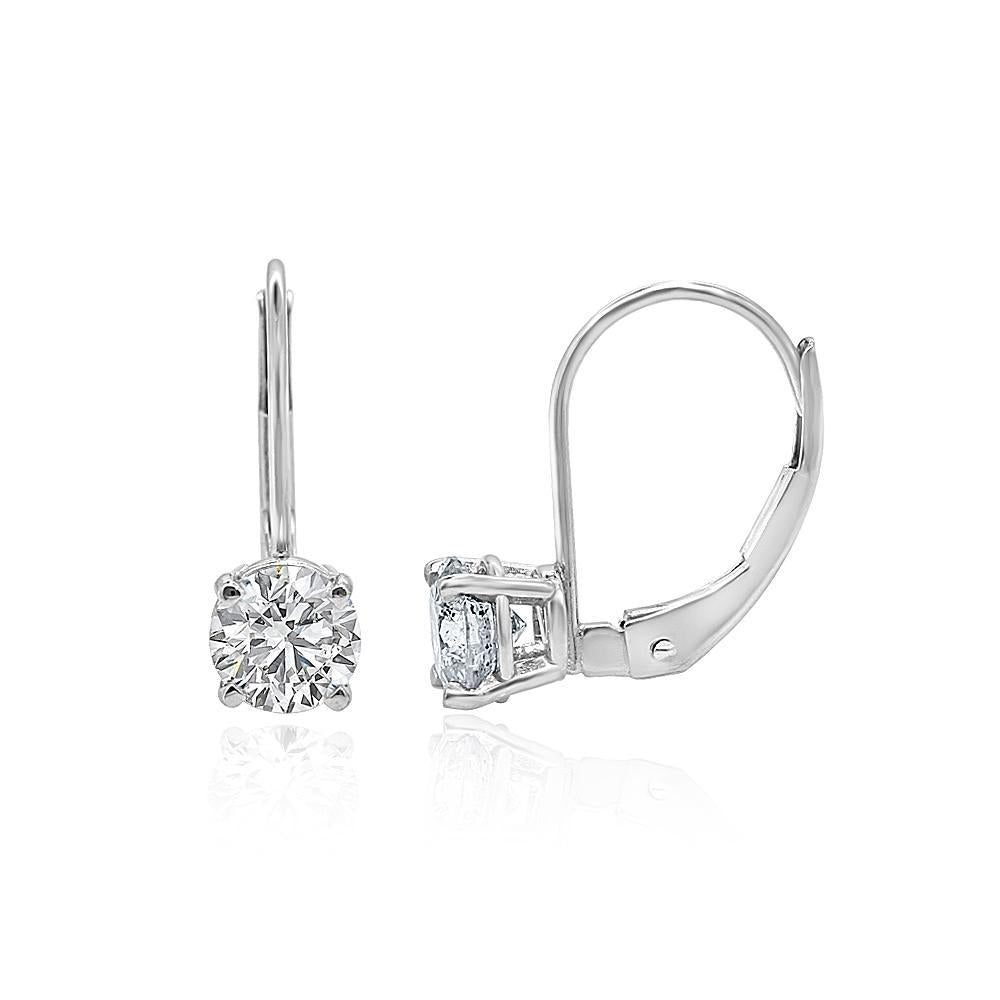
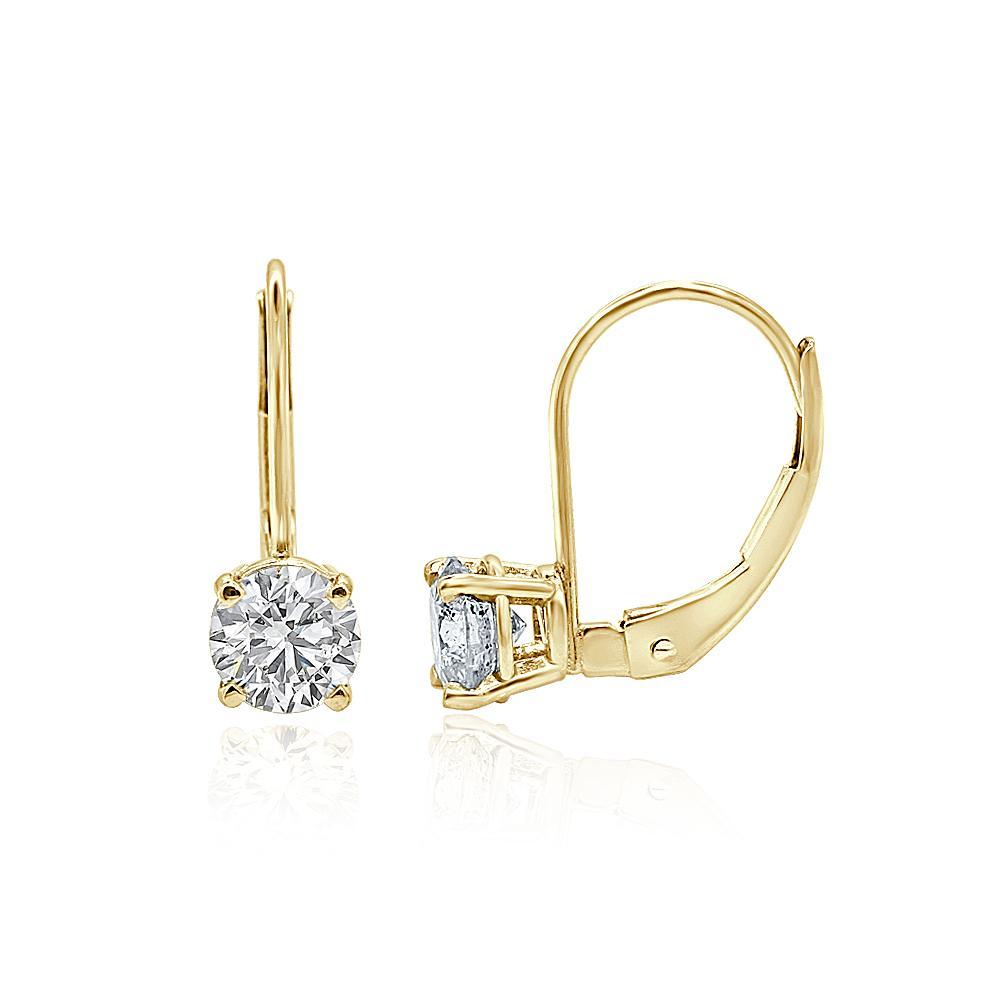
Diamond for Good's leverback earrings feature natural and lab-grown diamonds, predominantly in round solitaire cuts, set in 14K or 18K gold across white, yellow, and rose. Available sizes range from understated half-carat styles to larger multi-carat designs.
Lever Back vs Screw Back Earring Designs
Lever backs and screw backs are both designed to keep an earring securely in place, but the experience of using them is quite different.
A screw back threads onto the earring post, creating a deliberate, secure closure that takes several turns to remove. A lever back uses a hinged mechanism that closes in one motion, making it faster to put on and take off while still providing a secure hold when properly closed.
Neither mechanism is automatically superior. A screw back may appeal to someone who prioritises a threaded closure and rarely removes their earrings. A lever back can be preferable for someone who values speed and ease of use, particularly when earrings are taken off at night or changed regularly.
The quality of construction matters with either style. A well-made closure should operate smoothly, close completely, and remain secure without requiring excessive force.
A Style Borrowed from Drop Earrings
Lever backs have long been associated with drop and dangle earrings, where a hinged closure provides useful support for jewelry that extends below the earlobe. The mechanism's ability to accommodate additional weight makes it a natural fit for more substantial diamond earrings as well.
When applied to a solitaire stud, the lever back brings that practical heritage to a much cleaner silhouette. The front remains classic and understated, while the mechanism provides additional structure behind the ear.
This makes the style particularly interesting for buyers who want a larger diamond stud without pairing it with an overly complicated closure.
Choosing for Heavier Stones
The larger the diamond, the more important the relationship between the stone, setting, post, and back becomes. A heavier stud places greater demands on its closure throughout the day, particularly as the wearer moves.
A lever back provides a more substantial mechanism than a basic friction clutch and can feel more balanced behind the earlobe. Its broader construction can also help distribute the earring's weight more comfortably.
For particularly large or valuable diamond studs, however, the back should be considered alongside the entire earring construction rather than in isolation. Post length, setting design, earlobe thickness, and the diamond's total weight all influence how secure and comfortable the finished earring will feel.
Choosing Natural or Lab-Grown Diamonds for Leverback Studs
Leverback settings can accommodate both natural and lab-grown diamonds, so the closure does not dictate the diamond's origin. Instead, buyers can consider the characteristics of the stone separately from the practical requirements of the earring.
Natural diamonds appeal to those who value geological origin and rarity. Lab-grown diamonds can offer greater flexibility within a set budget, potentially allowing a buyer to choose a larger stone or a higher clarity grade.
Whichever origin you choose, matching remains particularly important when purchasing diamond earrings as a pair. The two stones should be closely matched in size, colour, clarity, and overall appearance so they read as a balanced set when worn.
Wearing It Well: Styling Your Leverback Diamond Studs
Leverback diamond earrings are suited to both everyday jewelry wardrobes and more formal occasions. Their secure closure makes them practical for regular wear, while the classic solitaire silhouette keeps the overall look polished rather than overly technical.
They are also convenient for anyone who changes earrings frequently. The single-motion closure is easier to operate than a screw back when earrings need to be removed or replaced throughout the week.
For sleep, exercise, or activities where jewelry may be exposed to repeated impact, removing the earrings remains the safer choice regardless of closure type.
Living With It: Caring for the Leverback Diamond Studs
Clean leverback earrings weekly with warm water, a small amount of mild soap, and a soft-bristled brush. Work carefully around the diamond, setting, post, and hinge, where skin oils and product residue can accumulate.
The hinge deserves particular attention. Make sure the lever opens smoothly and closes completely each time the earrings are worn. A closure that does not seat properly should not be treated as secure simply because it appears closed.
Have a jeweller inspect the lever mechanism and diamond setting periodically, especially on earrings worn frequently. Hinges are mechanical components and can develop wear after years of repeated opening and closing.
A considered closure behind the ear, effortless convenience in the hand, and a diamond designed to remain the focus.