Five Stone Rings
Five diamonds arranged across a single band create a presence that feels more expansive than a solitaire and more layered than a three-stone ring. Three stones traditionally suggest past, present, and future. Five leave more room for interpretation, allowing the ring to represent years, milestones, memories, or simply the lasting connection between two people.
What Five Stones in Five-Stone Rings Can Represent
A five-stone ring is often associated with five years of marriage, making it a natural choice for a fifth anniversary. Another interpretation connects the five diamonds with a fiftieth anniversary, with each stone representing a decade together. Some couples give each diamond a different meaning, reflecting stages such as friendship, courtship, partnership, marriage, and family.
There is no prescribed symbolism attached to the five-stone format. Its appeal lies precisely in that flexibility. The five diamonds provide a framework for personal meaning without requiring the wearer to follow a particular tradition.
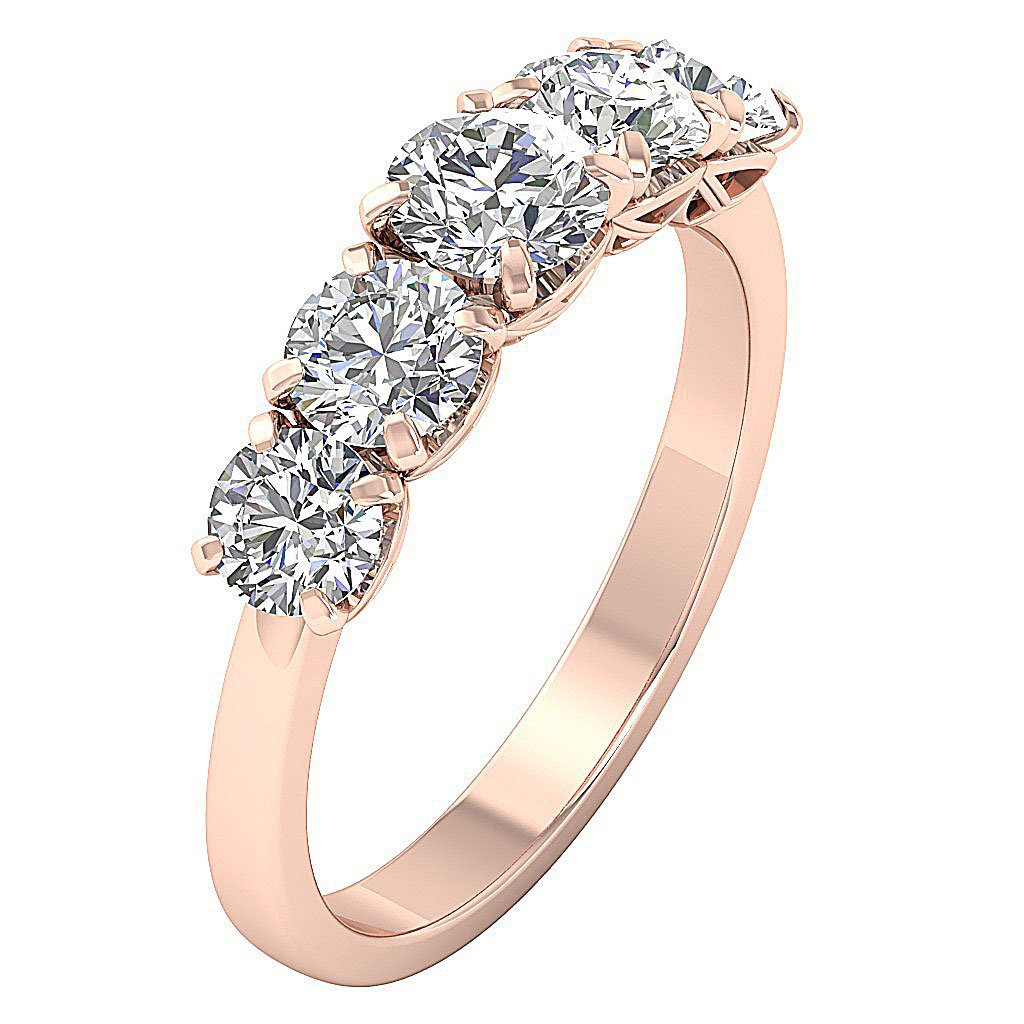
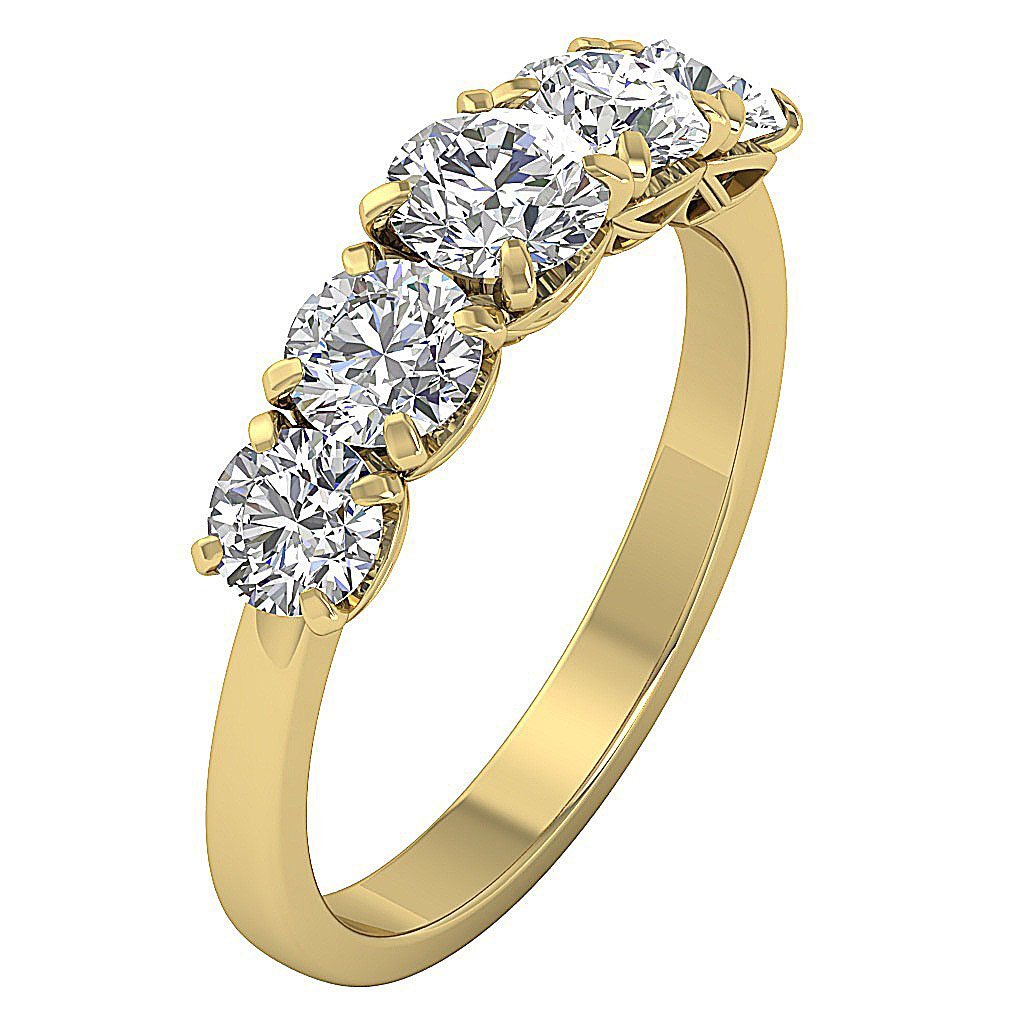
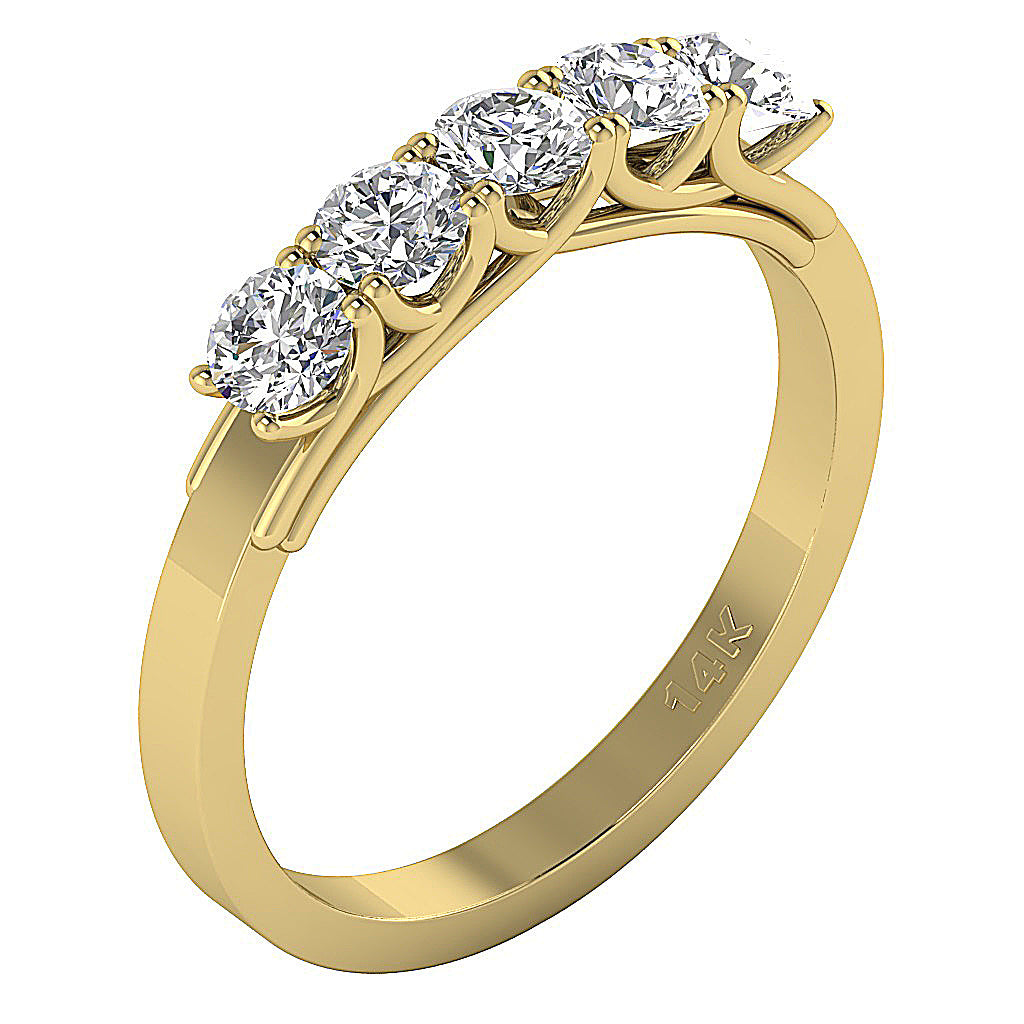
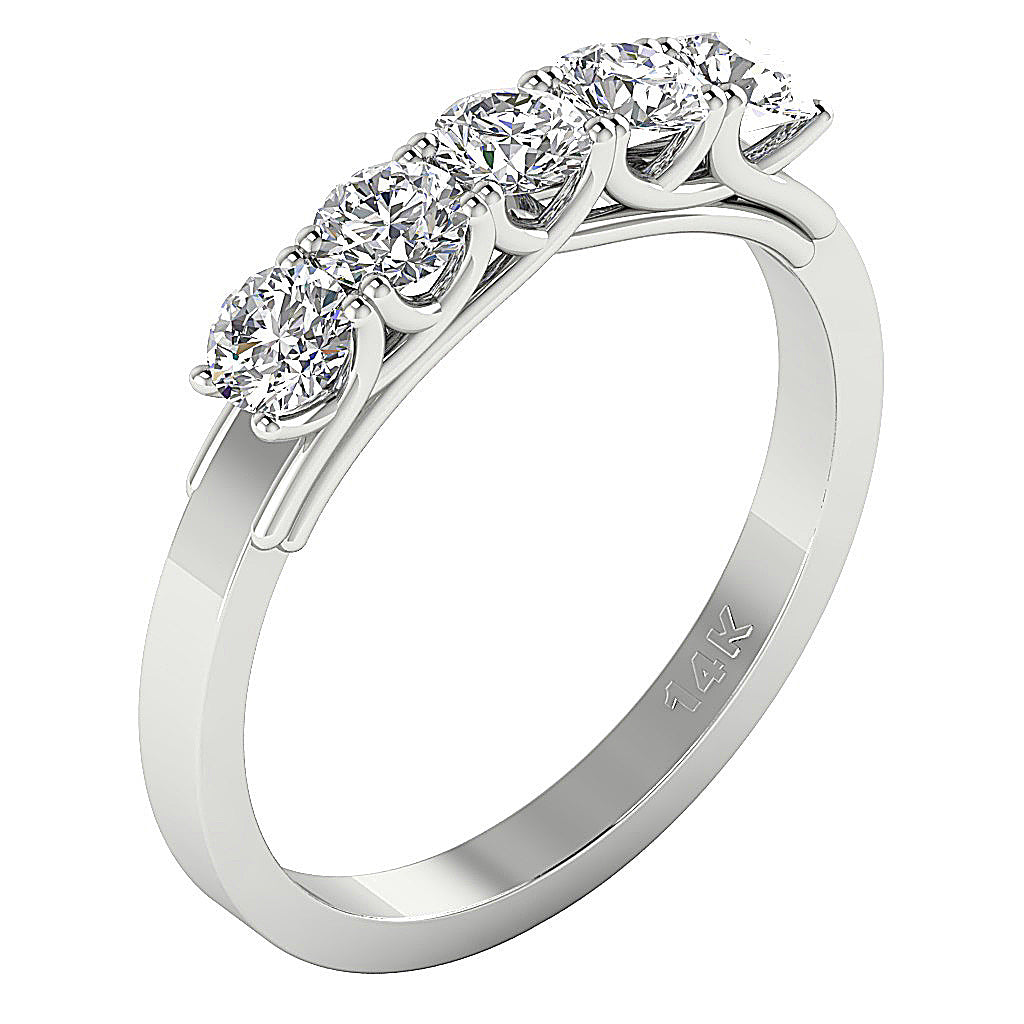
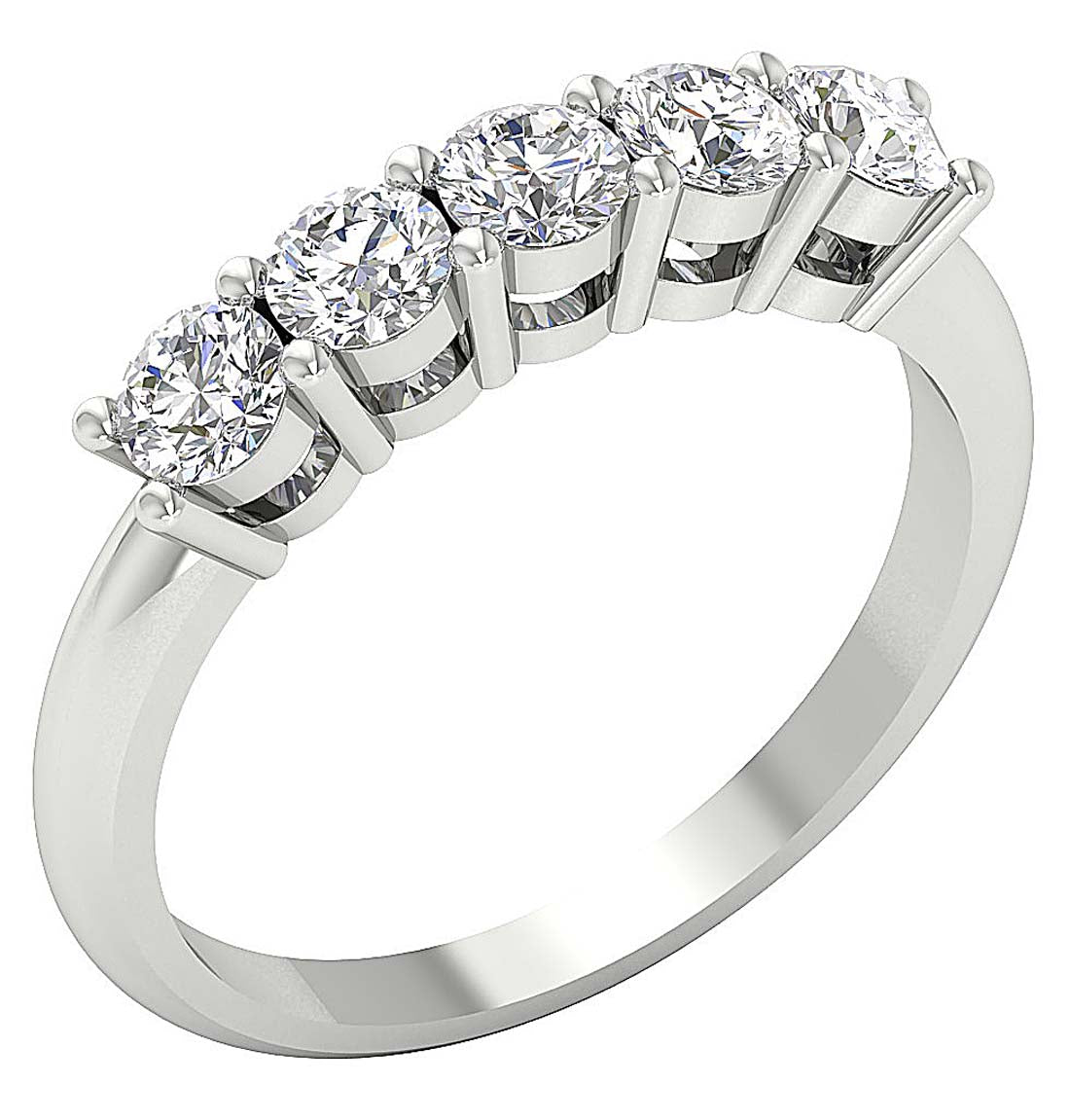
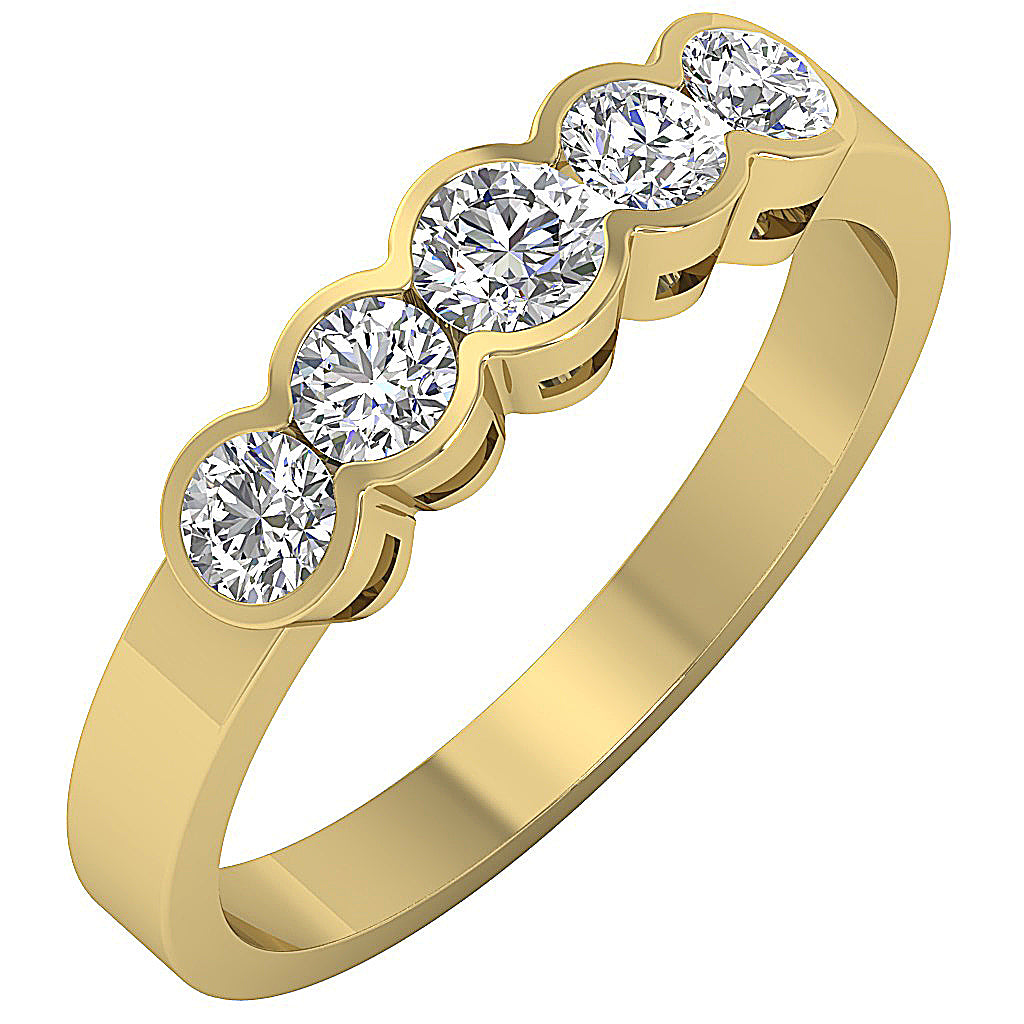
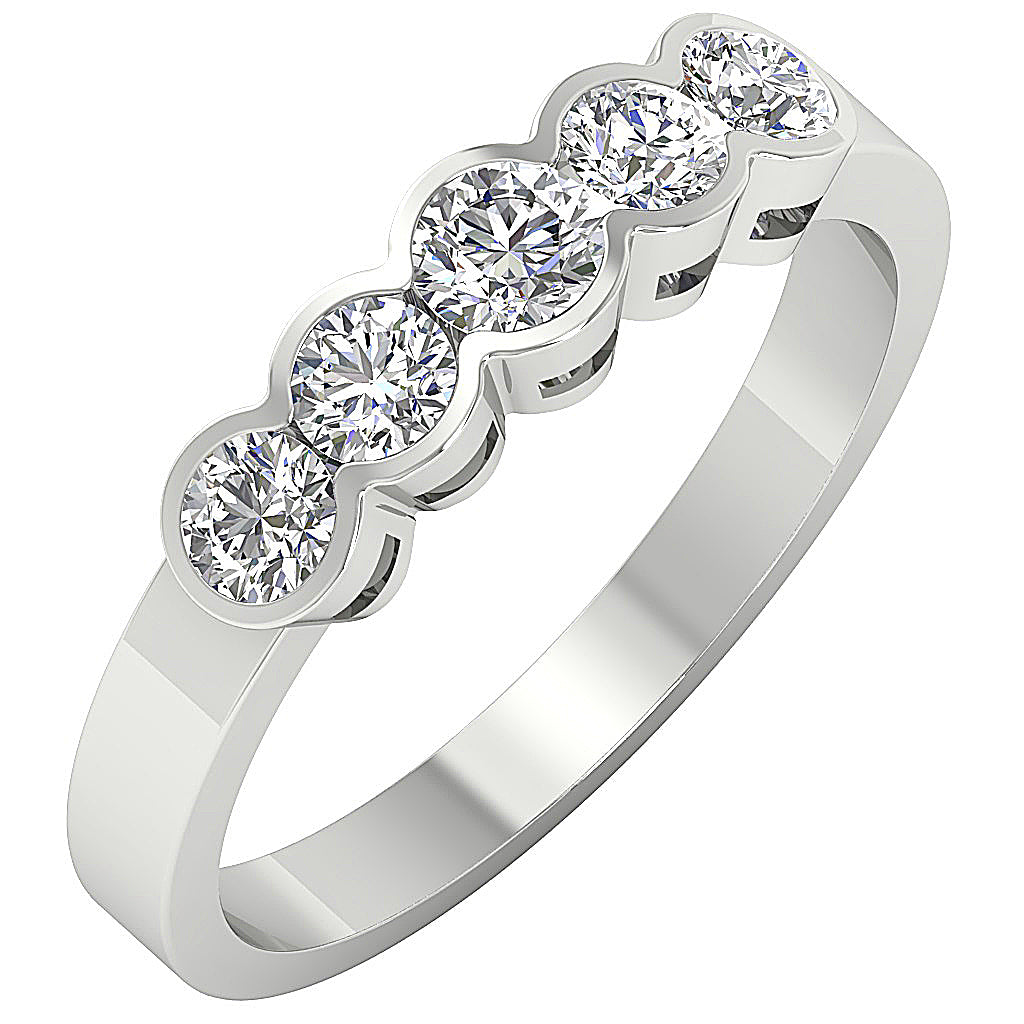
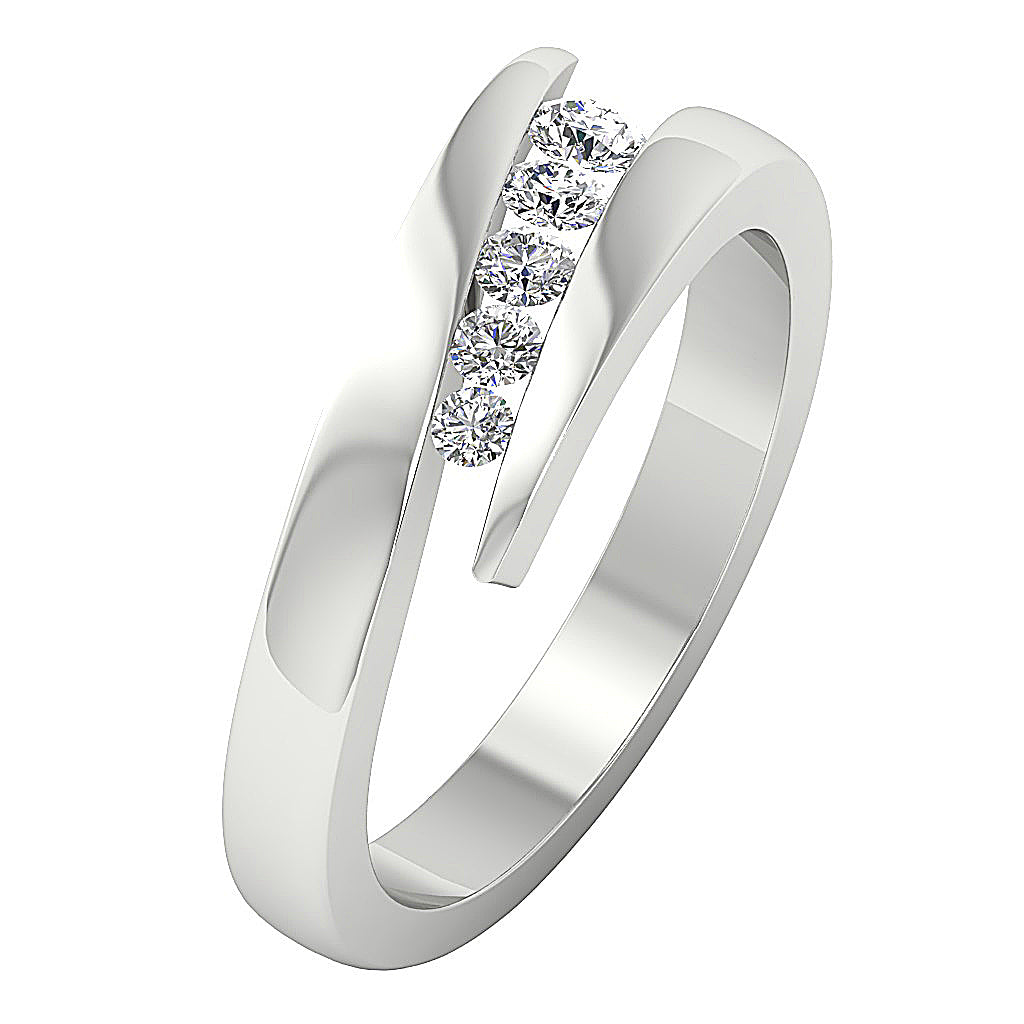
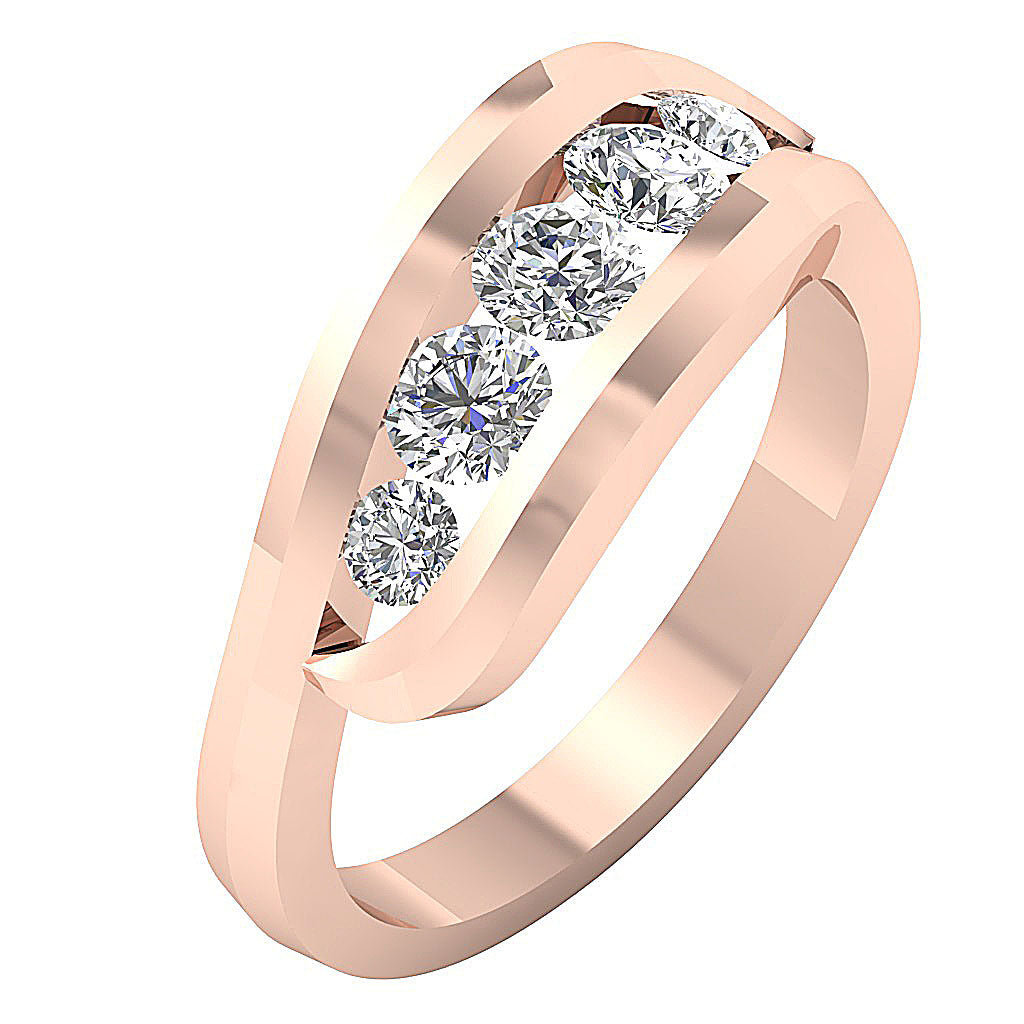
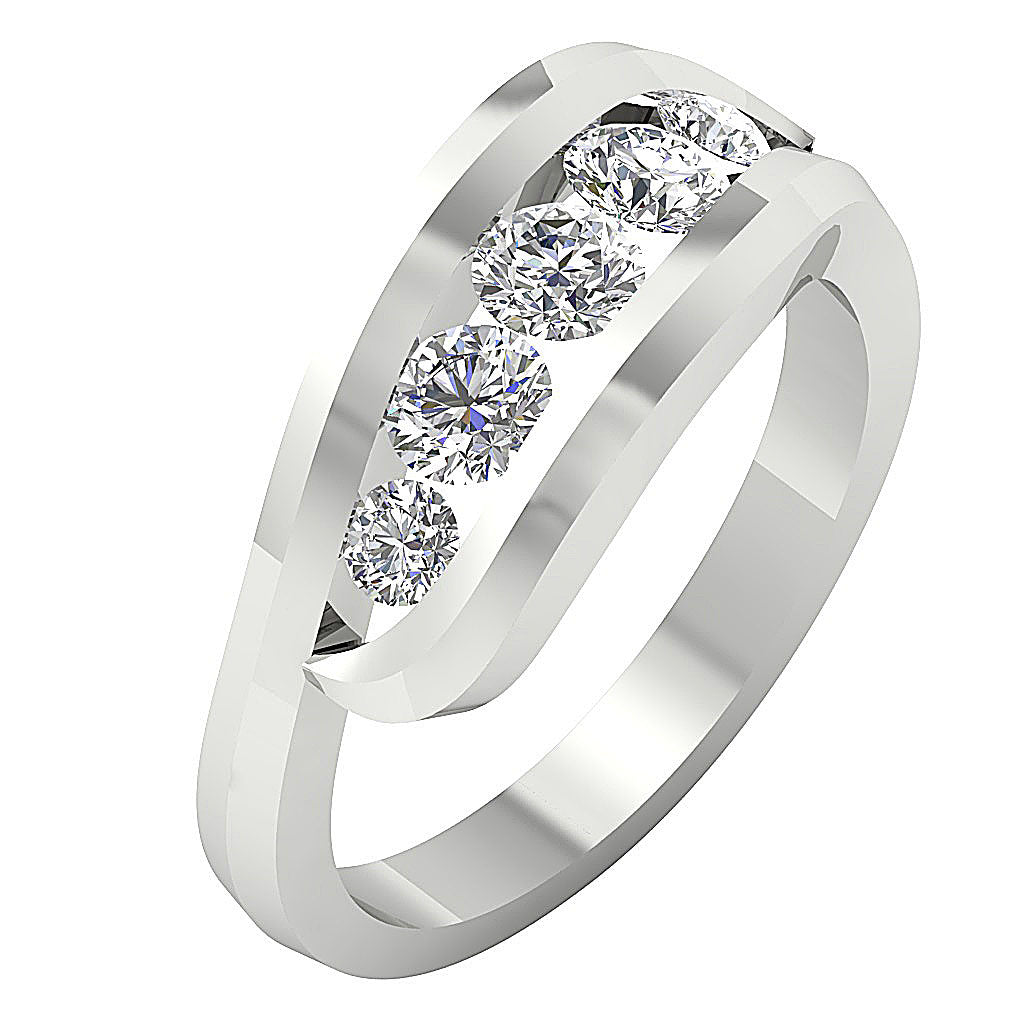
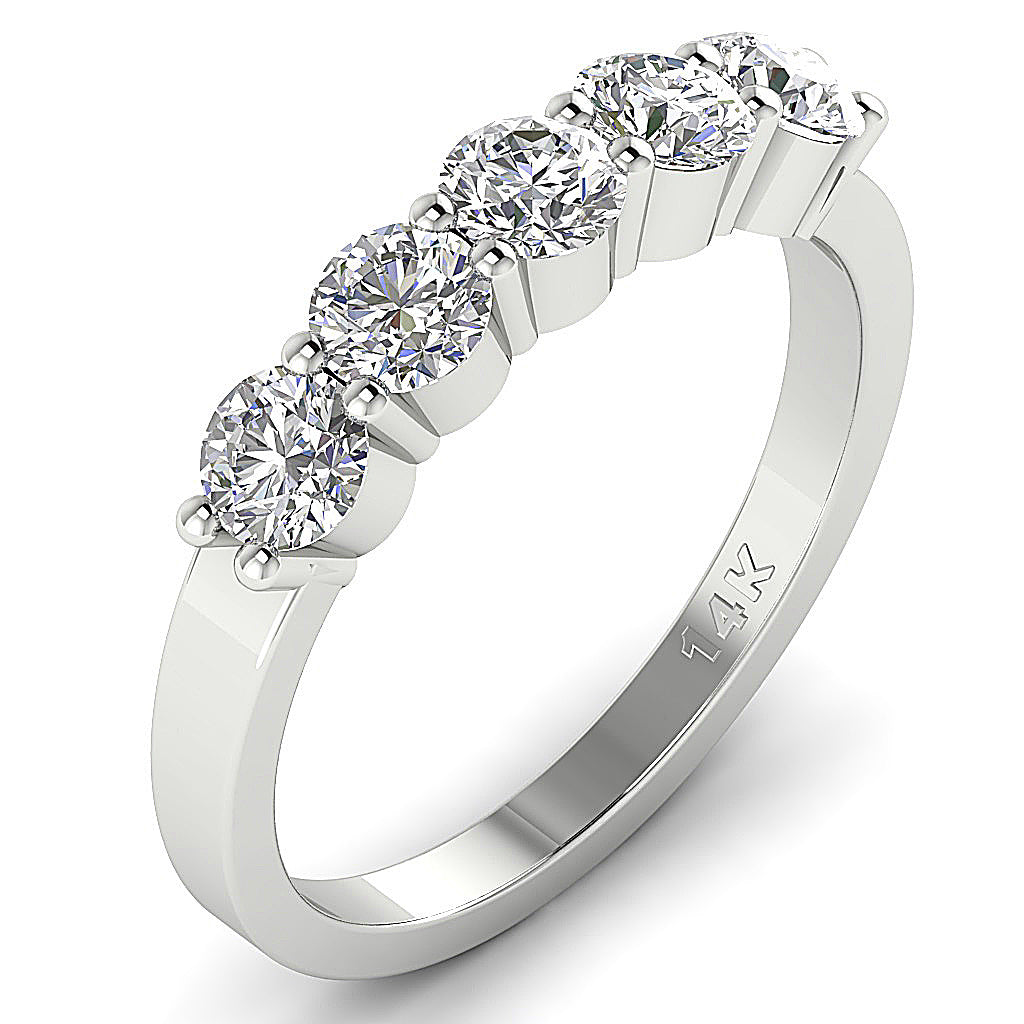
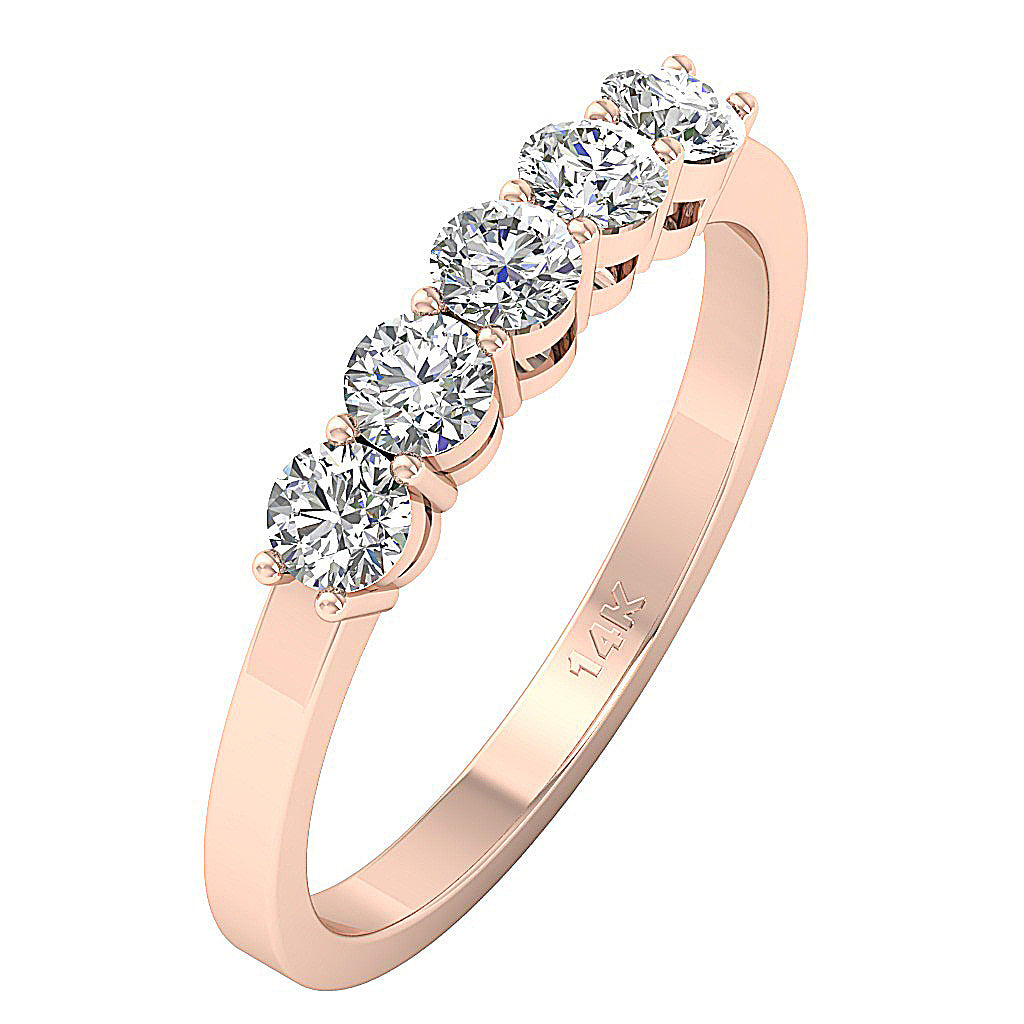
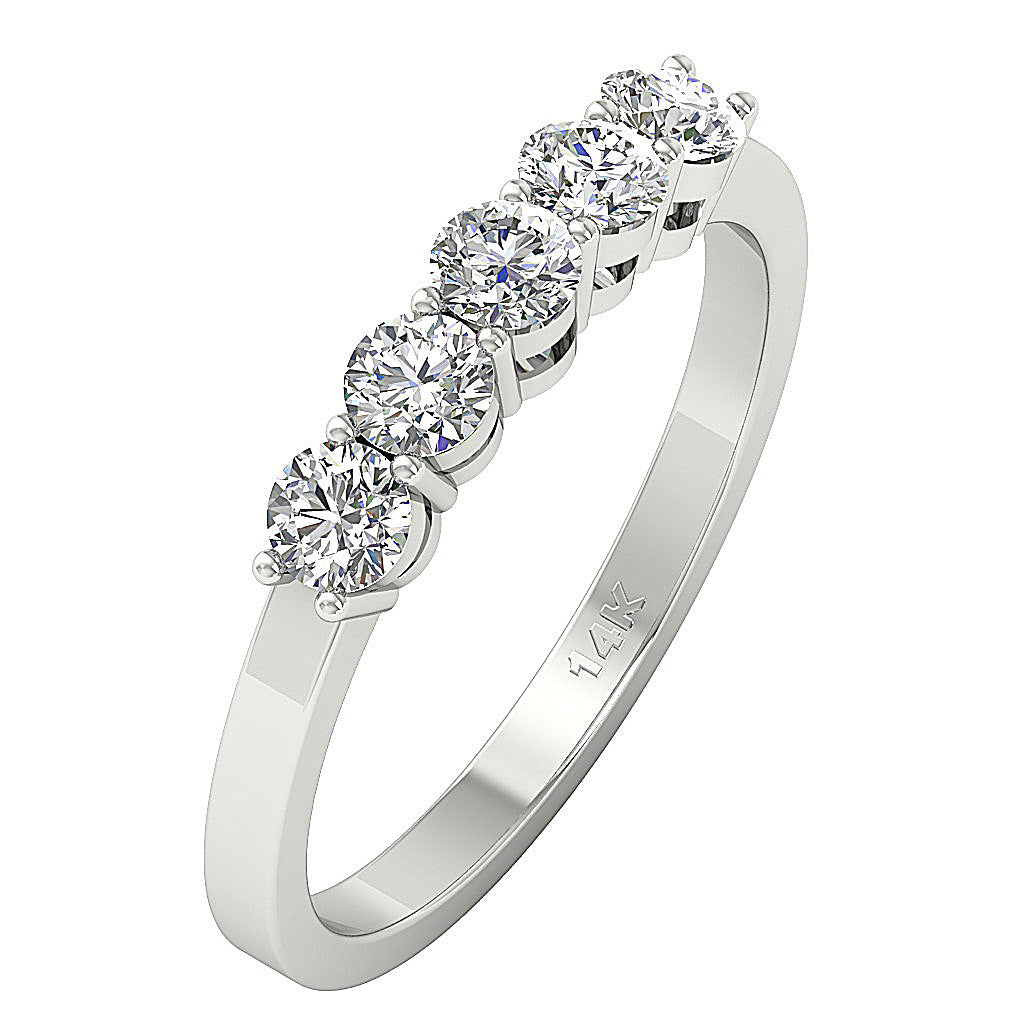
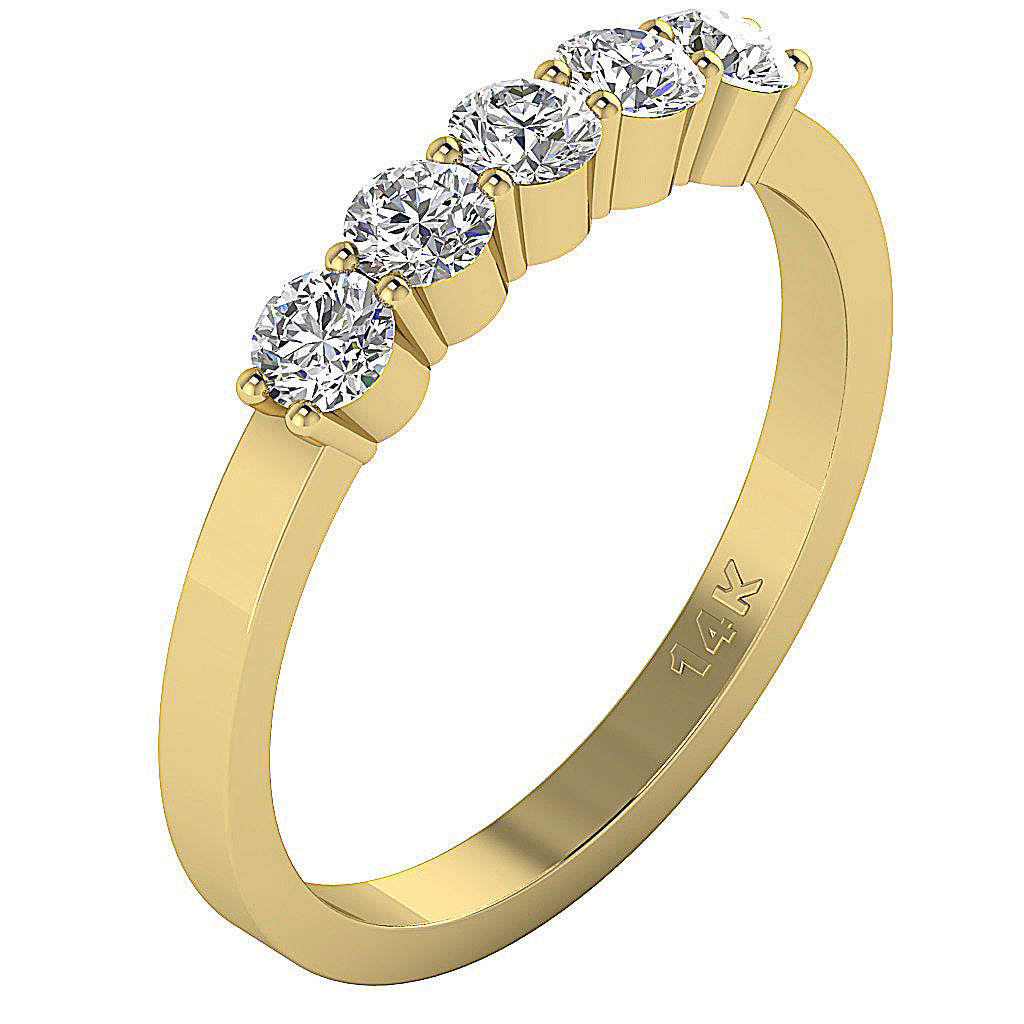
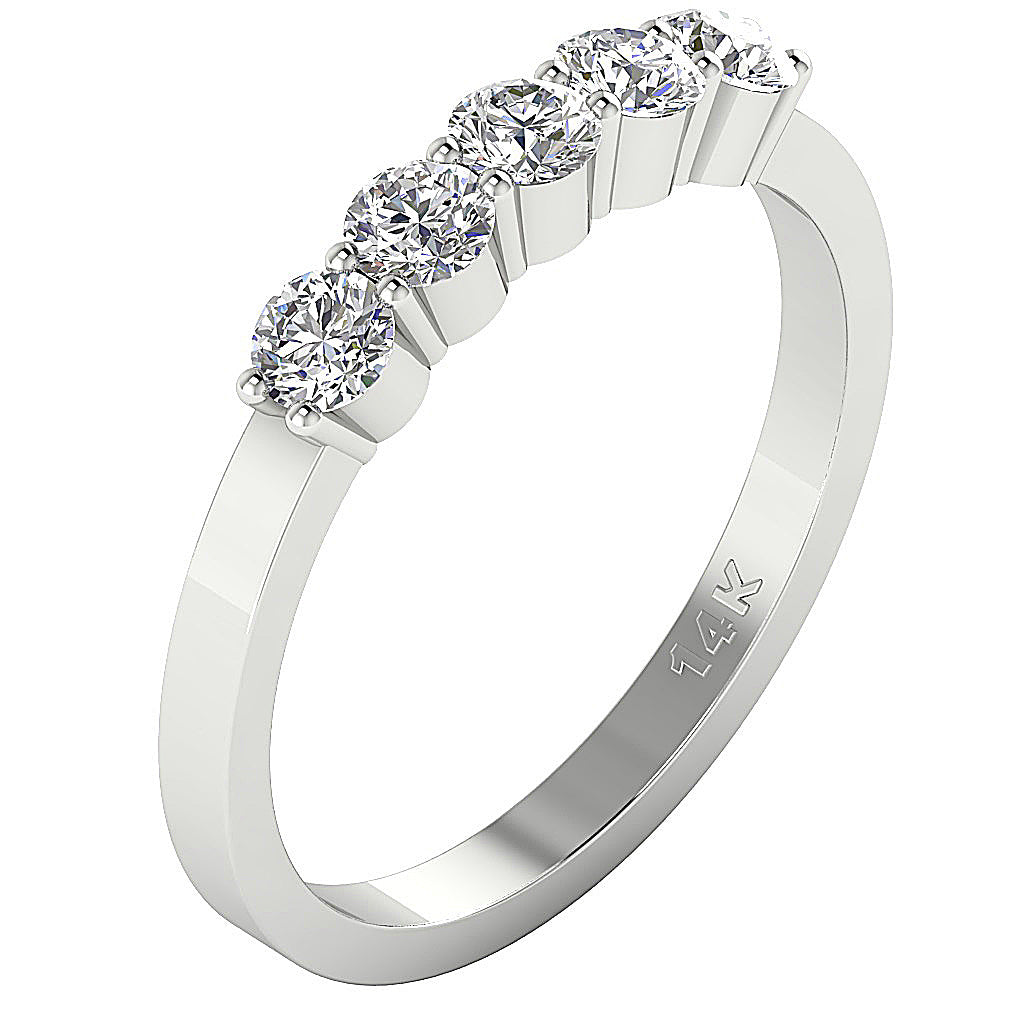
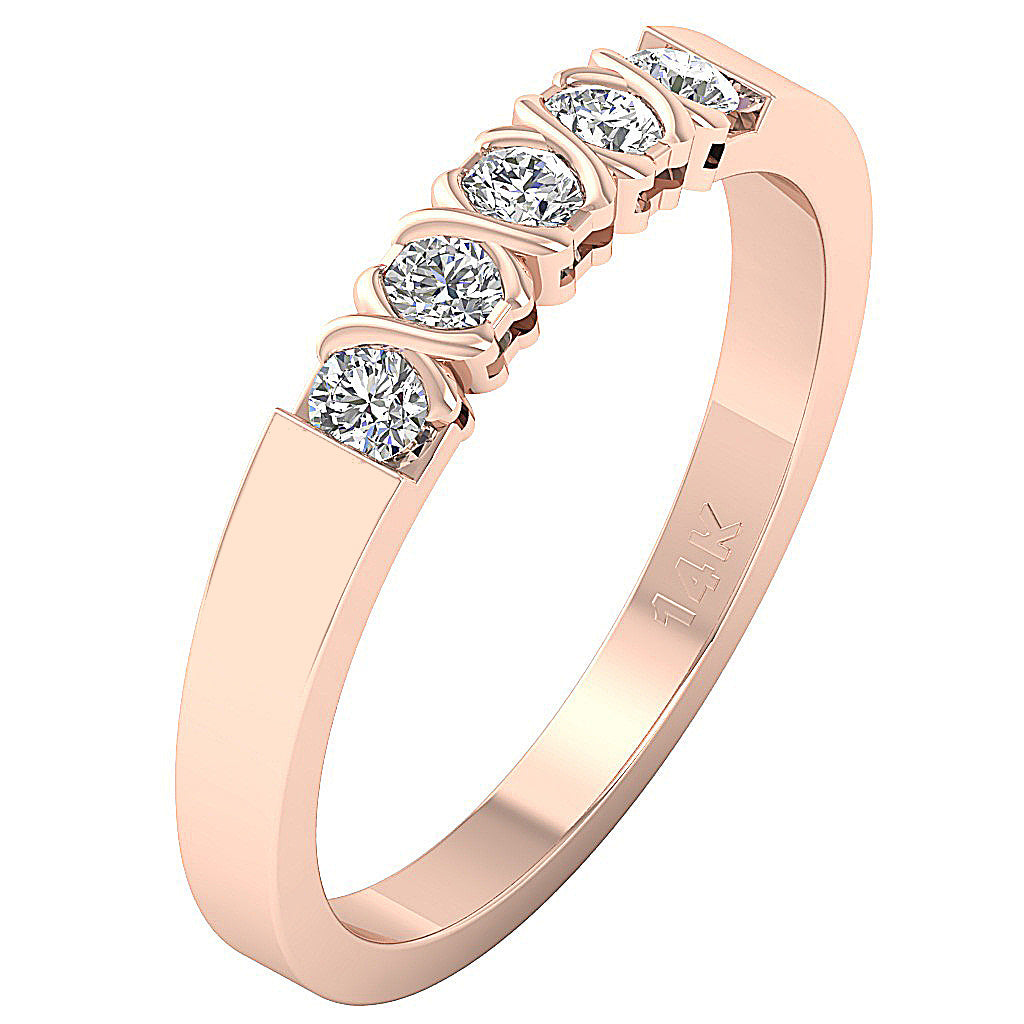
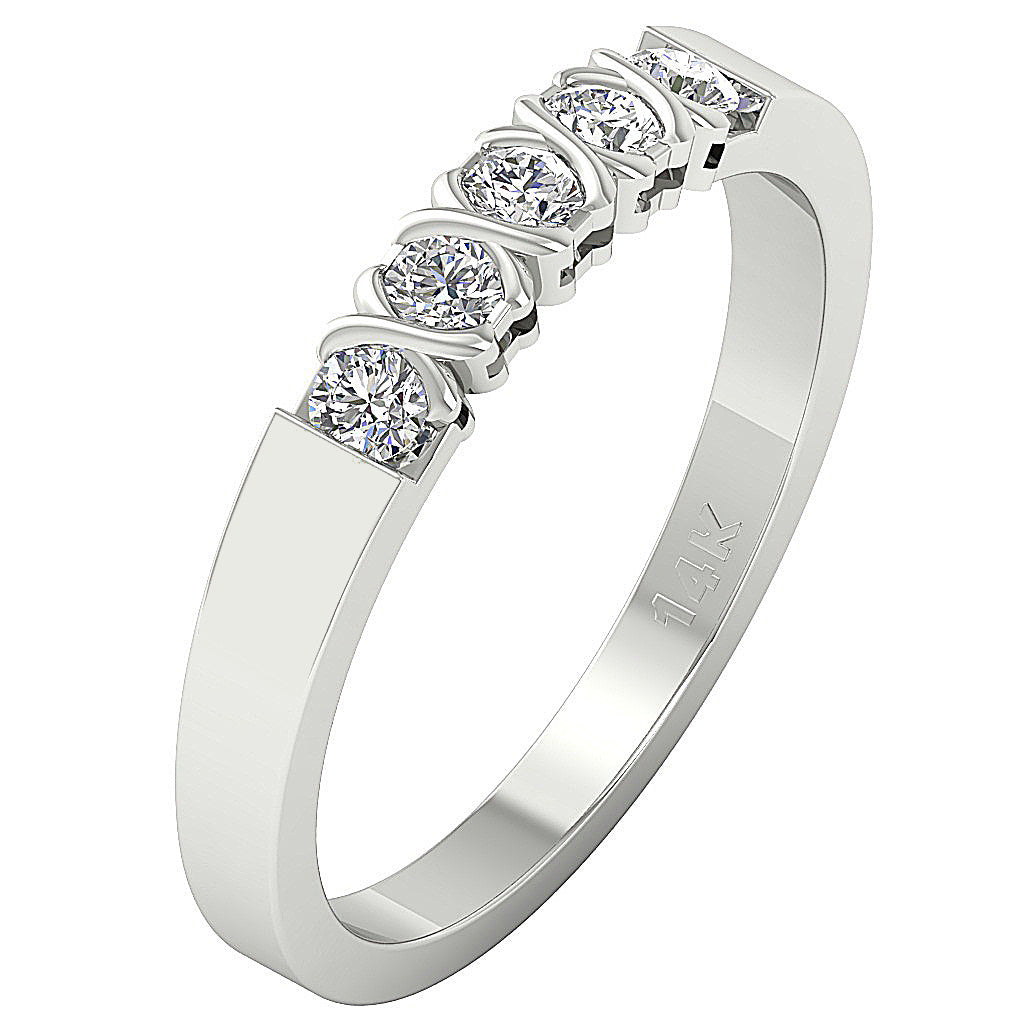
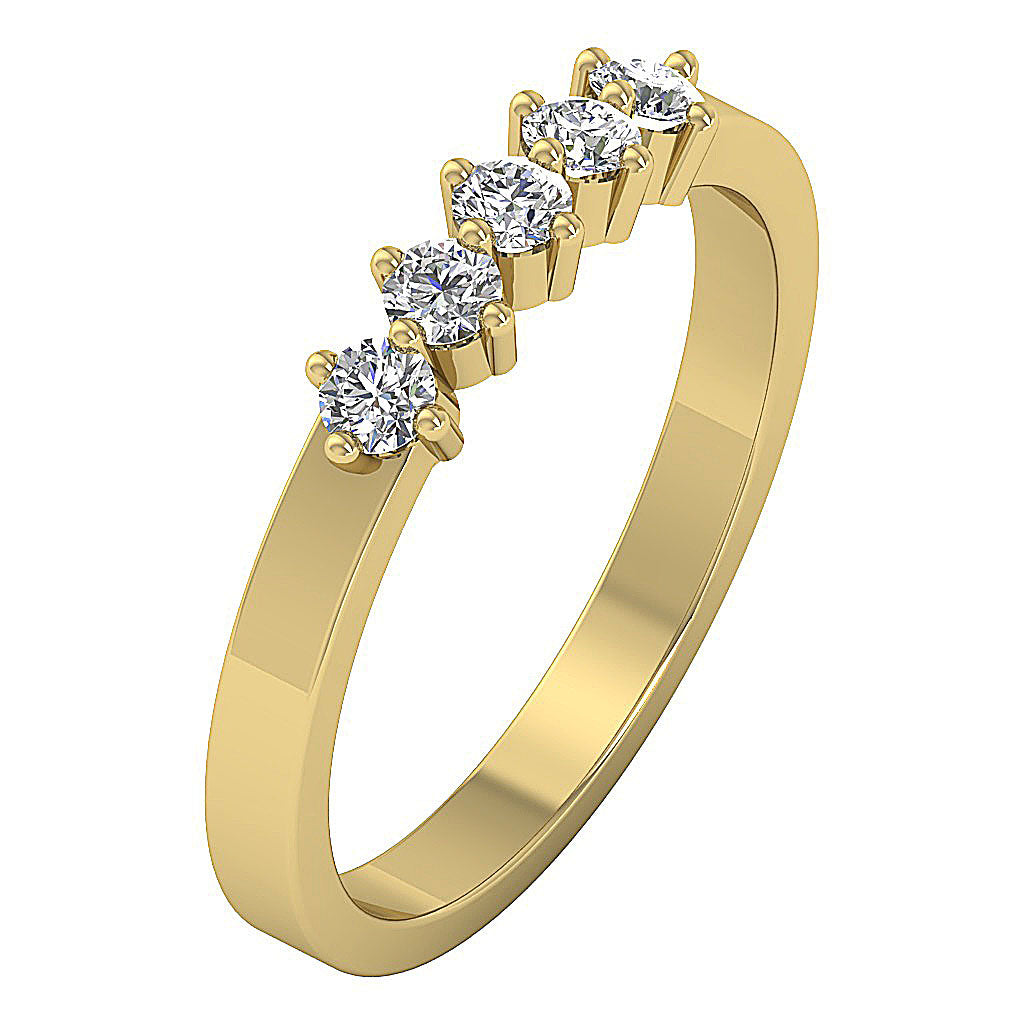
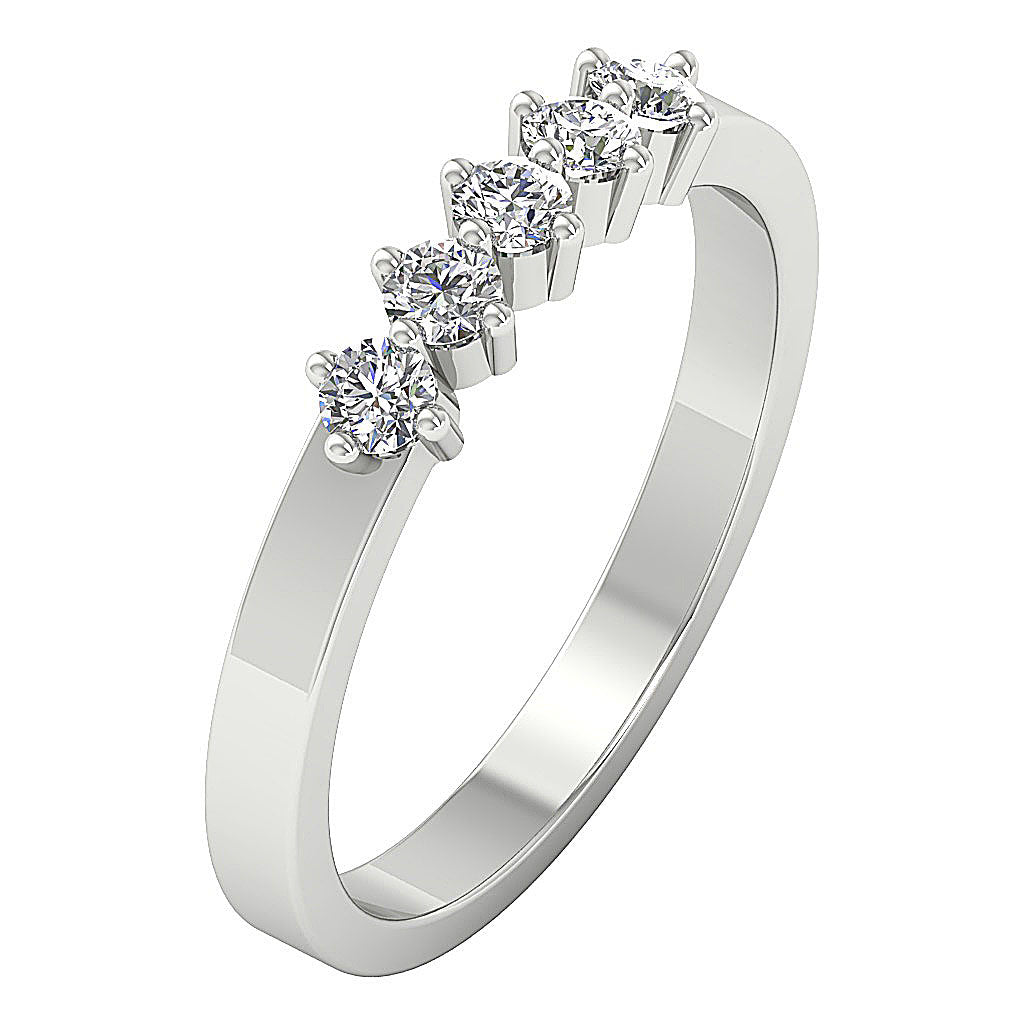
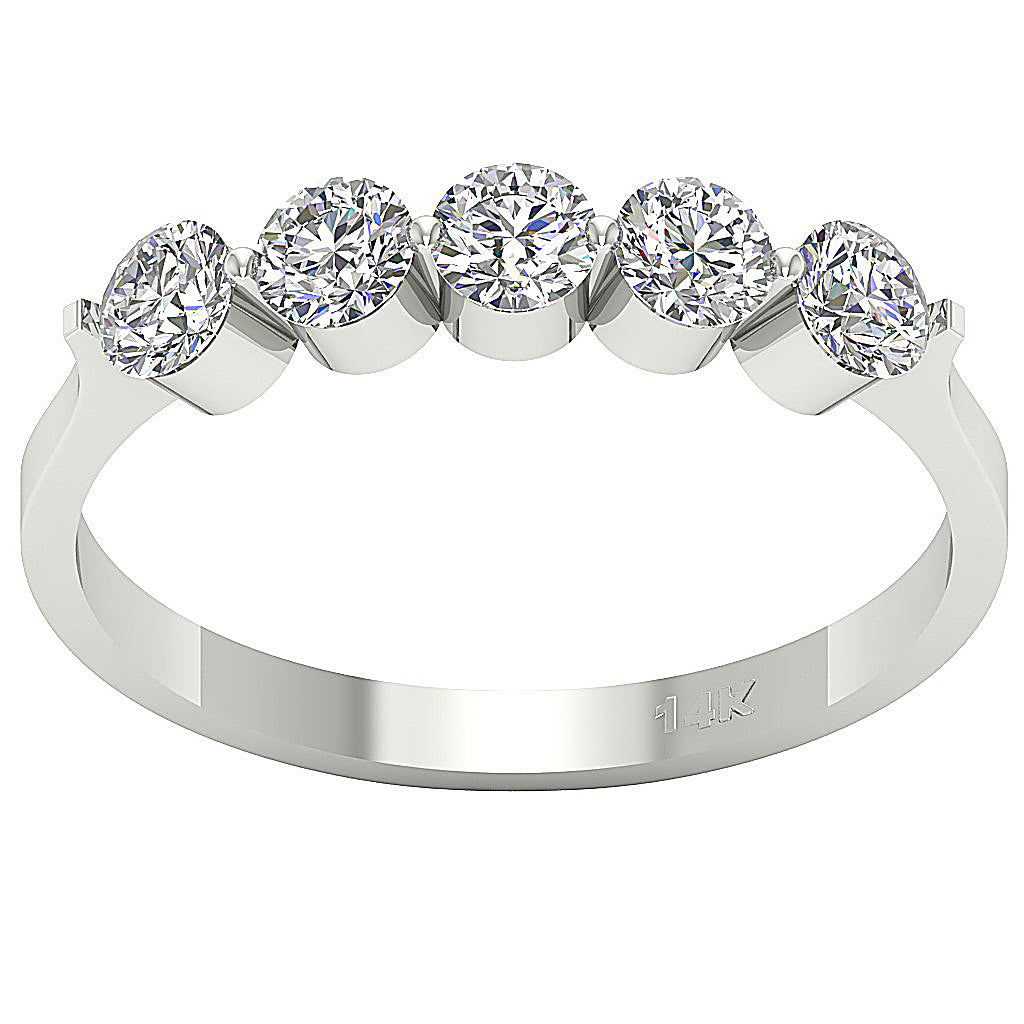
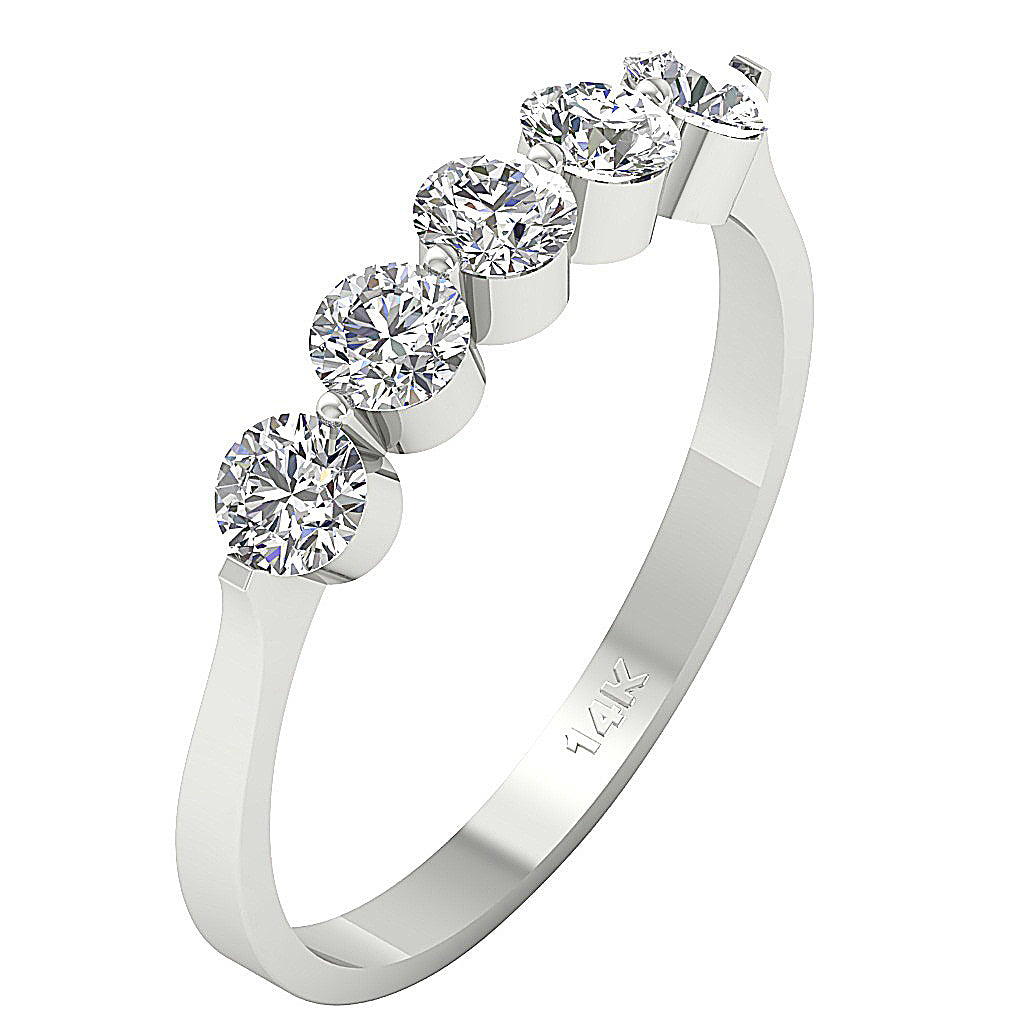
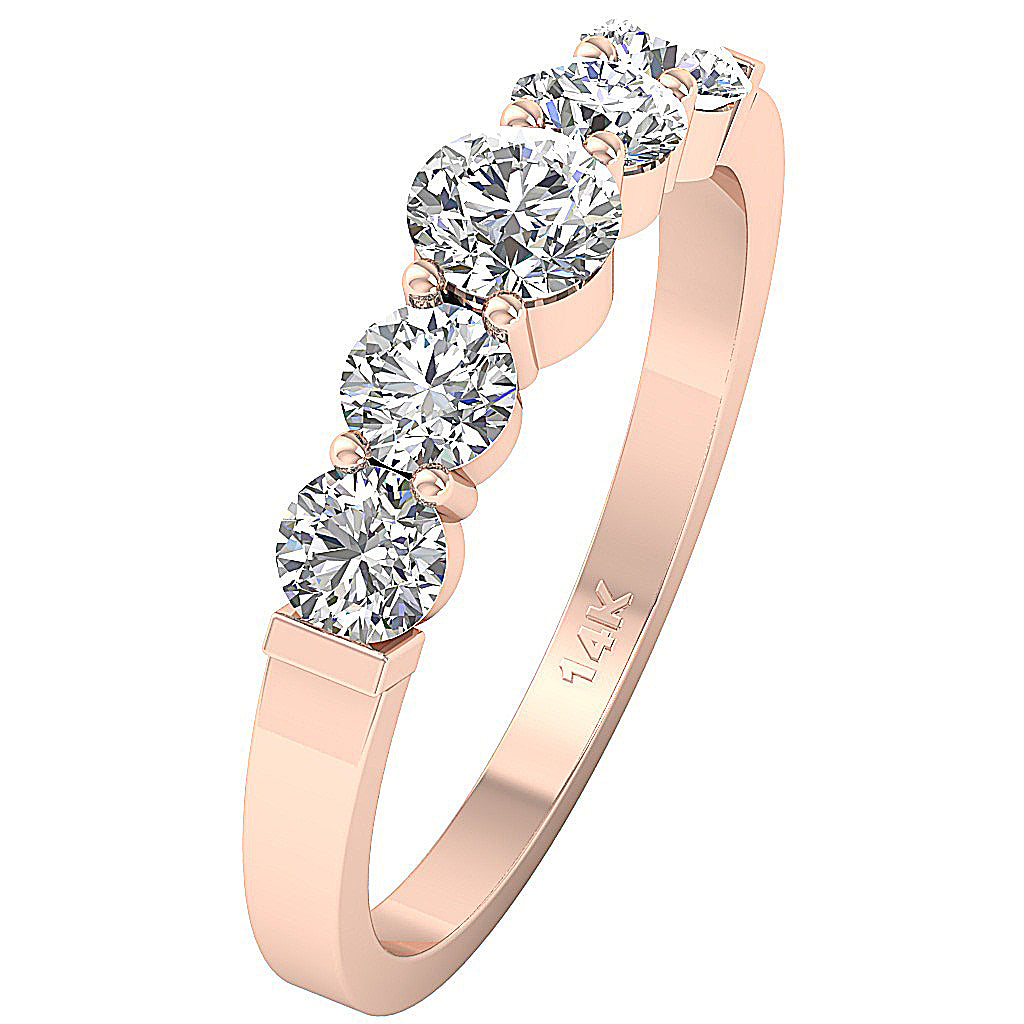
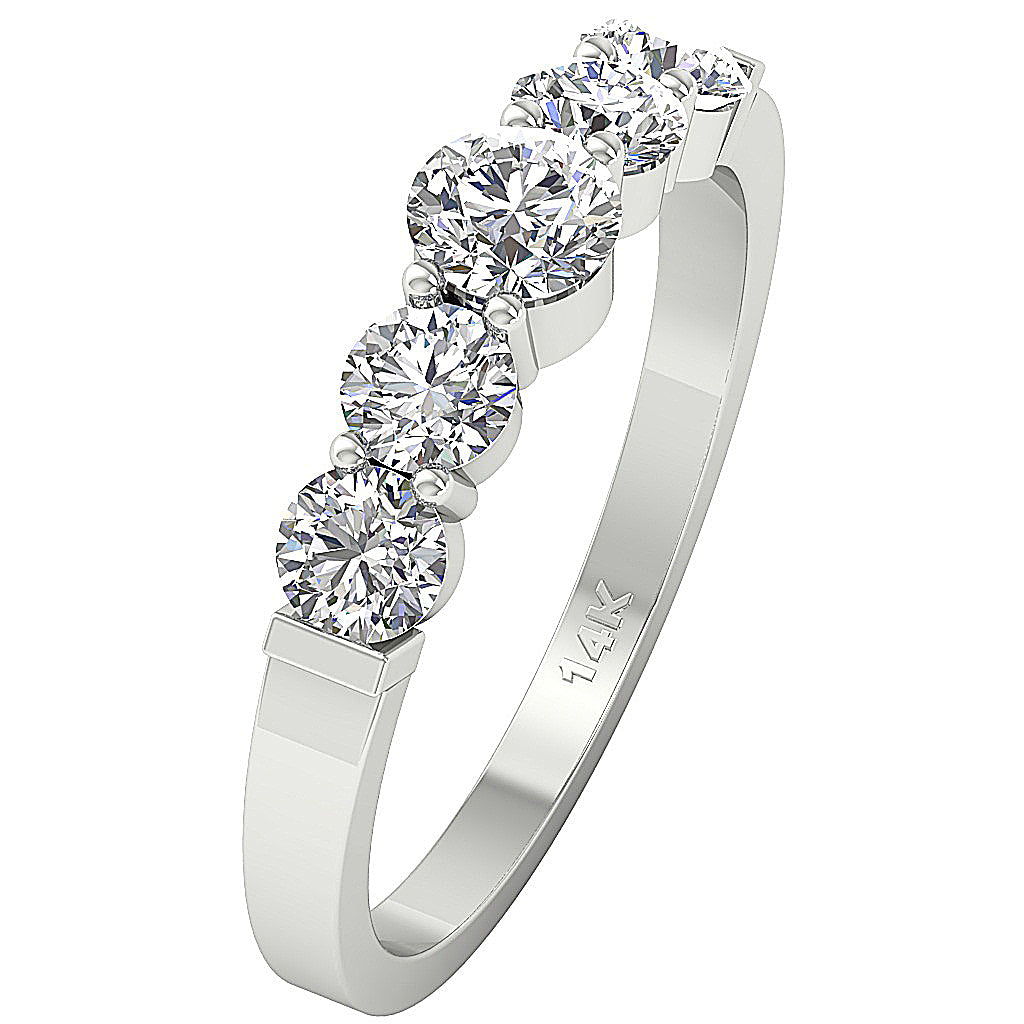
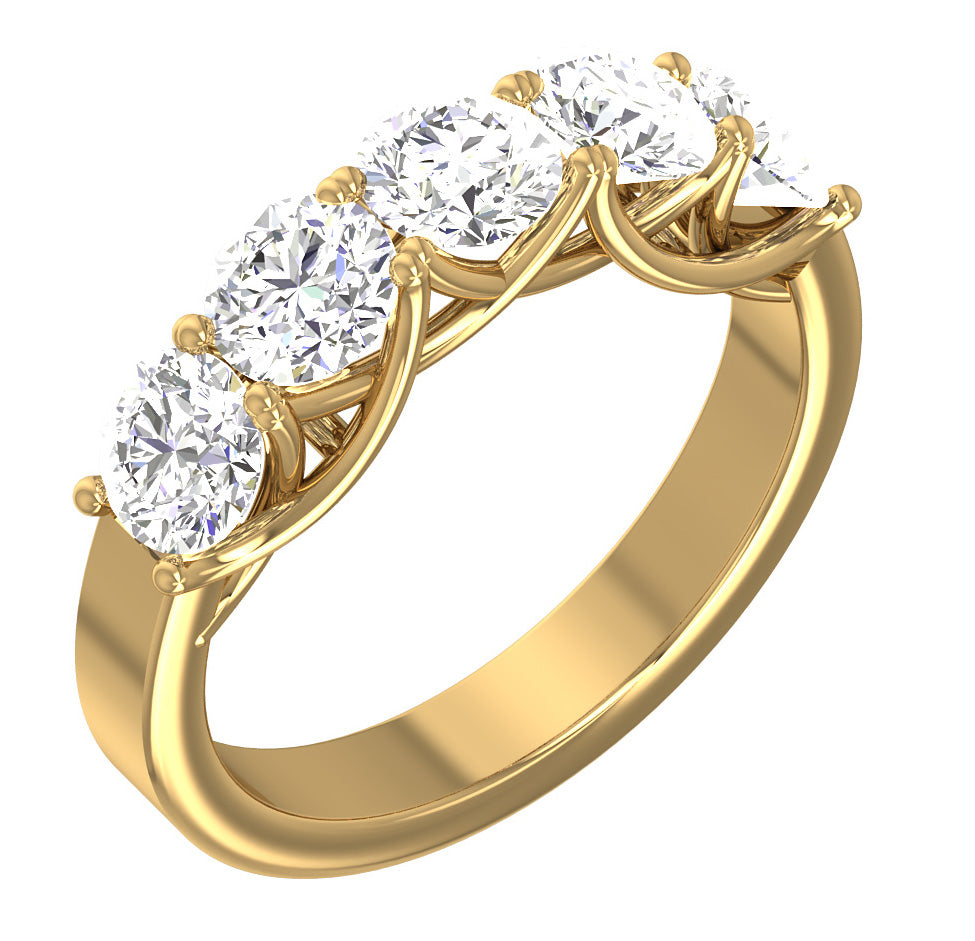
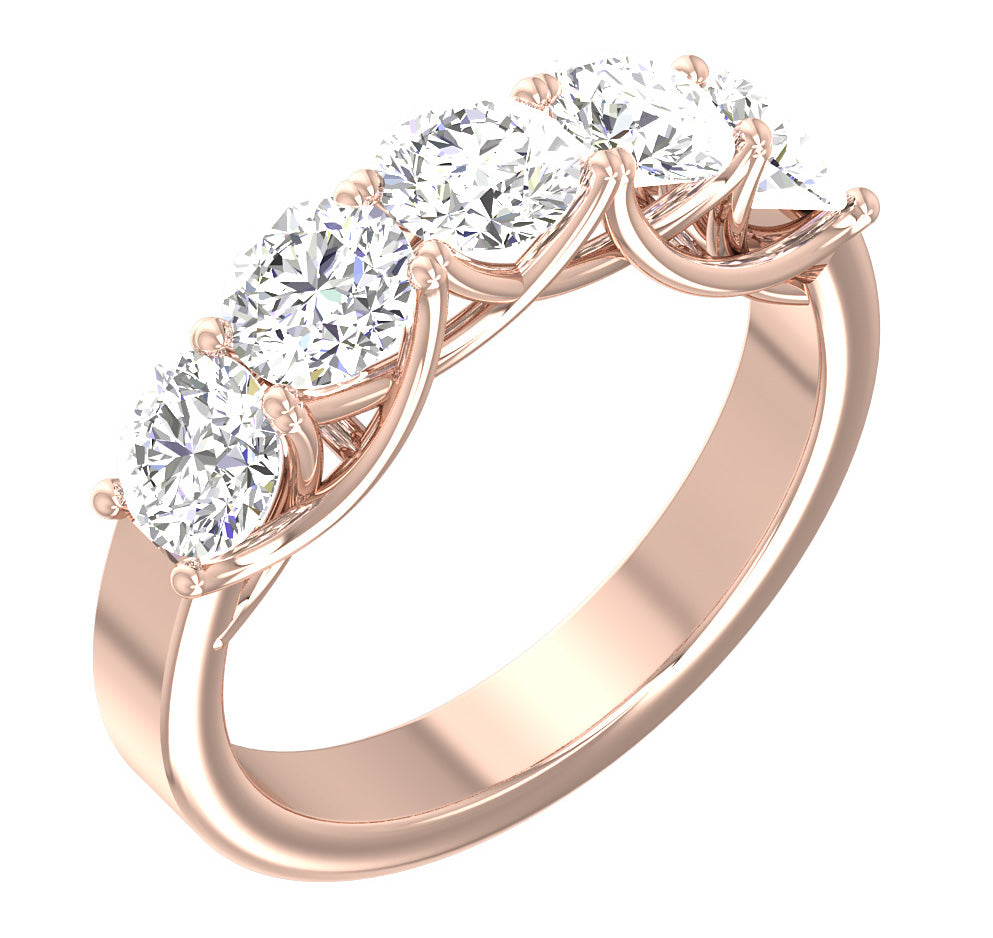
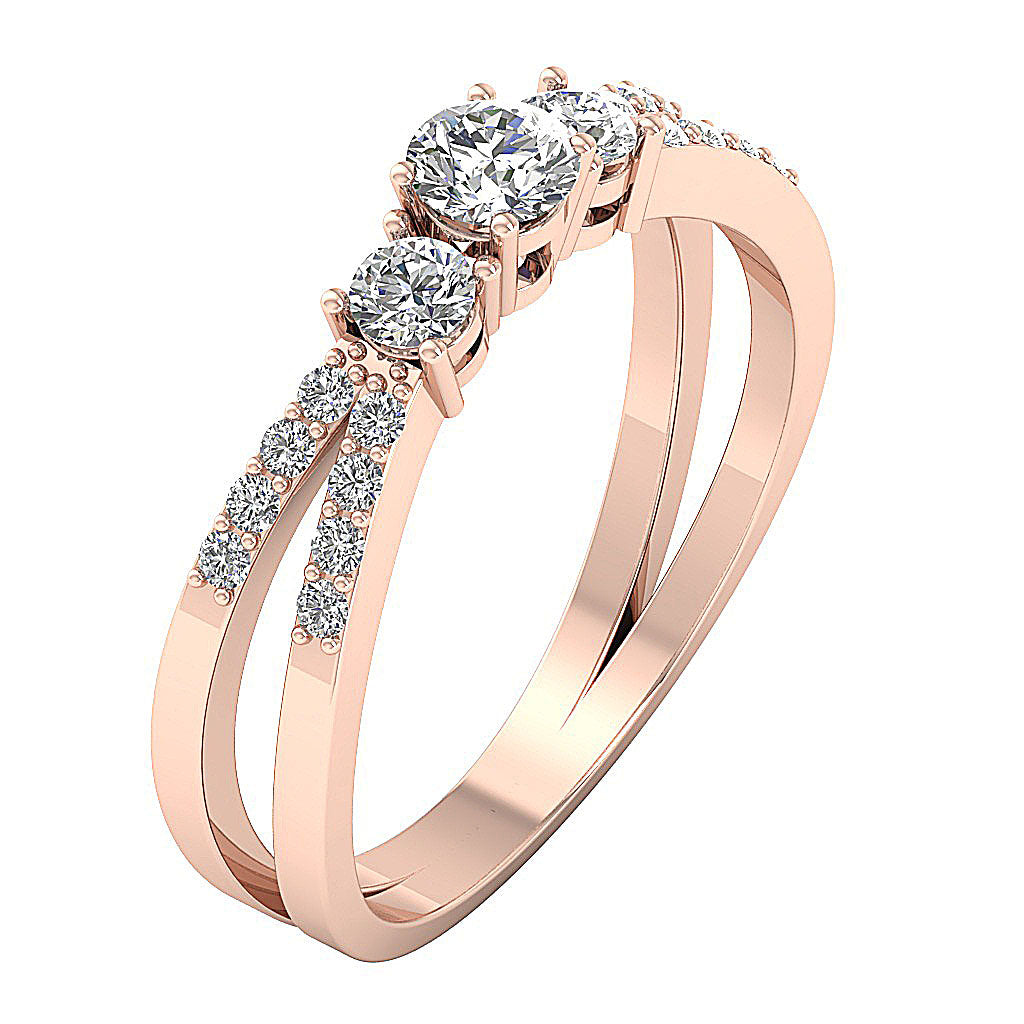
Diamond for Good's five-stone rings feature both natural and lab-grown diamonds, predominantly in round cuts, set in 14K or 18K gold across white, yellow, and rose. Many designs use matching stones for a balanced, symmetrical appearance, while select styles graduate the diamonds from a larger centre toward smaller stones at either side, creating a more fluid visual rhythm.
Choosing a Setting for Five-Stone Rings
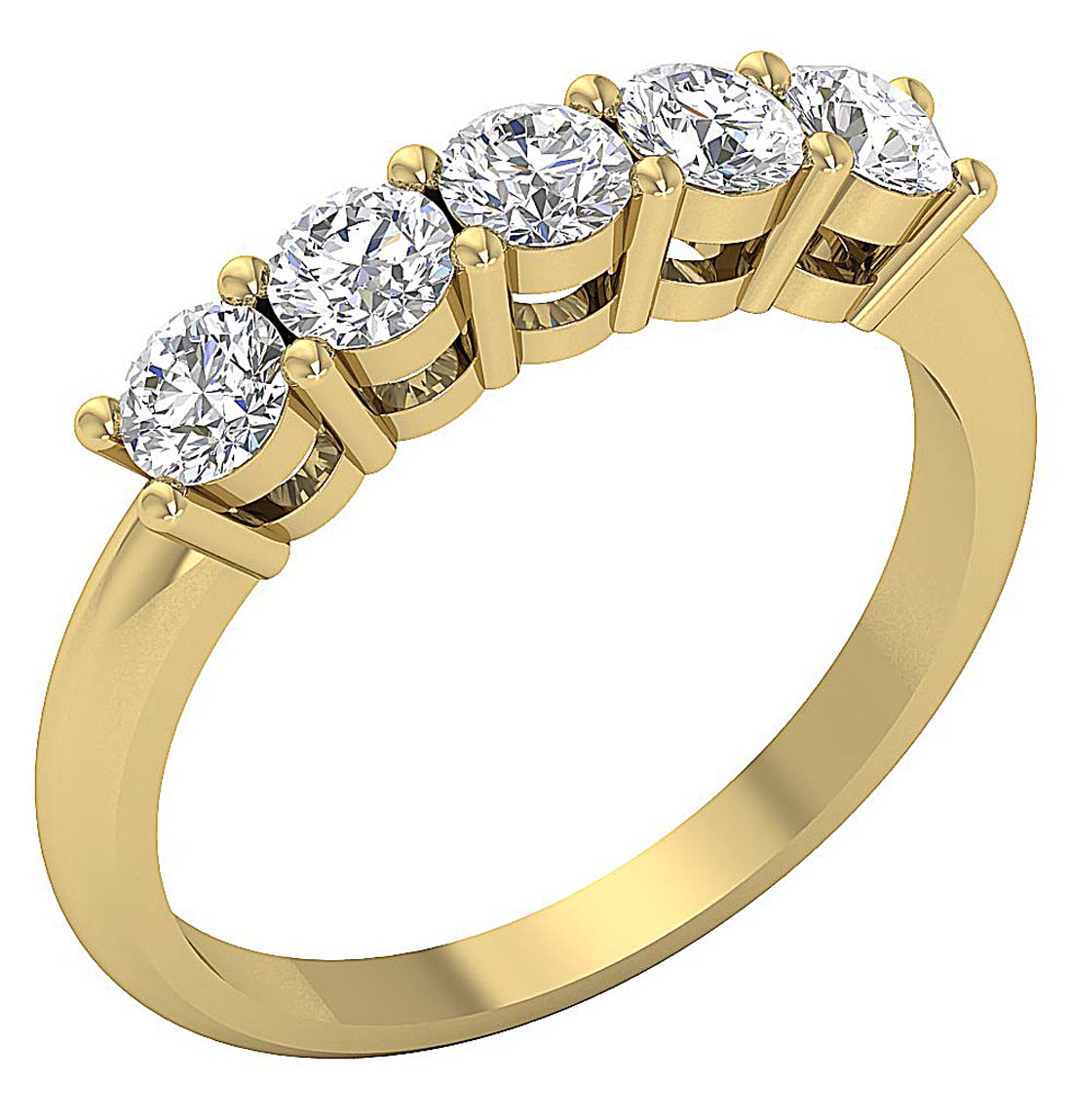
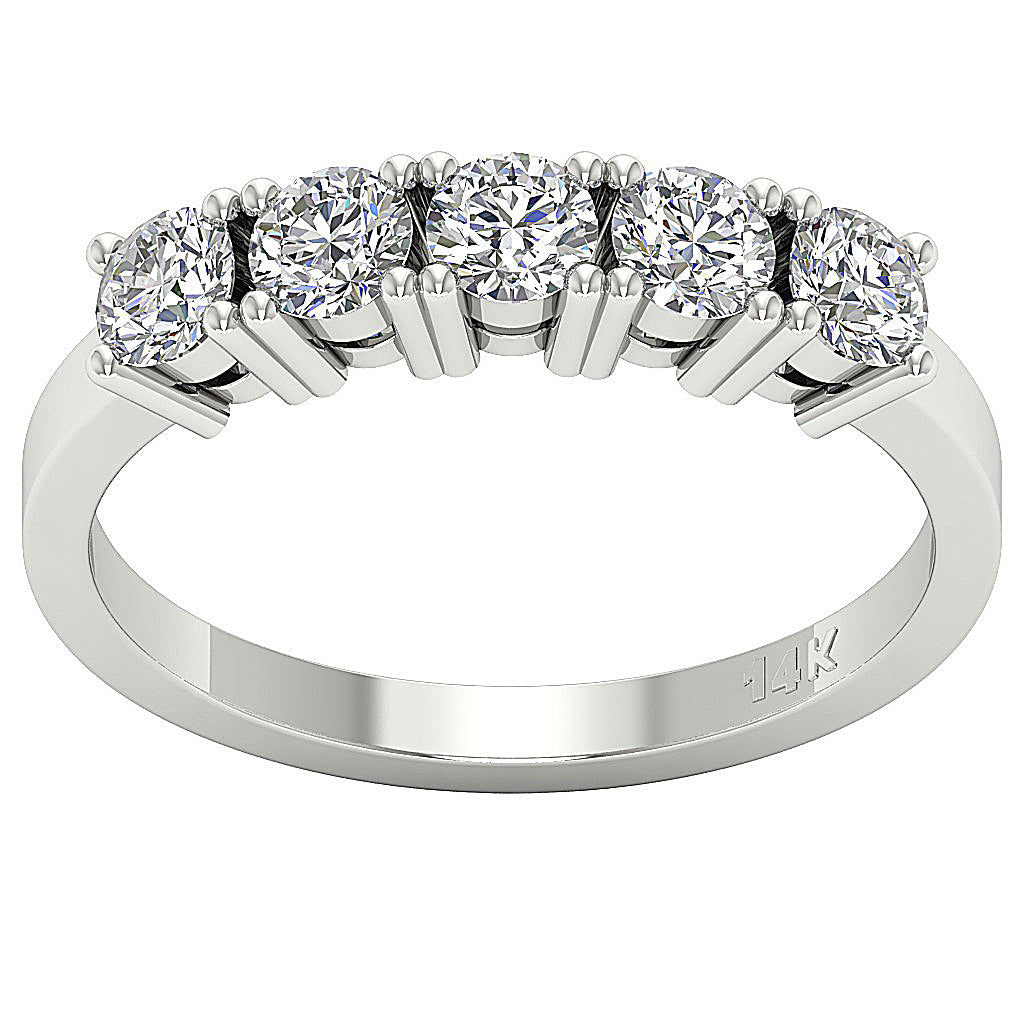
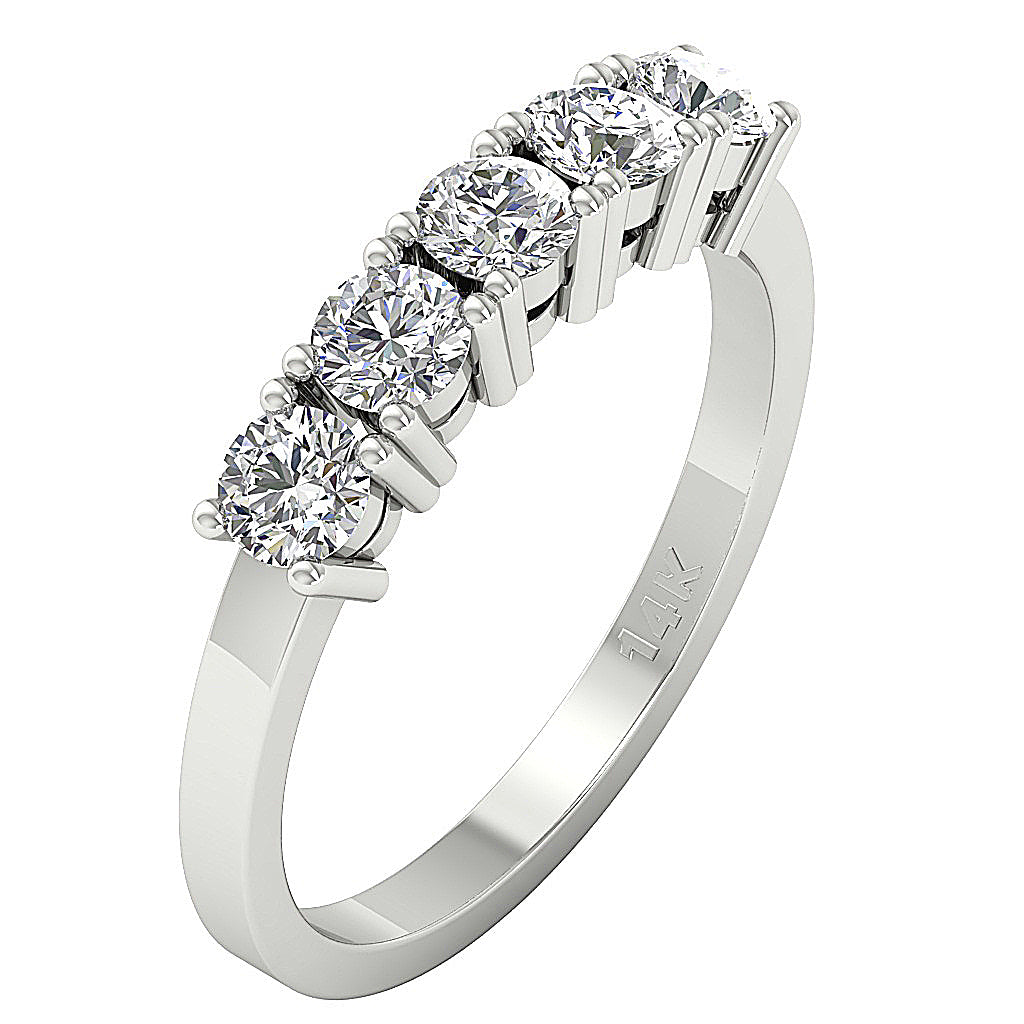
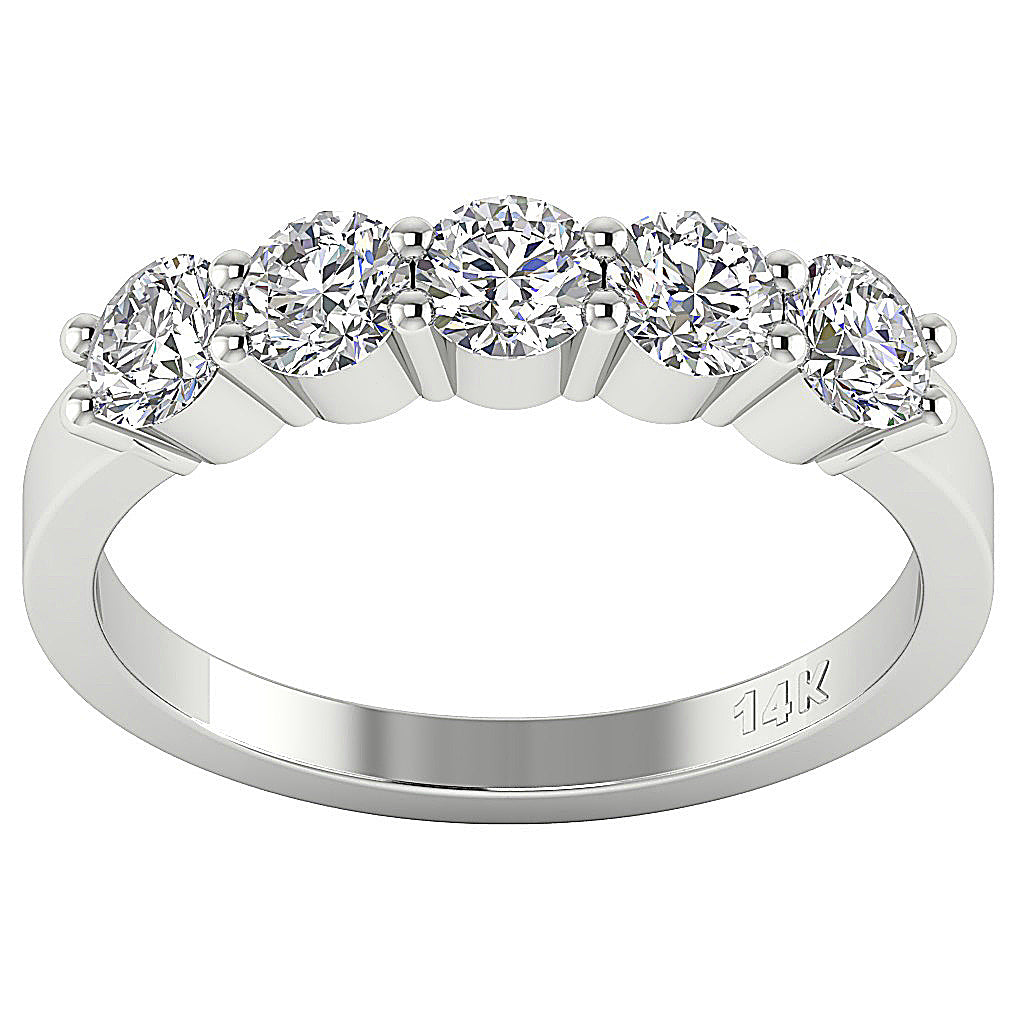
Prong settings remain a popular choice for five-stone rings because they expose more of each diamond to light, allowing the individual stones to contribute strongly to the ring's overall brilliance. The tradeoff is greater exposure around the diamond edges, which calls for careful inspection over time.
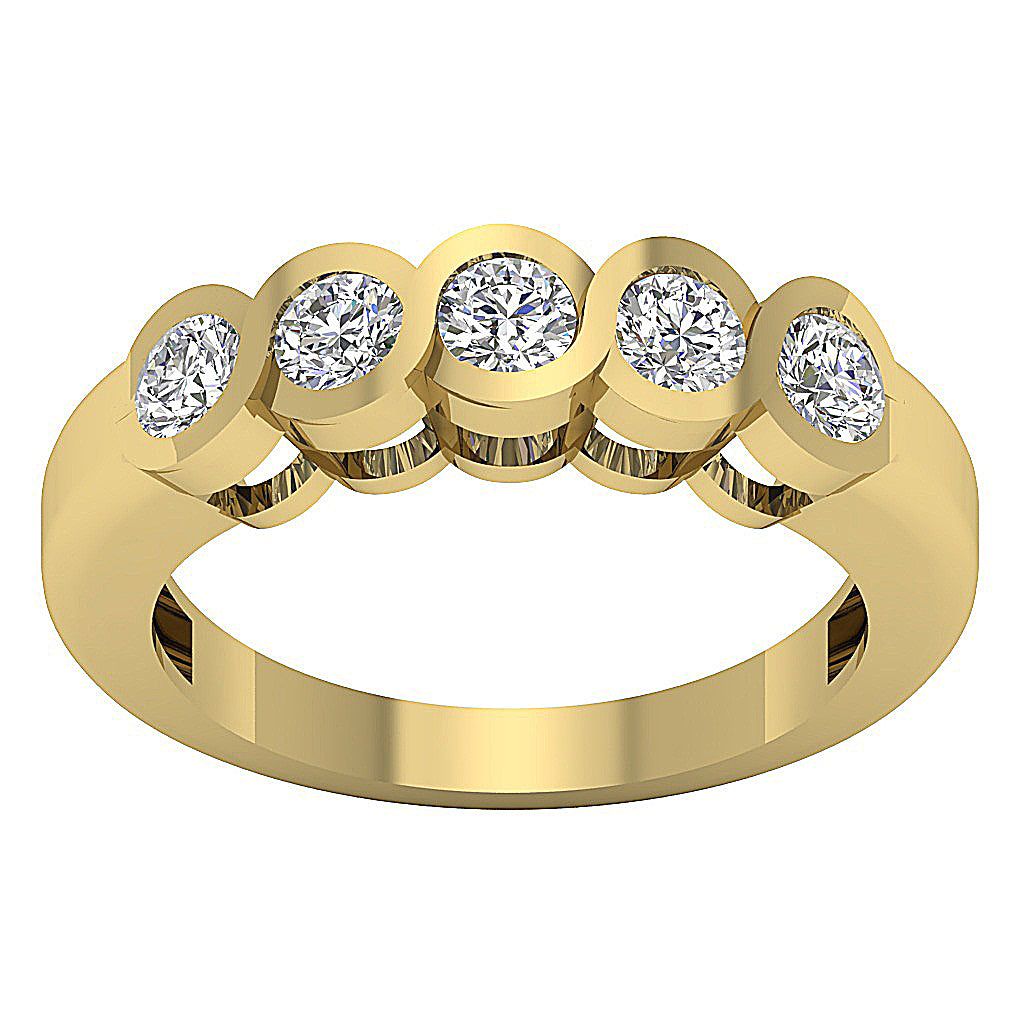
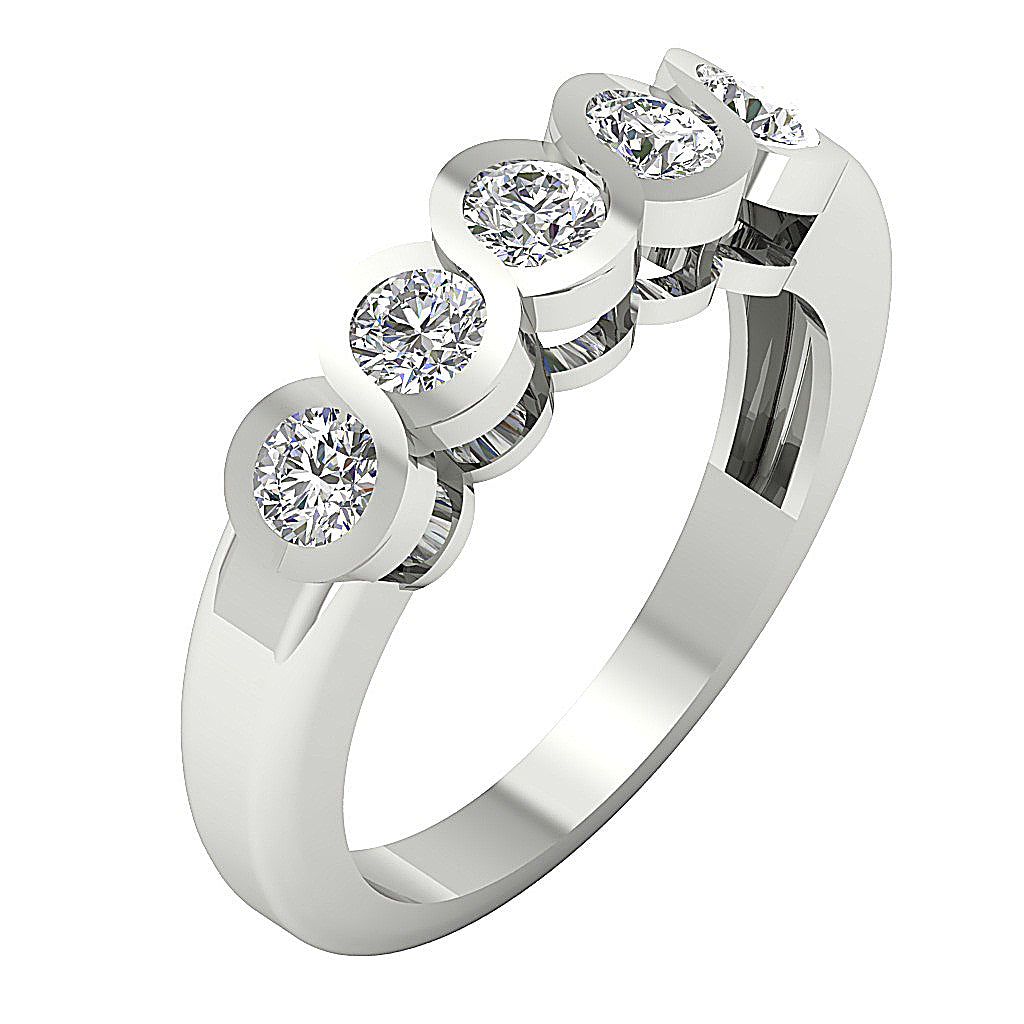
Bezel settings surround each diamond's edge with metal, creating a smoother profile and greater protection against catching or impact. For a five-stone ring intended for constant wear, this can be a practical choice without sacrificing the visual continuity of the diamond row.
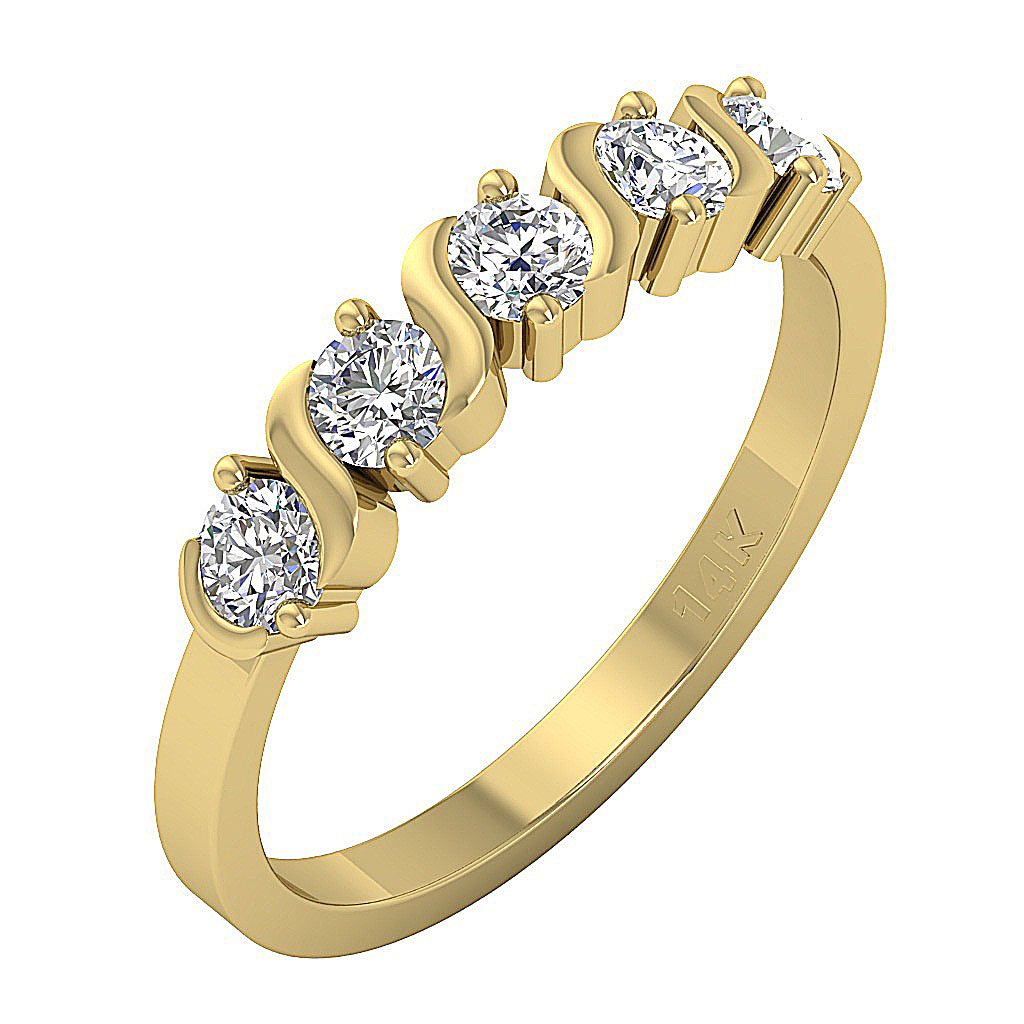
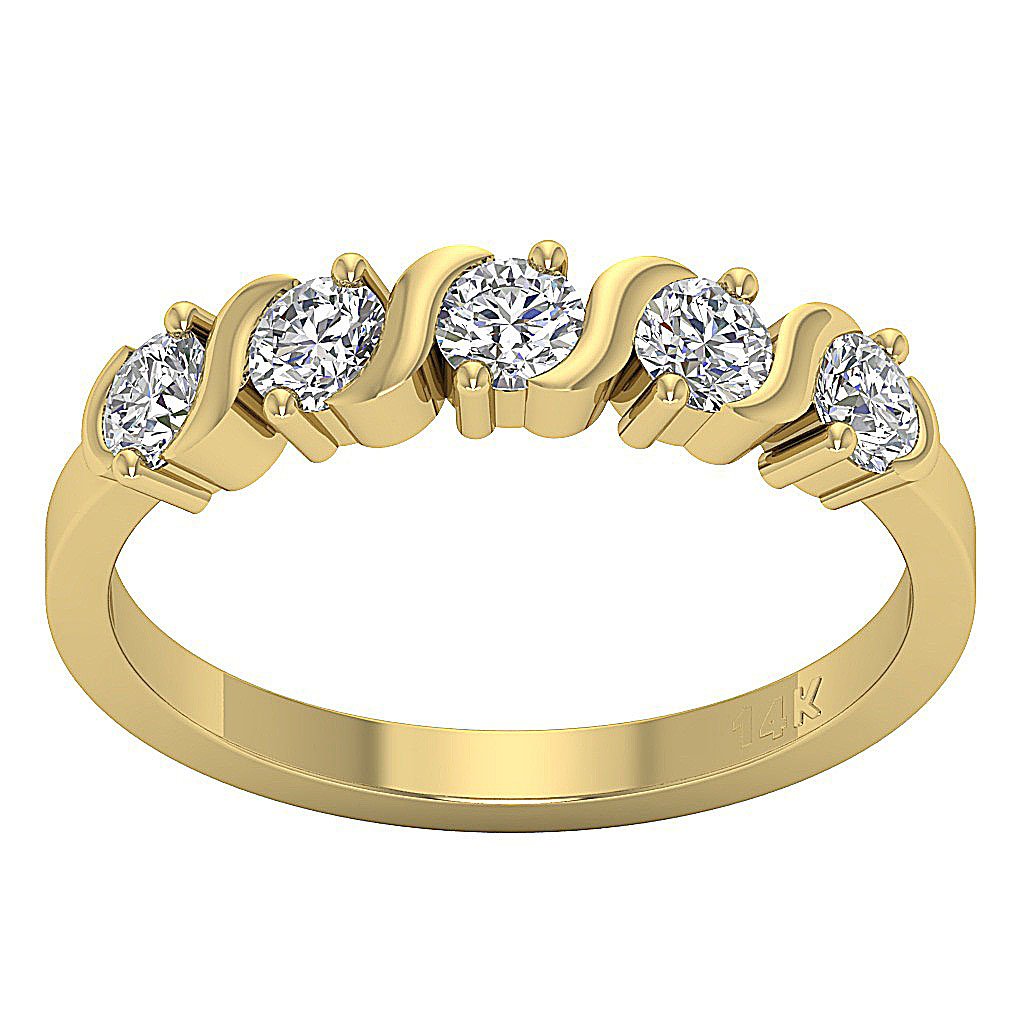
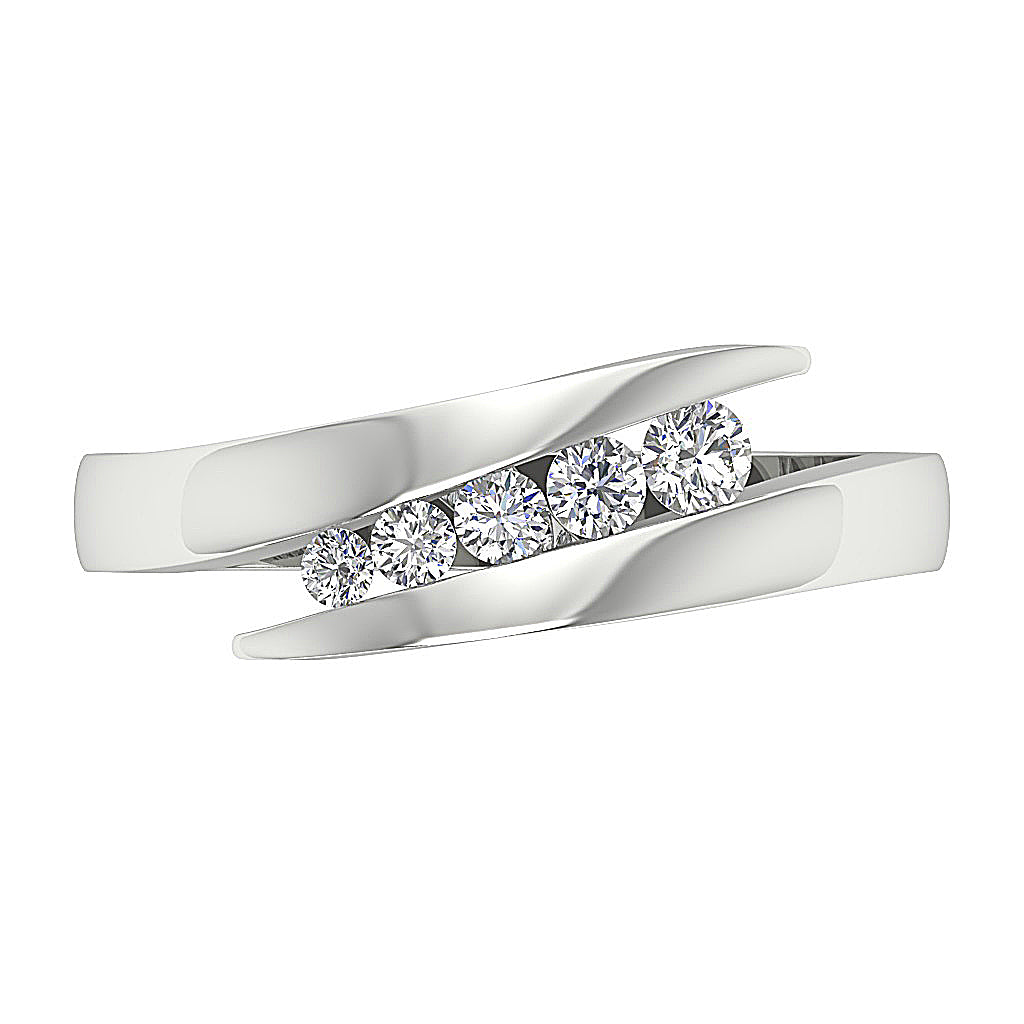
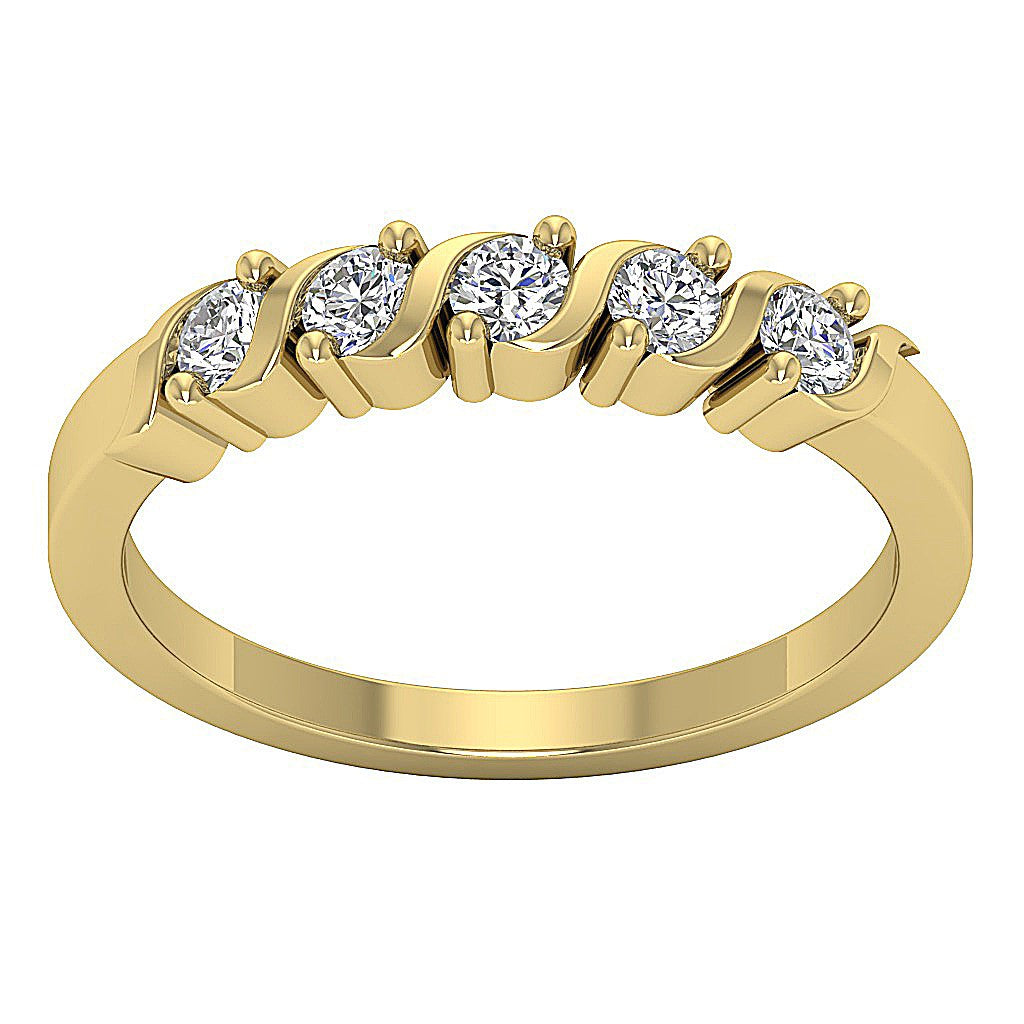
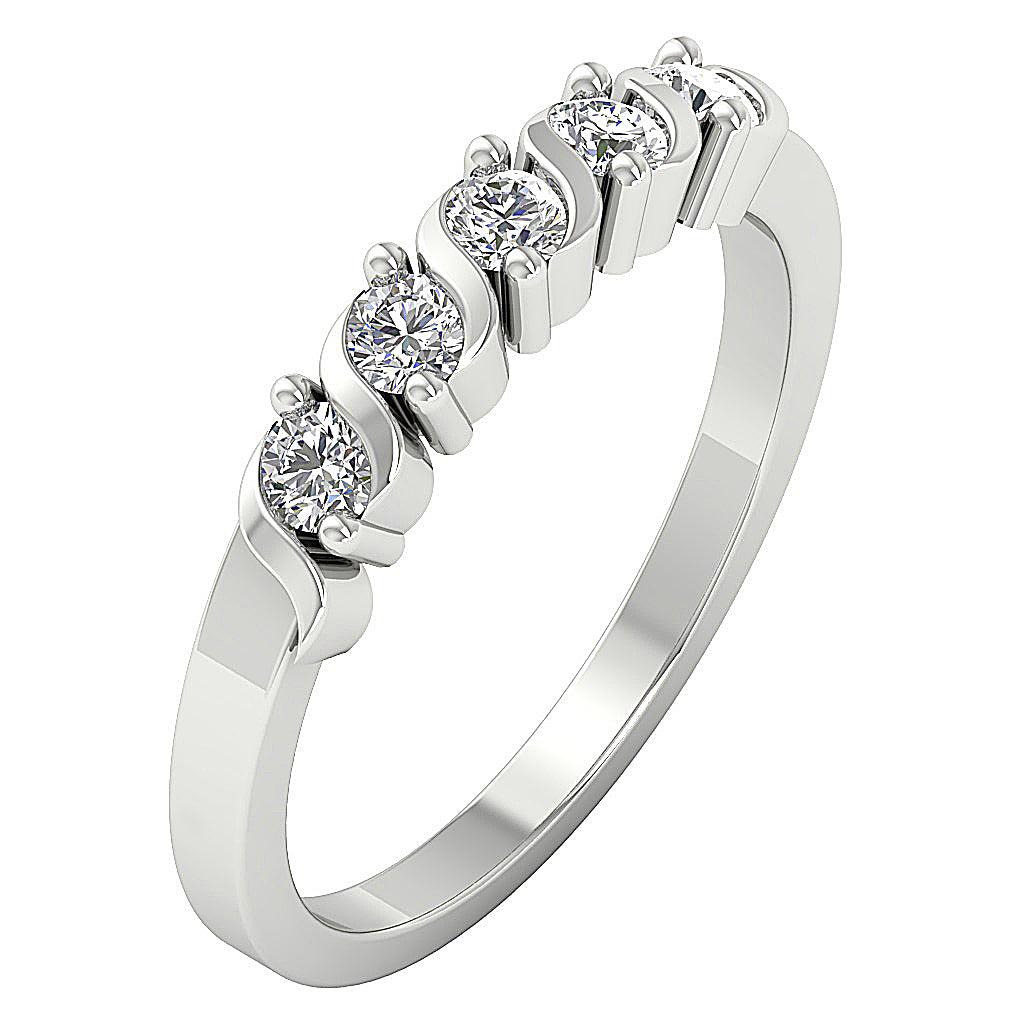
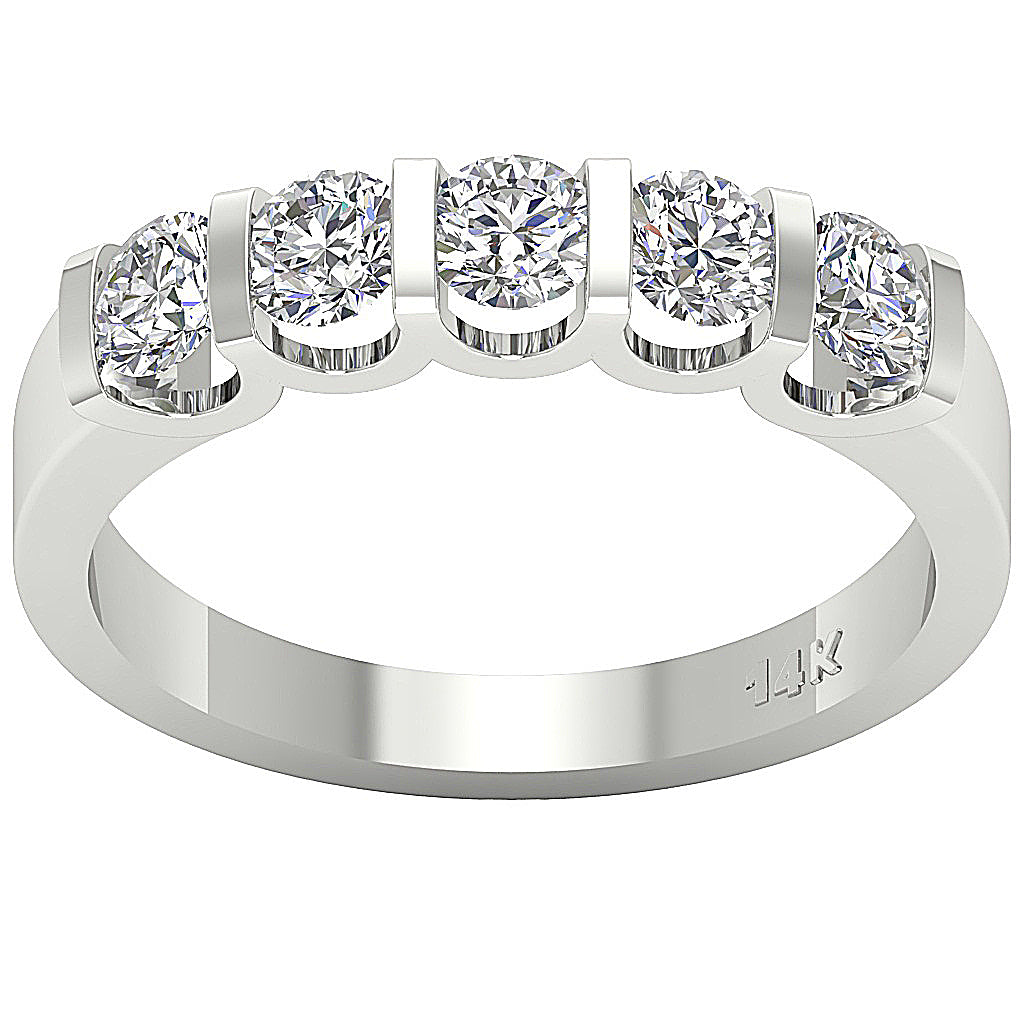
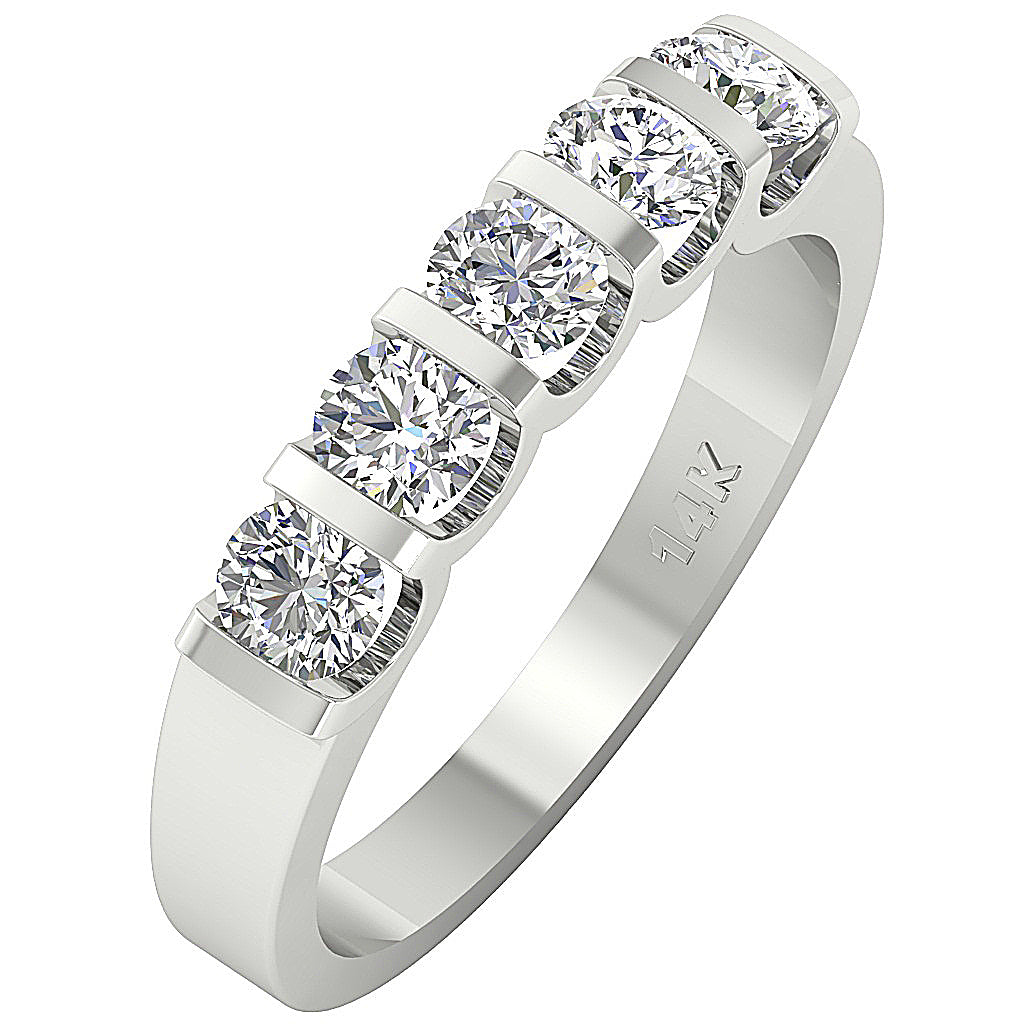
Channel settings place the five diamonds between two continuous metal walls, producing a clean, uninterrupted line. Bar settings offer a slightly more open appearance, with narrow metal bars separating the individual stones. This allows more light to enter between the diamonds while providing greater support than a fully exposed prong arrangement.
Wearing It Well: How to Style Five-Stone Rings
A five-stone ring is versatile enough to occupy different places in a jewellery collection. It can mark an anniversary and sit alongside an engagement and wedding set, or serve as an engagement ring in its own right. Designs with a slightly larger centre diamond are particularly suited to the latter, giving the eye a natural focal point while retaining the brilliance of the surrounding stones.
When stacking a five-stone ring, consider what sits beside it. The continuous row of diamonds already provides considerable visual interest, so a simpler band underneath can create a more balanced combination. A plain or lightly detailed wedding band allows the five-stone ring to remain the defining piece.
Choosing Between Natural and Lab-Grown Diamonds for Five-Stone Rings
Both natural and lab-grown diamonds are available across the collection, allowing the choice to be guided by budget, preference, and the overall look desired. With five diamonds contributing to the ring's total carat weight, the difference can become particularly noticeable when comparing stones of similar quality.
Lab-grown diamonds can make it possible to choose greater total carat weight or higher clarity within a particular budget. Natural diamonds, meanwhile, offer the geological origin and rarity that some buyers specifically value. Both options provide the hardness and optical properties expected of a diamond.
Choosing Diamond Proportions for Five-Stone Rings
The relationship between the five stones can significantly change the character of the ring. Matching diamonds create a precise, symmetrical appearance, while a graduated arrangement draws greater attention toward the centre and creates a softer transition toward the edges.
For buyers choosing a five-stone engagement or anniversary ring, proportion should be considered alongside total carat weight. Five smaller diamonds can create a wider visual spread across the finger than a single centre stone of comparable total weight, while a larger central diamond gives the ring a more traditional focal point.
Living With It: How to Care for a Five-Stone Ring
Five diamonds mean five individual settings, giving a jeweller more points to inspect during routine maintenance than a solitaire requires. Have each stone checked individually at least once a year, paying particular attention to the outer diamonds, where a loosened setting can be harder to notice.
Clean the ring weekly with warm water, mild soap, and a soft-bristled brush, working carefully between each diamond and along the metal separating the stones. Channel and bar settings deserve particular attention in these narrow spaces, where lotion and everyday residue can accumulate.
Five stones, one continuous row, and a meaning that belongs entirely to the wearer.