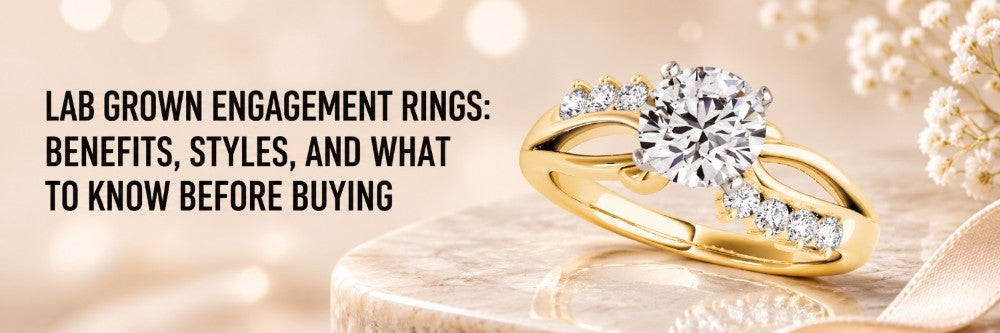
An engagement ring is worn in ordinary moments as much as in photographs, on a crowded train, while making dinner, during a difficult conversation or in the quiet of a morning that belongs to two people. Its meaning comes from the relationship, but its design reflects the moment in which that relationship is taking shape.
Lab grown engagement rings have become part of this contemporary landscape. They offer another way to choose a diamond, one that begins in a controlled technological environment rather than a geological deposit. The resulting stones share the same essential chemical composition and crystal structure as mined diamonds.
For some couples, the appeal is the opportunity to consider a larger or different design within a chosen budget. Others are drawn to the science, or simply prefer a lab-created stone.
How a Lab Grown Diamond Comes into Being
Lab grown diamonds are produced using technological processes that recreate conditions in which diamond crystal can form. Two principal methods are high-pressure high-temperature, commonly known as HPHT, and chemical vapor deposition, or CVD.
HPHT uses high pressure and high temperature to encourage carbon to crystallize into diamond. CVD grows diamond within a chamber from a carbon-containing gas, with energy used to separate carbon atoms and allow them to build onto a diamond seed. Both methods can produce gem-quality crystals, although the growth conditions and resulting characteristics differ.
Once grown, a lab diamond is cut and polished using the same broad principles applied to mined diamonds. It can be fashioned into a round brilliant, oval, pear, emerald or other shape. Its optical and physical properties are those of diamond, which is why specialized gemological equipment is used to distinguish laboratory-grown stones from natural ones.
A lab grown diamond is not a simulant such as cubic zirconia or moissanite. It is a diamond with a laboratory origin.
What Are the Benefits, and What Should Not Be Assumed?
The most widely discussed benefit is price. Lab grown diamonds generally cost less than comparable natural diamonds of similar carat weight and stated quality, although exact differences vary with market conditions, supply, specifications and retailer. This can create more flexibility: a buyer may choose a larger center stone, a more intricate setting or a different allocation of the overall budget.
Lab grown stones are available in a range of sizes, shapes and grades, giving couples room to explore designs that fit their aesthetic. Their physical properties also make them suitable for jewelry intended for regular wear, provided the setting is well made and the ring is cared for appropriately.
However, it is important not to turn a different origin into an automatic claim of environmental or social superiority. Laboratory production requires energy and materials, and its footprint depends on factors such as energy sources, manufacturing efficiency and supply-chain transparency. A lab grown diamond is not inherently impact-free. Equally, a natural diamond's responsible credentials should not be assumed from its category alone.
Ask for specific, verifiable information. What production or sourcing details are available? Are environmental claims supported by evidence? What does a certificate cover? Responsible language is precise; it does not rely on a single broad adjective to answer complicated questions.
What Are the Styles Available for Lab Grown Diamond Engagement Rings
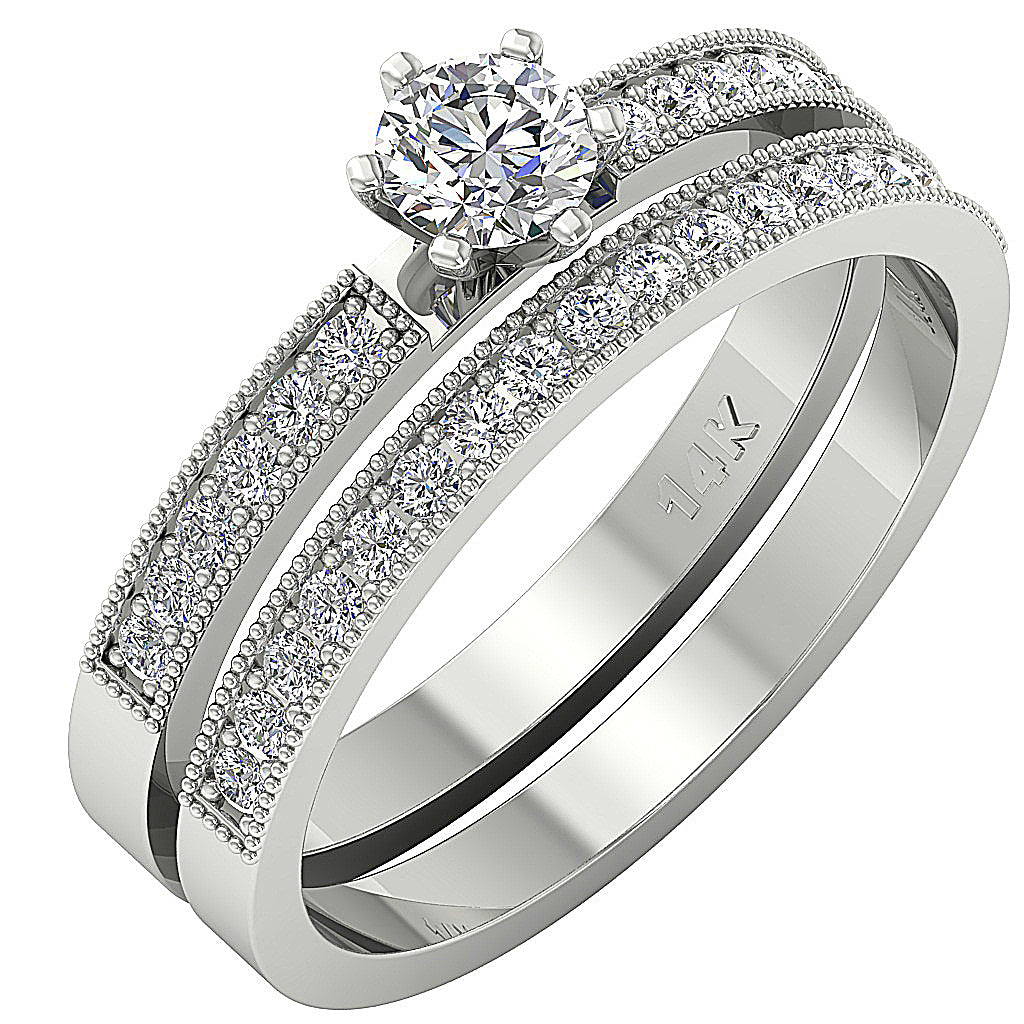
The solitaire remains the most compelling style because it gives the center diamond room to speak. A four-prong setting creates an open, balanced frame; six prongs can produce a more traditional crown-like outline. A cathedral setting raises the center stone through sweeping shoulders, while a bezel surrounds its edge with metal for a smoother, more contemporary silhouette.
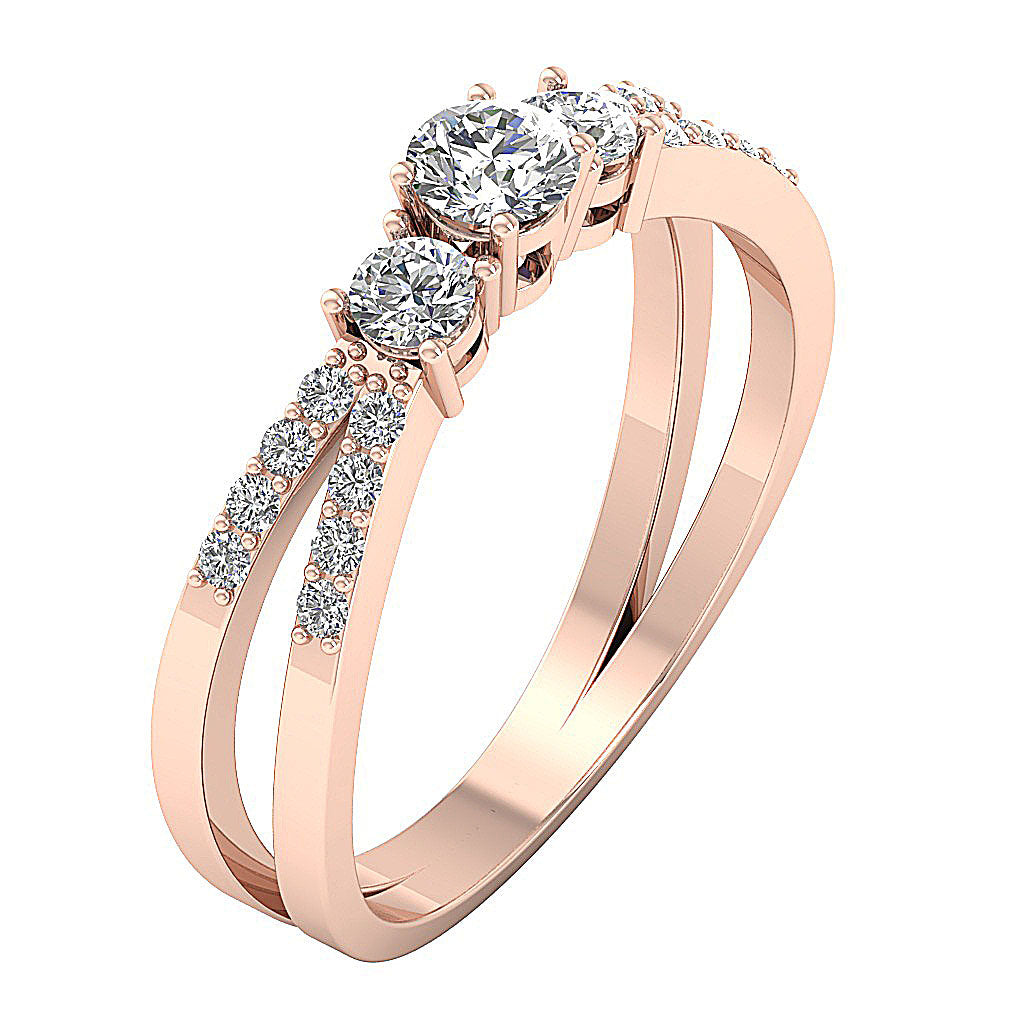
Halo rings create a circle of smaller diamonds around the center stone. The effect can add intricacy and visual scale, while pavé-set shoulders introduce a continuous line of light along the band. Three-stone designs offer a different symbolism, with side stones framing the center. Twisted bands, split shanks and bypass designs bring movement to the ring itself, turning the metal into part of the composition.
Round brilliant diamonds have a familiar symmetry and lively pattern of light. Oval stones create an elongated line across the finger; emerald cuts favor broad, mirror-like flashes; pear shapes introduce asymmetry. Marquise diamonds can create a striking length, while cushion cuts soften the outline with rounded corners.
A ring should be considered from every angle. Look at the profile as well as the top view. A high setting may allow more light beneath the diamond but can catch on clothing. A low setting may feel practical and understated. The right design balances visual character with the realities of the wearer's hands and routines.
The Four Cs and the Details That Matter
Carat measures weight, not visible size. A deeper cut may carry more weight below the girdle and appear smaller face-up than a shallower stone of equal carat weight. Compare measurements as well as carat numbers, particularly when deciding between shapes.
Cut influences the brilliance. For round diamonds, cut grading can provide a useful assessment of proportions and light performance. Fancy shapes are not always graded on the same scale, so examine their symmetry, polish and visual appearance.
Color describes how close a diamond is to being colorless on the relevant grading scale. Clarity assesses internal and external characteristics, usually under magnification.
No single grade guarantees that a diamond will look beautiful to every viewer. A stone's proportions, setting and the conditions in which it is seen all affect its appearance. Ask to view the diamond in natural and indoor lighting, and understand whether the grading report is from a recognized independent gemological laboratory.
For lab created diamond rings, ensure the report identifies the stone as laboratory-grown and that the product listing, invoice and certificate describe the same diamond. Check the report number where applicable. Also clarify whether the ring's stated carat weight refers to the center stone or total diamond weight across the piece.
The Setting, the Metal and the Life of the Ring
Gold is common choices for engagement rings, each color with a distinct appearance and care profile. White gold offers a cool tone, yellow gold a warmer one and rose gold a soft pink cast. Gold karat indicates the proportion of pure gold in the alloy; it does not indicate diamond quality.
The band should feel balanced against the center stone. A very fine shank can make a diamond appear more prominent, but structural strength matters, particularly for a ring worn every day. Ask about the width and thickness of the band, the security of the prongs and the service schedule recommended by the jeweler.
An engagement ring is exposed to repeated contact. Remove it for activities where it may be struck, caught or exposed to harsh chemicals. Have the setting checked periodically, and clean it using methods suitable for the metal and stone. These habits are not unique to lab grown diamonds; they are part of caring for fine jewelry.
Before purchasing, clarify resizing options, repair policies, warranties and what happens if a stone becomes loose. A beautiful design should be supported by clear aftercare.
How to Choose a Ring That Reflects Your Values
The conversation around engagement jewelry is no longer limited to tradition. Couples may consider environmental questions, labor standards, affordability, design longevity and the meaning of ownership. These factors do not need to compete. They can be part of one thoughtful decision.
A lab grown diamond may align with a preference for a laboratory origin or offer greater flexibility in design and budget. A natural diamond may appeal because of its geological history or personal symbolism. Neither choice tells the whole story about a person's ethics. What matters is the quality of information behind the purchase and whether the buyer feels comfortable with the trade-offs.
Ask how the stone was produced, what evidence supports environmental statements and whether the retailer communicates clearly about its suppliers. Consider whether the design will remain meaningful beyond the current moment. A ring with a strong silhouette, comfortable proportions and sound construction can feel contemporary without being disposable.
Wrapping Up
The best lab grown diamond engagement ring is not the one with the largest number on its specification sheet. It is the one chosen with open eyes: a diamond whose origin is understood, a design that feels personal and a promise that belongs to the people making it.
Explore Diamond for Good’s collection of elegant engagement rings that feature lab-grown diamonds and find one that fits your story perfectly.
Frequently Asked Questions
1. Are lab grown diamonds real diamonds?
Yes. Lab grown diamonds have the same essential chemical composition and crystal structure as natural diamonds. Their defining distinction is origin: they are created through controlled laboratory processes.
2. Do lab grown diamonds look different from natural diamonds?
To the unaided eye, comparable lab grown and natural diamonds can look alike. Specialist gemological testing can distinguish their growth characteristics and identify their laboratory or geological origin.
3. Are lab grown diamonds more sustainable?
Not automatically. Their environmental impact depends on energy sources, production methods and supply chains. Request specific, verifiable information rather than relying on broad sustainability claims alone.
4. What should a lab grown engagement ring certificate show?
The grading report should clearly identify the diamond as laboratory-grown and document its characteristics. Match report details with the stone, product description and purchase documentation.

Leave a comment
This site is protected by hCaptcha and the hCaptcha Privacy Policy and Terms of Service apply.