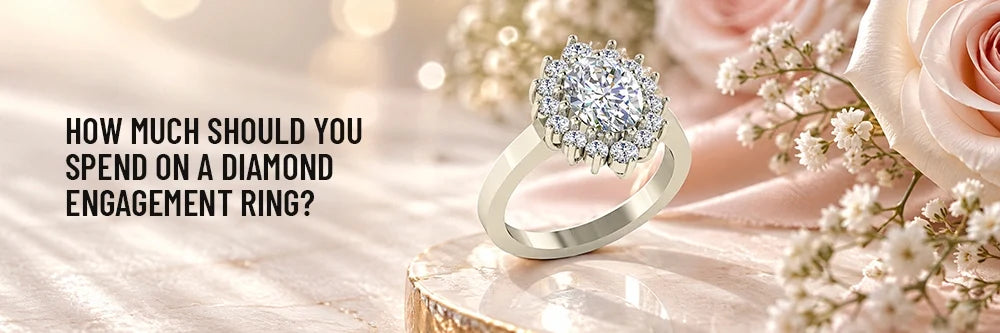
With the rising price of both precious stones and precious metals, many fall in love with a particular ring only to find out that it’s a little out of their budget. Many say that if you truly love your partner, you’ll spend at least two months’ salary on the engagement ring.
This “two months’ salary” rule has haunted engagement ring shopping for decades, and it deserves to be retired. It came from a 1930s De Beers advertising campaign, not from any financial logic, and it has aged about as well as most advertising slogans from that era.
A diamond engagement ring budget should be built from an actual conversation about finances and priorities, not a marketing line invented to sell more diamonds.
Where the Two Months’ Salary Rule Came From
De Beers introduced the idea in a 1938 ad campaign designed to standardize diamond spending at a time when engagement rings were far less universal than they are today. The campaign worked so well enough that the guidelines outlived the company’s original intent.
Eventually, it stretched to “three months’ salary” in later versions of the same ads, and saying that people use it without learning about its origins. There’s no financial reasoning behind either number. A ring budget based on someone else’s income, rather than the actual couple’s savings, debt, and shared goals, is solving for the wrong variable.
Two people with identical salaries can have completely different amounts of disposable income depending on student loans, rent, dependents, or how much they’re already saving elsewhere. They are also going to have different interests and tastes, and this is what the engagement ring should maintain.
What People Actually Spend on Their Engagement Rings
Recent industry data puts the average U.S. engagement ring spend somewhere between $5,000 and $6,000. However, the number varies significantly by region and shifts each year with diamond prices and metal costs.
Averages, though, hide a wide range. A meaningful share of rings sells for under $3,000, and a meaningful share sells for well over $10,000. The average is a data point, not a target.
What’s more useful than a national average is looking at spend as a percentage of the couple’s combined discretionary savings, excluding emergency funds and any money already earmarked for a house down payment or a wedding itself.
A ring is one purchase among several major ones that tend to cluster around engagement and marriage, and treating it in isolation from the wedding budget and any near-term savings goals is how people end up house-poor before the marriage even starts.
How to Build Your Engagement Ring Budget from the Ground Up
A more grounded approach starts with total available funds, not a formula. List what’s actually saved and available without touching an emergency fund or going into high-interest debt. From there, decide how much of that amount makes sense to put toward a ring, factoring in whether a wedding is being planned soon after and whether other big expenses, like a move or a car, are on the horizon.
For couples planning to propose without a joint conversation about money beforehand, a rough guide is to stay within what could be paid off in full within three to six months if financed, rather than carrying ring debt for years. Financing a ring isn’t inherently a bad decision, but financing one at an interest rate that erodes the sentimental value of the purchase usually isn’t worth it.
Where the Money Goes When Buying Your Engagement Ring
Roughly speaking, the diamond itself typically accounts for 60 to 75 percent of a ring’s total cost, the rest going towards the setting, metal, and labor. This ratio shifts depending on choices made within the ring itself.
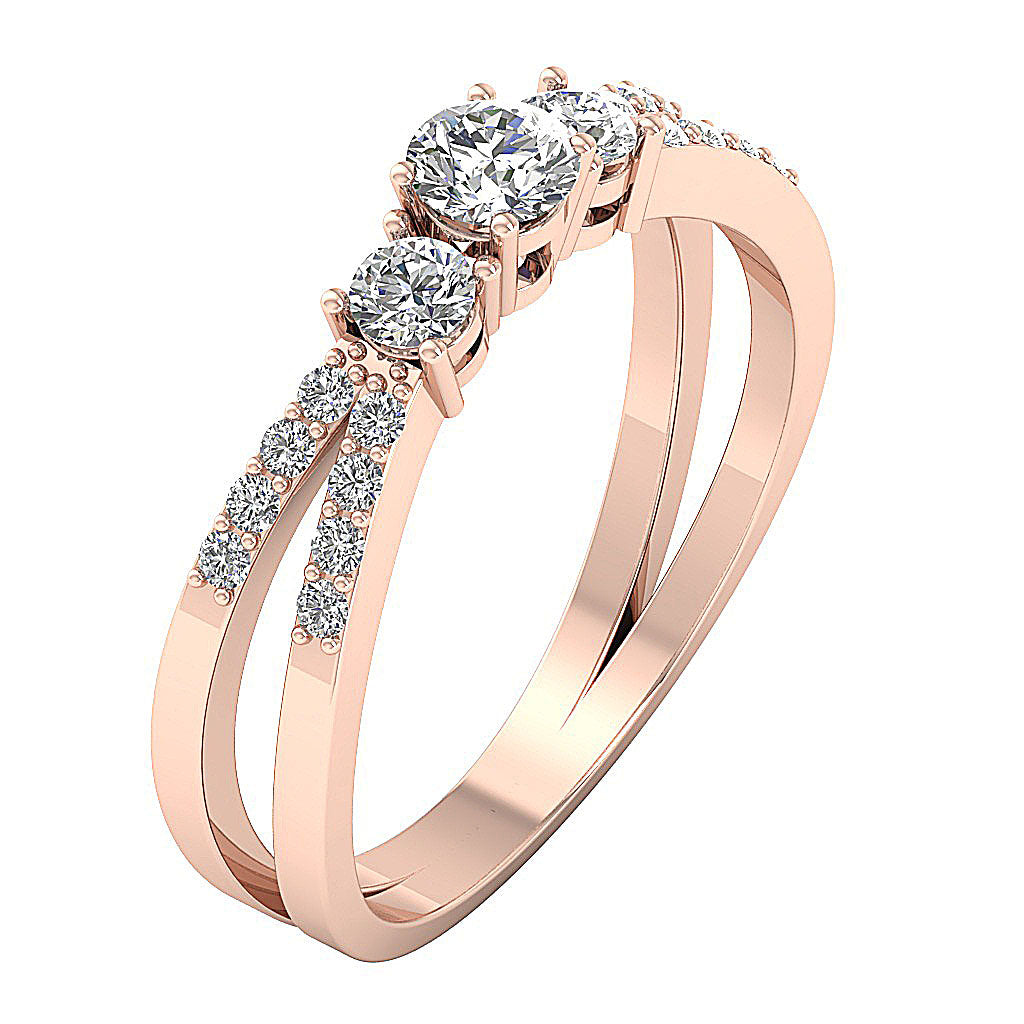
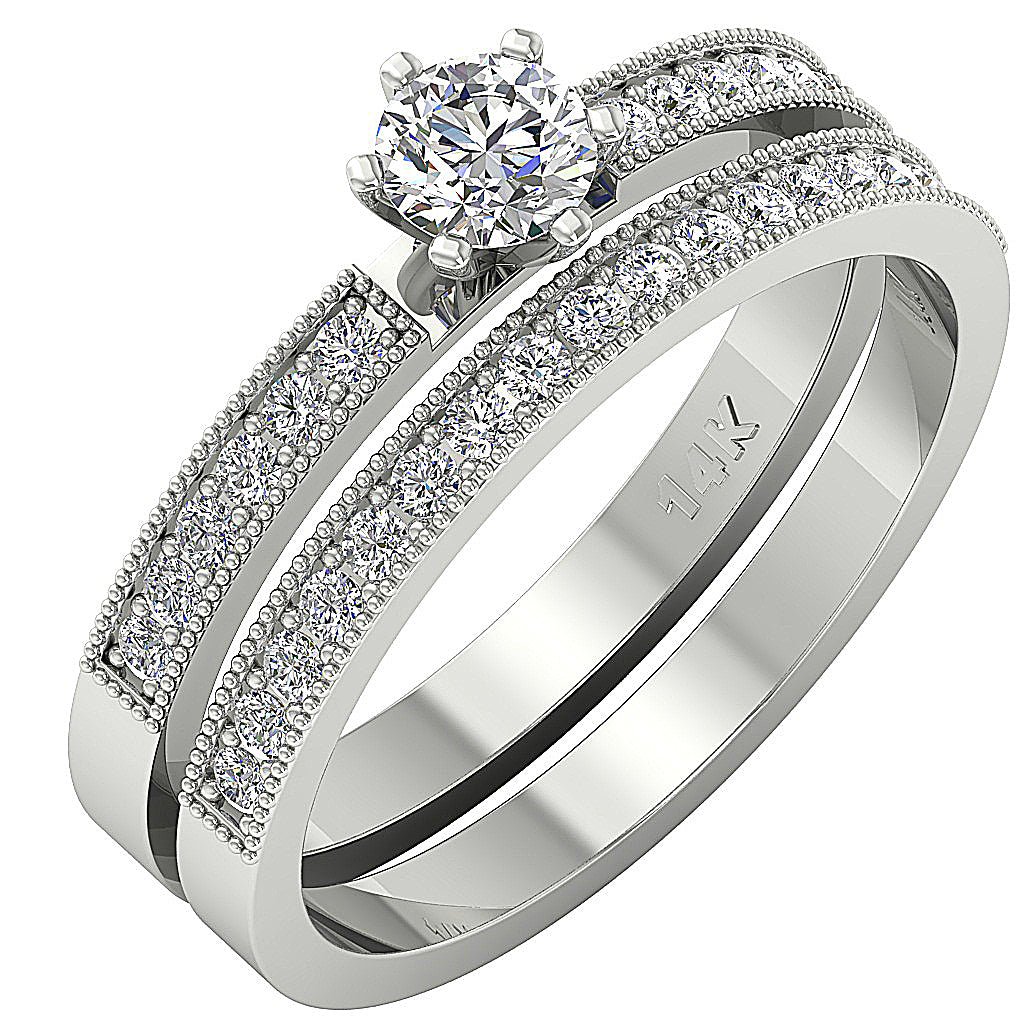
A simple solitaire setting spends almost the entire budget on the stone. A setting with a halo, pavé band, or intricate metalwork redirects some of that budget toward craftsmanship and design rather than raw carat weight.
How rings are priced based on their components helps with setting the budget. Someone who wants a larger center stone on a limited budget can choose a simpler setting and put more of the budget toward the diamond. Someone more drawn to an elaborate design can choose a smaller center stone and let the setting carry more of the visual weight.
How Regional and Personal Factors Shift the Budget
Cost of living plays a bigger role in ring budgets than most people account for. A couple in a major coastal city, already stretching to cover rent, is working with a different financial reality than a couple in a lower cost-of-living region with more disposable income relative to salary.
National averages tend to flatten these differences into a single number that doesn’t map cleanly onto anyone’s actual situation.
Family and cultural expectations add another layer. In some families, an heirloom stone gets reset into a new ring. This removes the diamond cost from the budget entirely, and the budget goes towards the metal, setting, and labor. In others, there’s an expectation around ring size or style that factors into the conversation whether or not it’s stated directly.
None of these factors has a right answer, but naming them out loud, rather than budgeting in a vacuum, tends to produce a number both partners feel good about.
The Four Cs and Where to Spend Strategically
Not all four Cs, cut, color, clarity, and carat, affect price and appearance equally.
Cut quality has the single biggest effect on how a diamond looks and is worth prioritizing over the others, since a poorly cut diamond looks dull regardless of its other grades. Clarity and color, on the other hand, can often be stepped down a grade or two from “perfect” without any visible difference to the naked eye.
A diamond graded VS2 clarity and G color, for instance, looks essentially identical to a flawless, D color diamond once mounted, at a meaningfully lower price. This is where an informed buyer can spend less than someone chasing top grades across the board, while ending up with a ring that looks just as impressive in person.
How Lab-Grown Diamonds Impact Budget Flexibility
Lab-grown diamonds are chemically and optically identical to mined diamonds but typically cost 60 to 85 percent less at the same carat, color, and clarity. They have opened up a path to a larger, higher-grade stone within a budget that would have only covered a modest mined diamond a decade ago.
For couples prioritizing size and clarity over the rarity of a mined stone, a lab-grown diamond can stretch a $5,000 budget into a ring that would cost $15,000 or more with a mined center stone of comparable size and grade.
This isn’t a compromise for everyone, since some buyers place real value on a diamond’s natural origin. However, it’s a meaningful option that buyers can explore before setting a final number.
Creating a Budget Framework That Works for You
Rather than a fixed dollar figure or a multiple of income, a more useful framework asks three questions in order.
First, what amount can be spent without touching savings earmarked for anything else.
Second, how does that amount need to be split between the wedding, the ring, and any near-term plans that you have?
Third, within the ring portion specifically, what combination of cut, carat, and setting delivers the most visual impact for that number?
Answering those three questions honestly produces a number that’s actually tied to a couple’s real finances, rather than a slogan from an eighty-year-old ad campaign. That number will look different for every couple, which is what makes it important to explore and evaluate.
Wrapping Up
There’s no universal right answer to how much to spend, only a number that fits a couple’s actual finances and priorities. Diamond for Good’s collection spans a wide range of budgets, which makes it easier to see what different price points actually look like before committing to one.
Frequently Asked Questions
Should the ring be a joint purchase or a surprise?
Both approaches work, and the right choice depends on the couple. Many couples now shop together or discuss a budget range in advance, which reduces the risk of a mismatched style or size while still leaving room for a surprise proposal moment.
Is it worth buying ring insurance separately from a homeowner’s policy?
Often, yes. Standard homeowner’s or renter’s policies frequently cap jewellery claims well below a ring’s replacement value. A standalone jewellery insurance policy or rider typically costs a small percentage of the ring’s value annually and covers loss, theft, and damage more comprehensively.
How long should someone save before buying a ring?
There’s no fixed timeline, but saving with a specific target date in mind, rather than an open-ended goal, tends to keep spending disciplined. Three to twelve months of focused saving is common, depending on the target budget and existing savings.
Do ring prices fluctuate seasonally?
Somewhat. Prices on natural diamonds can shift with global supply, and retailer promotions cluster around the fourth quarter and Valentine’s Day. Shopping outside of peak proposal season sometimes means more attention from jewelers and occasionally better available inventory.

Leave a comment
This site is protected by hCaptcha and the hCaptcha Privacy Policy and Terms of Service apply.