
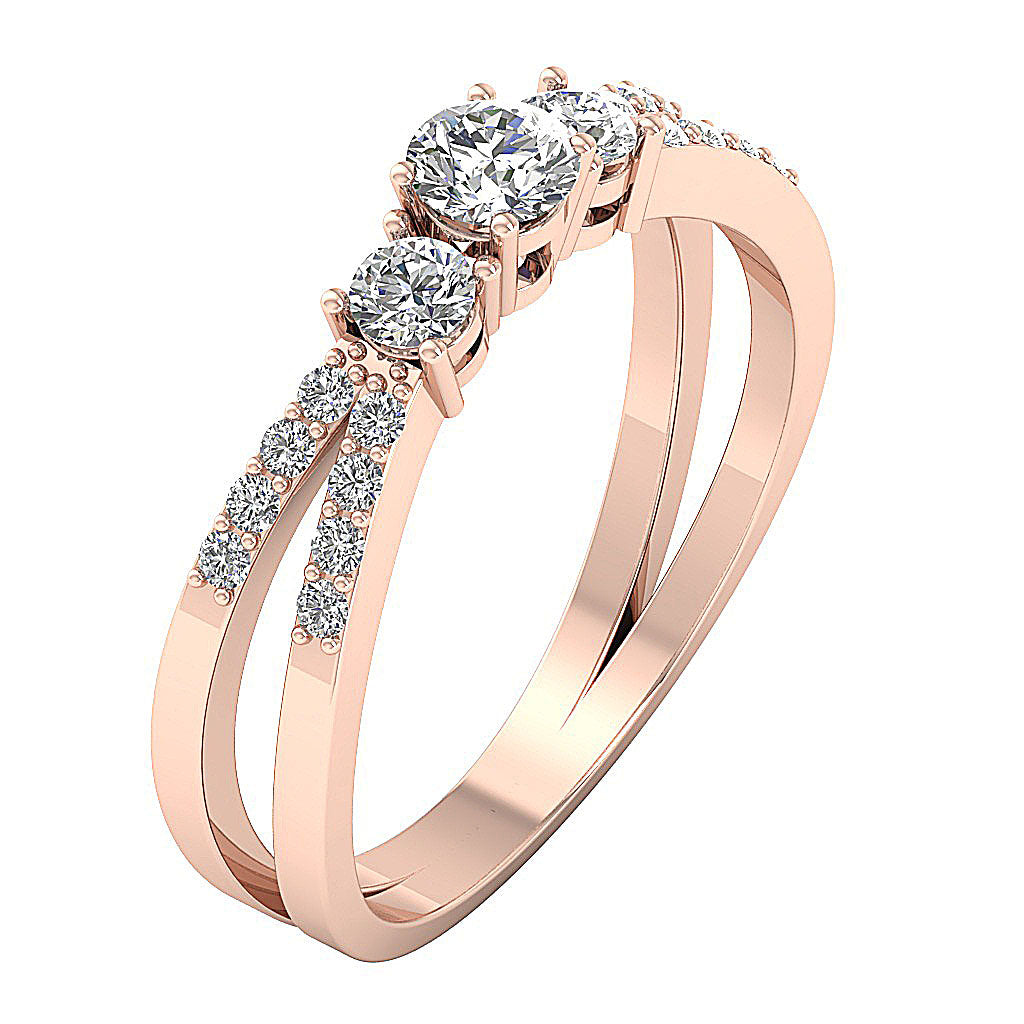
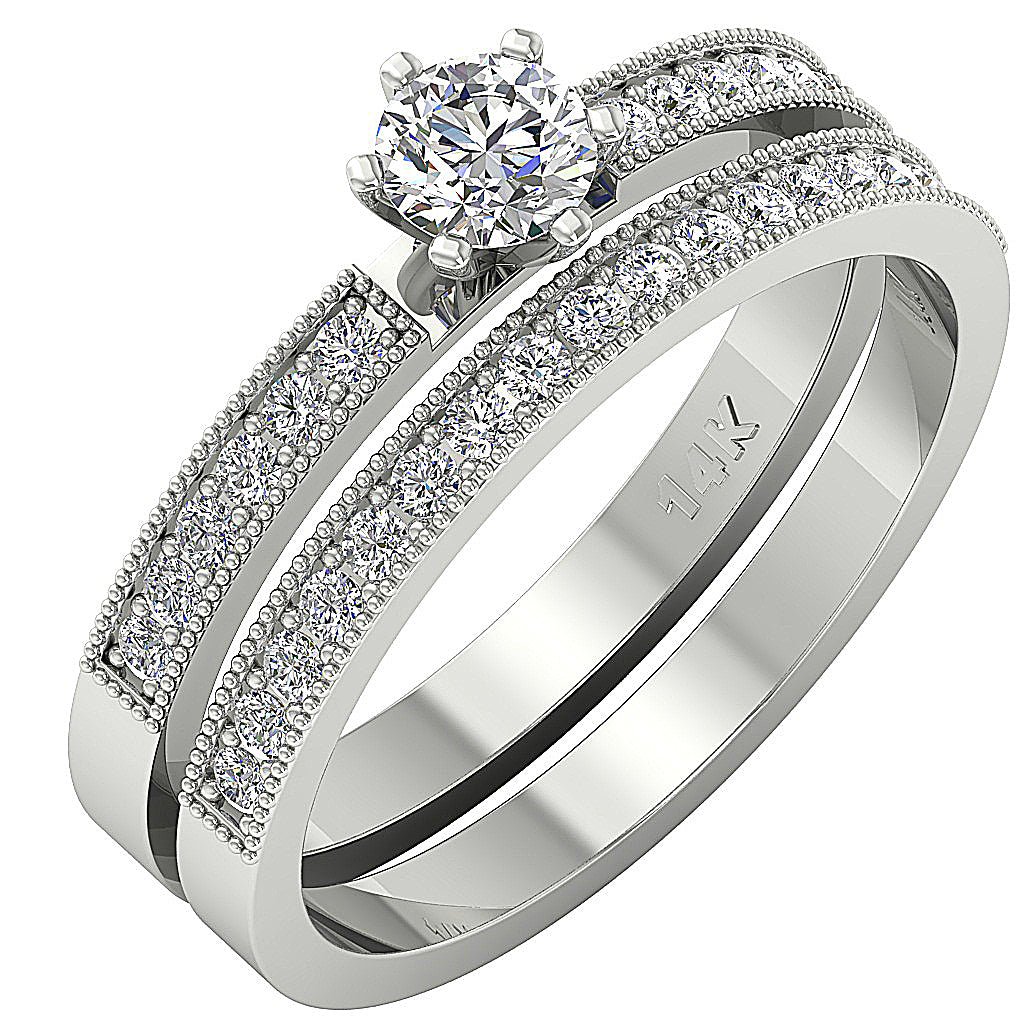
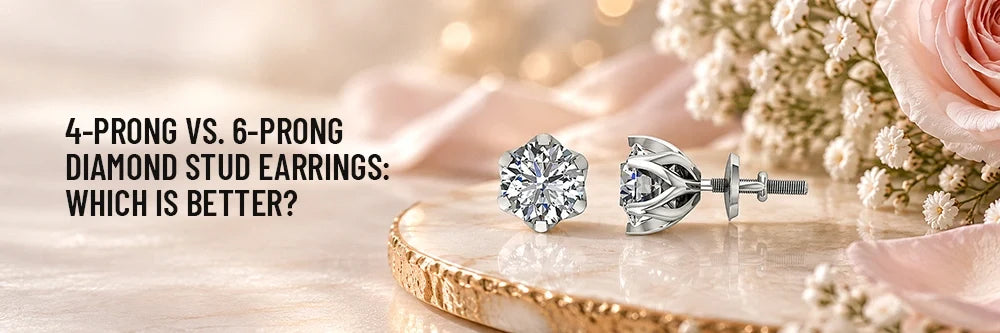
Prong-set diamond stud earrings are usually more brilliant than any other setting. With the slight spacing under the stone, these studs allow the light to pass through, offering a prismatic beauty for an otherwise simple design.
Prong count sounds like a minor technical detail until you’re actually comparing two nearly identical listings and one has four metal claws holding the diamond while the other has six. The difference affects how much light reaches the stone, how secure it feels day to day, and even how the diamond appears in profile.
Neither option is objectively better. They’re built for slightly different priorities, and knowing what those priorities are makes the choice much easier when you’re ready to buy diamond studs.
What the Prongs Do for a Diamond Earring
A prong is a small metal claw bent over the edge of a diamond to hold it in the setting. Every prong that touches the stone also covers a small sliver of its surface, which means every prong is a trade-off between security and light exposure.
Having fewer prongs exposes more of the diamond to light. Having more prongs distributes the pressure across more contact points, which ensures the stone is better secured. This is an important factor for people who are going to be wearing the same piece every day and rarely taking it off.
Stud earrings almost always use either four or six prongs. Occasionally, the design uses three prongs for smaller stones, though three-prong settings are less common for anything above a quarter carat. The four- and six-prong debate is really about how much metal you’re willing to trade for the extra security.
What do Four-Prong Settings Offer
Four prongs are the more common choice for round and princess-cut diamond studs, and for good reason. With less metal covering the stone, more light enters and exits through the sides and pavilion. This tends to make the diamond look brighter and slightly larger than the same stone in a heavier setting.
The classic “martini” style four-prong setting, where the prongs taper into a cone shape below the diamond, is popular specifically because it maximizes this open, airy look. Four prongs also tend to sit lower and closer to the ear, which some people prefer for a cleaner silhouette.
The drawback is that with only four points of contact, each prong is doing more work. If one prong is bent or worn down, the stone has less backup support than it would in a six-prong setting.
What Makes Six-Prong Settings a Solid Choice
Six-prong settings distribute the same task of holding the diamond in place across two more contact points. This reduces the strain on any single prong, offering a more secure setting as the carat weight increases.
A 2 carat diamond stud carries more relative risk in a four-prong setting than a 0.5 carat stud does, simply because there’s more weight and surface area for gravity and daily bumps to work against. Many jewelers recommend six prongs once a stone crosses roughly the 1.5 to 2 carat mark, specifically for this reason.
Six prongs also come across slightly differently from an aesthetic standpoint. The additional metal creates a bit more visual structure around the diamond, which some people like for a more classic, “your grandmother’s diamonds” aesthetic, while others find this slightly busier than the minimal four-prong look.
How Does Light Performance Come Into Play
In controlled comparisons, a well-cut diamond in a four-prong setting does show marginally more brilliance than the identical stone moved into a six-prong setting, because two additional prongs mean two additional small areas where light is blocked rather than reflected.
In practice, under normal lighting and normal viewing distance, most people cannot reliably tell the difference between the two in a side-by-side comparison. Because the prongs themselves are delicate and precise, the addition of two more has very little effect on brilliance.
However, the difference becomes noticeable with smaller diamonds, generally half a carat and under. In smaller stones, every fraction of surface coverage represents a larger percentage of the total stone. On a 2 carat diamond, six thin prongs look very similar to four. On a 0.25 carat diamond, six prongs can visibly reduce how much sparkle escapes.
How Does Prong Count and Secure Setting Affect Daily Wear
This is where six prongs earn their keep. Stud earrings get caught on scarves, hair, pillows, and car headrests more than almost any other jewelry category, purely because they’re worn constantly and sit close to fabric and hair. A prong that’s been quietly bending for months without anyone noticing is one of the most common reasons a diamond falls out of a setting.
If a pair of earrings are going to be worn daily and rarely taken off, six prongs offer a genuine security advantage. This is particularly true for anyone who works with their hands, exercises in their earrings, or tends to sleep in jewelry.
If the earrings are reserved for evenings out, worn for a few hours and then stored, the added security matters less. In this case, the four prongs become a reasonable choice purely on appearance.
Does Prong Count Change the Price?
Generally, no, at least not significantly. The cost difference between a four-prong and six-prong setting in the same metal comes down to a small amount of additional material and labor. This is usually a modest percentage of the total setting cost. The diamond itself, not the prong count, accounts for the overwhelming majority of the price in almost every case.
Where prong count can affect cost indirectly is through insurance and long-term ownership. A setting that holds its stone more securely is less likely to need a repair claim or, worse, a replacement stone after a loss. Over a decade of daily wear, six prongs on a larger diamond can end up being the more economical choice once the odds of a lost stone are factored in, even if the upfront difference in price is negligible.
Matching the Setting to How Much You Are Planning to Wear the Earring and Where
Picture two people who are buying the same pair of studs. One works in a hospital, washes her hands dozens of times a day, and wears her earrings from the moment she gets dressed until she showers at night. The other wears studs mainly for dinners and weekend plans, taking them off the rest of the time and storing them in a jewelry box.
The first person is a strong candidate for six prongs, almost regardless of carat weight, because the earrings are never given a rest. The second person can lean toward four prongs without much added risk, since the stones spend most of their life protected rather than exposed to daily wear and tear.
Carat weight and lifestyle together, more than either factor alone, should drive the decision. A small diamond worn occasionally is low risk in either setting. A large diamond worn constantly benefits the most from the extra security six prongs provide.
If the priority is maximum sparkle and a clean, minimal look, and the earrings won’t be worn during workouts or manual work, four prongs are usually the better fit. They also work best for stones under a carat and a half. If the priority is peace of mind for daily, near-constant wear, or the carat weight is on the larger side, six prongs are the better choice.
A Quick Way to Check Your Own Prongs
Getting your diamond jewelry professionally inspected is important; however, most people usually do this once or twice a year, or even less. Anyone can do a basic prong check at home between professional inspections.
Hold the earring up to a bright light and look at the diamond from the side rather than straight on. Each prong should sit flush against the stone with no visible gap or wobble when the setting is gently pressed. A prong that looks flattened, thin, or slightly lifted away from the diamond’s surface is a sign it’s time for a jeweler to take a look, ideally before the earring is worn again, rather than after.
Run a fingernail lightly around the edge of the setting. This will reveal a loose prong that isn’t obvious just from looking. The method is effective since a compromised prong sometimes catches or snags slightly where a secure one wouldn’t.
This takes about ten seconds and is worth doing every few months for earrings worn daily, particularly at the six-month and one-year marks after purchase, when initial wear patterns tend to show up first.
Wrapping Up
Prong count is a small detail with a real effect on how a pair of studs looks and holds up over years of wear. When you’re ready to buy diamond studs, Diamond for Good offers both four- and six-prong settings, which makes it easier to compare the two directly before deciding.
Frequently Asked Questions
Do more prongs make a diamond look smaller?
Slightly. Extra prongs cover a bit more of the stone’s surface, which can marginally reduce visible size and sparkle. The effect is minor on larger diamonds and more noticeable on stones under half a carat, where surface coverage matters proportionally more.
Can a four-prong setting be converted to six prongs later?
Not usually without remaking the setting entirely, since prongs are cast or built as part of the mounting itself. A jeweler can sometimes add reinforcement or repair worn prongs, but converting the prong count typically means starting with a new setting.
How often should prongs be inspected for wear?
Once a year is a reasonable minimum, more often for earrings worn daily. Many jewelers offer free prong checks and retightening as part of a purchase, which is worth taking advantage of before a stone works loose.
Are bezel settings a safer alternative to prongs altogether?
Bezel settings, which wrap a thin metal rim fully around the diamond’s edge, are generally more secure than any prong count because there’s no exposed edge to catch on fabric. The trade-off is reduced light entry and a smaller apparent size.


Leave a comment
This site is protected by hCaptcha and the hCaptcha Privacy Policy and Terms of Service apply.