
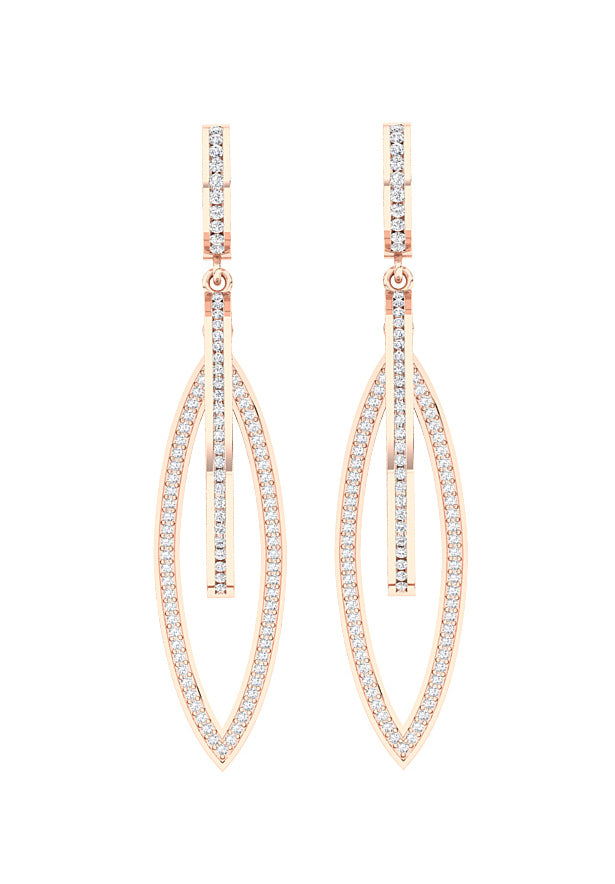
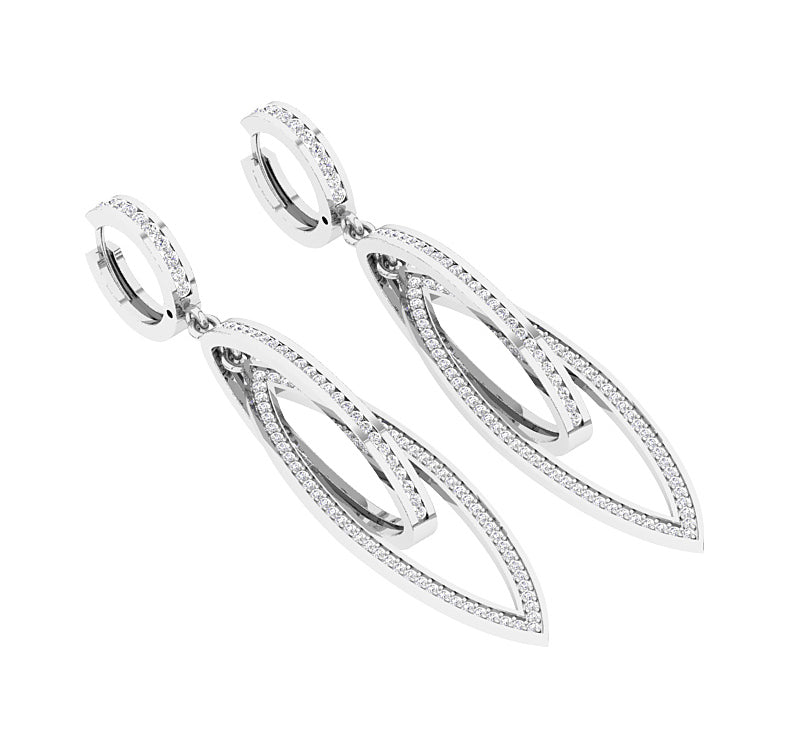
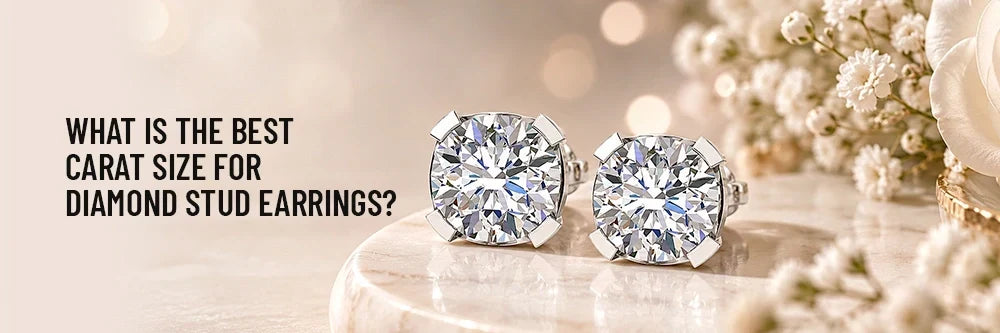
Diamond stud earrings get worn more than almost any other piece in a jewelry box. They go from a boardroom to a dinner reservation without a second thought, which is exactly why the carat question matters so much.
Pick a stud too small, and the diamonds disappear into the earlobe. Opt for diamonds too large and a pair meant for daily wear starts to feel like a special-occasion piece you’re afraid to sleep in. The right carat size for diamond stud earrings isn’t a fixed number. It’s a balance between face shape, lifestyle, and the specific way a diamond is set.
Here, we are going to walk you through what you need to look for in diamond studs and how to pick a carat size that is perfect for you.
What is the Difference between Carat Weight per Earring and Total Carat Weight
This is where most confusion starts. A listing that says “1 carat total weight” is describing both earrings combined, not the size of each stone. So a 1 TCW pair is really two 0.5 carat diamonds, and each one measures around 5.1mm across. Someone picturing a full carat sparkling on each ear is going to be disappointed when the box arrives.
Reading total carat weight correctly is far more important than following any styling advice. Before comparing prices between two pairs, check whether the number quoted is per stone or combined. A 2 TCW pair sold as “each stone 1 carat” will look dramatically larger than a 2 TCW pair made of smaller diamonds, even though the total weight and often the price are nearly identical.
How Face Shape and Ear Size Affect How the Size of the Stud is Perceived
A 0.5 carat diamond on a petite earlobe looks different than the same stone on a longer, more prominent ear. As a result, there is no universal answer here, but a few patterns hold up.
Rounder faces tend to benefit from studs on the smaller side, since they don’t compete with the fullness of the cheek. Longer, narrower faces can usually carry a bit more size without looking overdone.
Ear size plays its own role, and it’s often overlooked. Someone with a smaller earlobe might find that a 1 carat diamond, on its own, looks proportionally close to what a 1.5 carat diamond looks like on someone with a fuller lobe. If possible, try a pair in person, or ask for exact millimeter measurements rather than relying on carat weight alone.
Plus, two diamonds of the same weight can have different diameters depending on how deep they’re cut.
Matching Carat Size of Your Stud Earrings to How Often You’ll Wear Them
The answer to “what carat should I buy” comes down to how often the earrings will actually leave the jewelry box.
For daily wear, most people land somewhere between 0.25 and 0.75 carats per earring. This range is large enough to catch light without feeling heavy against the ear after eight hours at a desk. It’s also the sweet spot for earrings you don’t think twice about wearing to the gym or on a flight.
For pieces that you wear occasionally, the size of the studs should be bigger and more of a statement. A wedding, a milestone birthday, or an anniversary gift often calls for something closer to 1 to 2 carats per earring, where the size itself becomes part of the statement. These pairs tend to spend more time in a jewelry box between wears, which makes it easier to justify going bigger.
Diamond Pricing and Unexpected Factors that Impact It
Diamond pricing doesn’t move in a straight line with carat weight. It jumps at specific thresholds, mainly the half-carat and full-carat marks, because rough diamonds are cut and sorted around those benchmarks. A 0.95 carat diamond can cost noticeably less than a 1.01 carat diamond, even though the size difference is invisible to the eye.
This is useful information if a budget is doing some of the deciding. Shopping just under a round number, at 0.90 or 1.90 carats instead of 1 or 2, often means paying less per stone while barely changing how the earrings look on the ear.
The visual difference between 0.95 and 1.01 carats is close to nothing. However, the price difference frequently isn’t.
How the Setting Changes the Apparent Size
The mounting a diamond sits in can make it seem larger or smaller than its actual carat weight.
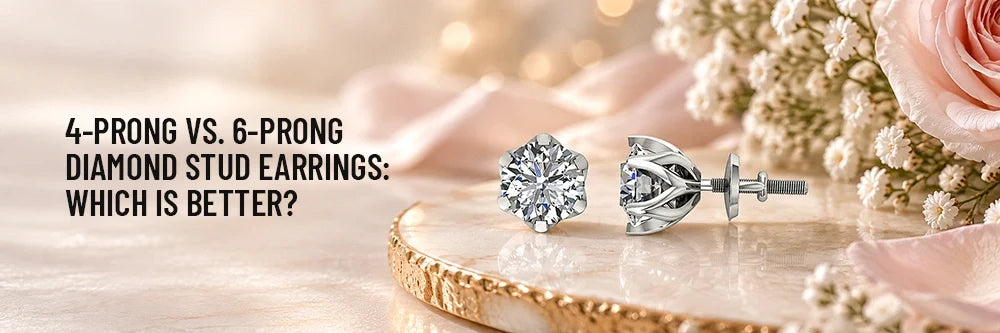
A bezel setting, where a thin rim of metal wraps around the stone’s edge, tends to make a diamond look slightly smaller because the metal border draws the eye inward. A four-prong martini setting, which holds the stone with minimal metal, lets more of the diamond’s surface catch light and can make the same carat weight look a touch larger.
Halo settings take a different approach entirely, ringing the center stone with smaller pavé diamonds to increase the overall footprint without increasing the center stone’s carat weight. This information is a must-know for anyone trying to hit a certain look on a tighter budget.
A 0.4 carat center stone in a halo setting can occupy roughly the same visual space as a 0.75 carat solitaire, at a fraction of the cost.
Cut Quality Changes How Big a Diamond Looks, Too
Carat weight measures mass, not size, and cut quality decides how that mass gets distributed. A diamond cut too deep hides some of its weight underneath the setting, where nobody sees it, which means it can look smaller face-up than its carat weight implies.
A diamond cut shallow spreads its weight outward, sometimes appearing larger from above than the number on the certificate would suggest, though usually at the cost of brilliance. This is why two 0.75 carat diamonds from two different sellers can look meaningfully different sitting on a table. One might measure 5.8mm across, the other 6.1mm, purely because of proportions.
For stud earrings, where the stone is viewed almost entirely from a face-up angle, this difference is more noticeable than it would be in a ring viewed from multiple sides. Check the millimeter diameter alongside the carat weight, rather than trusting the carat weight on its own. This is a small habit that contributes volumes towards the final purchase.
Clarity and color also play a quieter role. A diamond with a visible inclusion near the center can draw the eye toward the flaw rather than the size, which makes a technically larger stone feel less substantial. Thus, a well-cut, eye-clean diamond at a given carat weight will almost always outperform a poorly cut diamond of the same weight.
How to Decide Between Buying One Pair Now or Building Toward Something Bigger
Some buyers treat stud earrings as a one-time purchase. Others think of them the way they think of a starter home, useful now with an eye on trading up later. Diamond studs support both approaches better than most fine jewelry categories, since a well-made pair holds its value reasonably well and can often be traded in or upgraded through the original retailer.
For someone planning to upgrade eventually, it can make sense to buy slightly smaller now, in the 0.3 to 0.5 carat range per ear, and treat a milestone anniversary or a significant birthday as the moment to move up in size.
For someone buying once with no plans to revisit the decision, it’s worth stretching the budget a little further at the outset rather than settling for a size that will feel underwhelming in a few years.
A Simple Way to Decide the Carat Weight to Opt For
If none of the above narrows things down, a workable rule is to think in terms of two categories rather than a single ideal number.
Choose something in the 0.25 to 0.5 carat range per ear for a pair that will be worn constantly and shouldn’t demand attention.
Choose 1 carat or above per ear for a pair meant to be noticed, worn less often, and remembered.
Between those two categories sits the 0.5 to 1 carat range, which works for people who want one pair of studs to do almost everything. These are substantial enough to hold their own at dinner, and light enough not to feel like a commitment during a regular Tuesday.
Wrapping Up
Choosing a carat size ultimately comes down to matching the diamond to the life it will actually live, not the other way around. For those ready to compare settings and sizes side by side, Diamond for Good’s collection of stud earrings offers a useful starting point for seeing how these differences look in person.
Frequently Asked Questions
Are lab-grown diamonds a good choice for stud earrings?
Yes. Lab-grown diamonds share the same optical and physical properties as mined diamonds, so a stud pair looks identical either way. The main difference is cost, which lets buyers choose a larger carat size for the same budget.
How should diamond stud earrings be cleaned at home?
Warm water with a drop of mild dish soap and a soft toothbrush works well for routine cleaning. Soak for a few minutes, brush gently around the setting, then rinse and pat dry with a lint-free cloth before wearing again.
What metal holds up best for everyday stud settings?
14k or 18k white, yellow, or rose gold all wear well daily. 14k and 18k gold are tougher due to the higher percentage of alloys, offer more color choice, and typically cost less at the same purity.
Should diamond stud earrings be insured separately?
It depends on the value and existing coverage. Many homeowners’ or renters’ policies cap jewelry claims at a low amount, so a separate rider or standalone jewelry insurance policy is worth considering for pairs above a few thousand dollars.

Leave a comment
This site is protected by hCaptcha and the hCaptcha Privacy Policy and Terms of Service apply.