An engagement ring and a wedding band get talked about as a pair, but they mark two different chapters. One is a promise, the other is what happens once that promise gets kept. Worn together, they stop being two pieces of fine jewelry and start being a record of an actual life.
Understanding the wedding band vs engagement ring distinction isn't about picking a winner. It's about choosing each ring with intention, so the pairing feels thoughtful rather than accidental, ensuring both pieces complement each other sitting side by side twenty years from now.
Whichever direction your taste runs, toward quiet simplicity or real brilliance, the goal is the same: rings that balance craftsmanship, comfort, and individuality. That's what turns a matched set into something worth keeping.
Why Two Rings Exist in the First Place
Before they became cherished pieces of fine jewelry, engagement rings and wedding bands carried powerful symbolism. They represent two moments that shape the beginning of married life, each with its own significance.
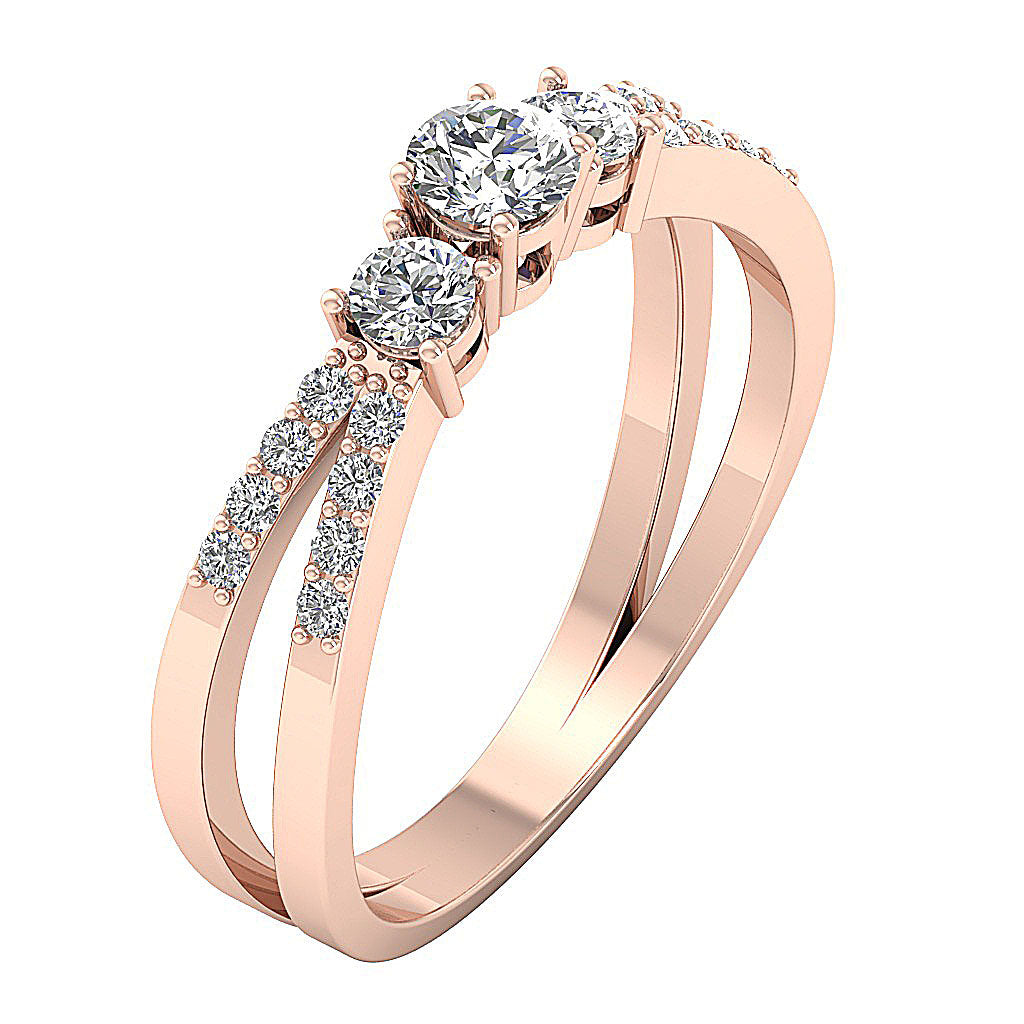
The engagement ring marks a proposal. It's built around a center diamond or gemstone, and it exists to say: this is where we're headed. It's personal, and it's meant to be noticed.
The wedding band comes later, exchanged at the ceremony itself. Its circle has no beginning or end, which is exactly the point. Most wedding bands are quieter by design, restrained yet elegant.
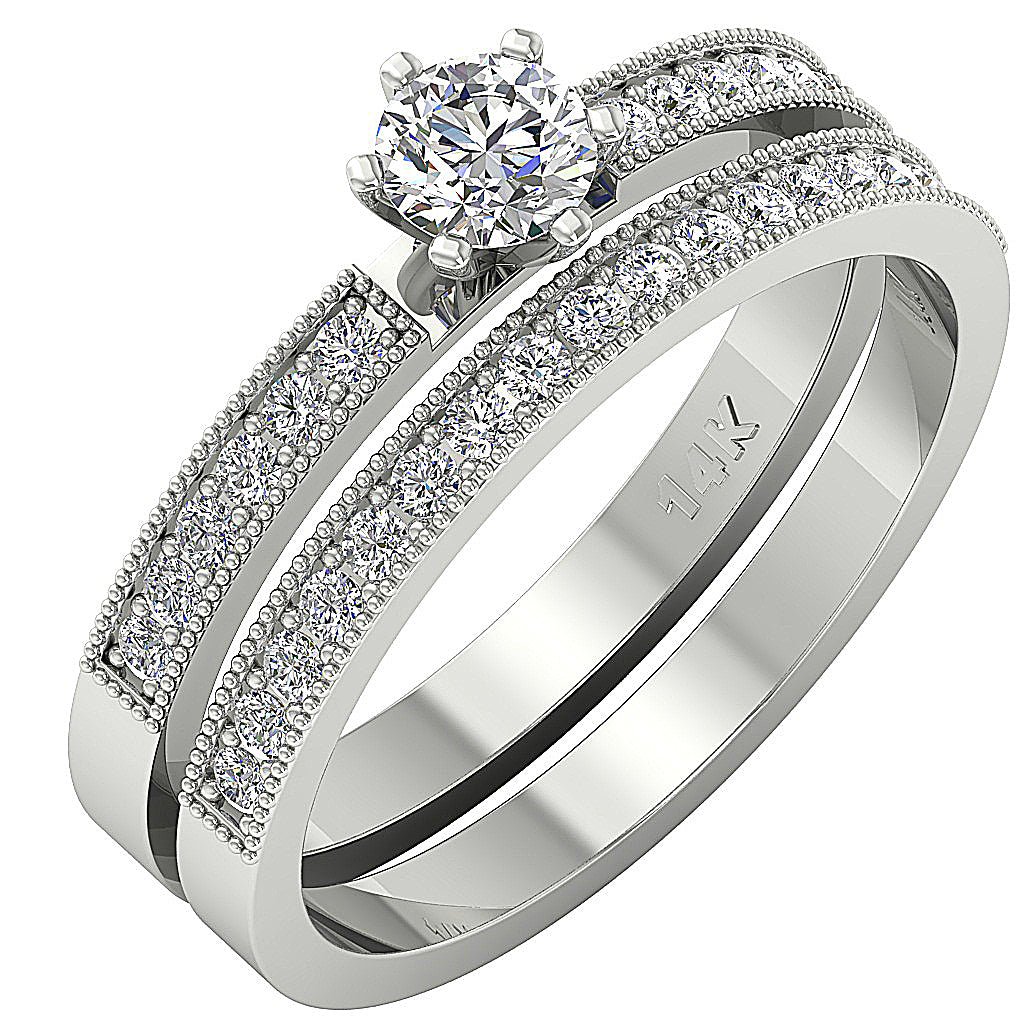
Couples, today, interpret these traditions in ways that reflect their own lives. Some buy a matching bridal set built to sit together seamlessly. Others build the pairing piece by piece, mixing eras or styles. Either way, the two rings end up telling one story: a promise, followed by the life built on top of it.
Wedding Band vs Engagement Ring: The Real Differences
Although worn together, the engagement ring and wedding band do different jobs.
Purpose
The engagement ring shows up at the proposal. It's about anticipation, hope, and a decision to build a future together. The wedding band shows up at the ceremony, representing the vows exchanged and the commitment. Two milestones, where each ring has its own symbolism.
Design
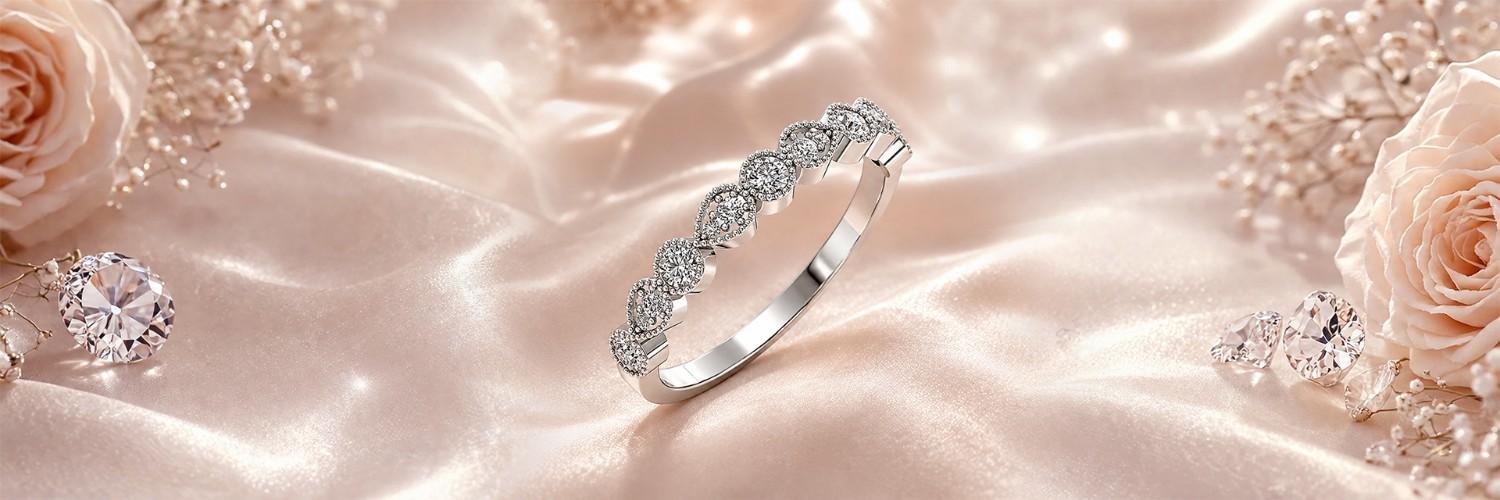
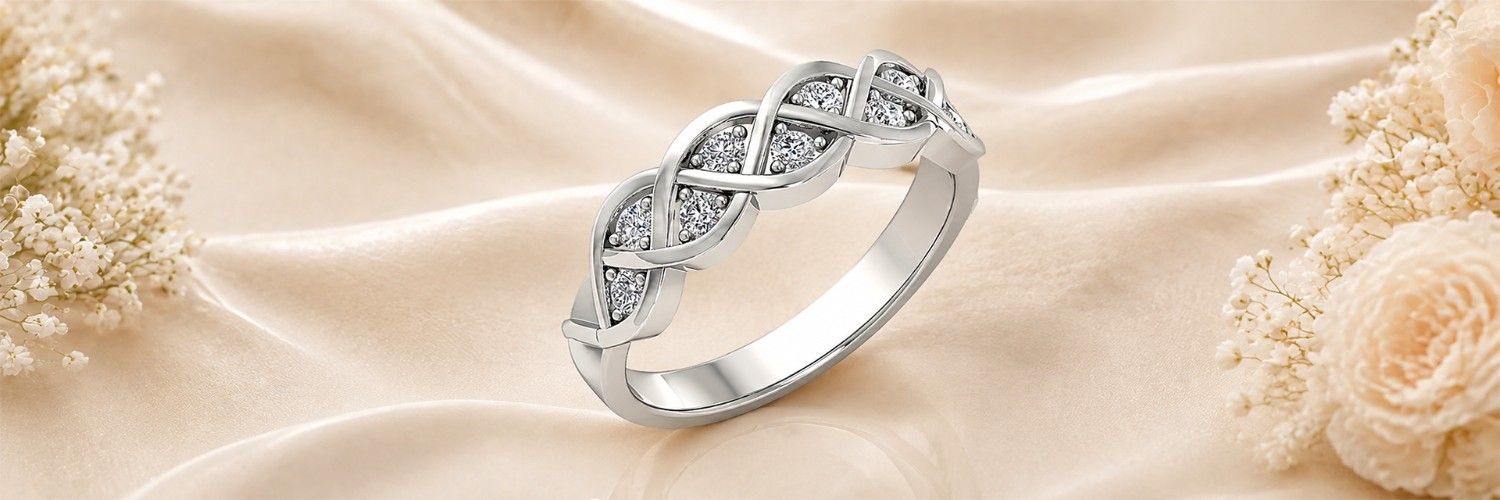
Engagement rings are built to draw the eye. A center diamond does that work, and the setting is built around highlighting brilliance and individuality. Wedding bands tend to go quieter and more elegant. Some are just polished metal. Others carry small diamonds in pavé, channel, or eternity settings.
Timing
Traditionally, the engagement ring comes first and gets worn alone through the engagement, with the band joining it at the wedding. More couples now buy both at once, which makes it easier to get the proportions and metals right from the start instead of guessing later.
Investment
Engagement rings usually take the bigger share of the budget because of the center diamond. Wedding bands tend to be more about craftsmanship and how they wear over decades of daily use. It comes down to what actually matters to the two people buying them.
How to Wear an Engagement Ring and Wedding Band Together
Tradition puts the wedding band closest to the heart, slid on before the engagement ring. The symbolism is straightforward: marriage is the permanent thing, and the engagement ring sits beside it as a reminder of the promise that came first.
Past that, there aren't many real rules. Some people want a seamless, matched look. Others go out of their way to mix textures, diamond shapes, or metal tones on purpose. A delicate band can offset a bold engagement ring nicely. A diamond-set band adds brilliance without stepping on the center stone.
There are also times when wearing them separately just makes more sense: travel, certain jobs, black-tie events where a simpler hand reads better. None of that changes what either ring means.
The best pairing is the one that feels effortless on the hand, not the one that follows a rulebook.
Choosing Diamond Wedding Bands That Work With Your Engagement Ring
The best bridal sets aren't identical twins; they're harmonious. A good wedding band supports the engagement ring instead of fighting it for attention.
Start with metal. White gold with white gold, or yellow gold with yellow gold, gives you an automatically cohesive look. Mixed metals can work too, and tend to read as more contemporary, but that's a deliberate choice, not a default.
Shape matters just as much. A round brilliant pairs naturally with a classic pavé or eternity band. Elongated shapes like oval or pear often look better with a gently contoured band that follows the ring's curve. Emerald cuts want clean lines that echo their own architecture rather than something busy.
Proportion is where pairings can go wrong. A band that's too wide can swallow the center stone. One that's too thin can look like it doesn't belong to the same ring. Whatever style you land on, polished, pavé, or eternity, the aim is a pairing that looks considered from any angle, not just the obvious one.
Should Your Wedding Band Match Your Engagement Ring?
There's no rule that says it has to. Some couples want a matched set that reads as one unit. Others prefer contrast, mixing vintage with contemporary, polished with textured, even different metals entirely.
A coordinated set gives you effortless continuity: same metal, same proportions, same design language throughout. A mixed pairing gives you something that looks more collected over time, closer to how most people actually accumulate jewelry.
The better question isn't which look is more correct. It's which one matches how you already wear jewelry day to day. The right bridal set gets more meaningful with time, as anniversaries and future pieces get added to it.
What to Think About Before You Buy Both Rings
The beauty of the rings is what first catches the eye. Comfort determines whether you actually enjoy wearing the rings once they're on your hand for good.
Try the rings together, especially if your hands are busy all day. Profile, width, and fit all affect whether the rings sit comfortably or start rubbing against each other within a few months.
Metal matters here too. Gold offers more range in tone but needs upkeep. Always plan on regular cleaning and the occasional check-up to keep the setting secure and the metal looking right.
Think past the wedding day, too. Resizing, an anniversary band down the line, or small design updates are all easier when you've planned for a bit of flexibility from the start. Well-made rings can absorb those changes without losing what made them special.
Building a Bridal Set That Actually Lasts
The best bridal sets look just as good in twenty years as they do on day one, which has less to do with trends and more to do with the choices behind them.
Skip whatever's fashionable this year and invest in proportions and craftsmanship that hold up. A good wedding ring guide treats the engagement ring and wedding band as one long-term decision, not two separate purchases made under pressure.
Chosen well, the two rings age together, and that aging is most of what makes them feel valuable later.
Wrapping Up
Choosing between a wedding band vs engagement ring was never really the question. Each one covers a different part of the same story, and worn together they become something neither ring is on its own.
Whether you land on a matched set or something more deliberately mixed, prioritize craftsmanship, comfort, and design that will still make sense a decade from now over whatever's trending this season.
Ready to build a bridal set that actually fits your story? Explore Diamond for Good’s collection made with real craftsmanship and intention, and find the rings that feel right on every anniversary.
Frequently Asked Questions
Can my wedding band and engagement ring have different diamond shapes?
Yes. Mixing diamond shapes can look distinctive and elegant as long as the proportions feel balanced. The goal is rings that complement each other, not compete for attention.
Should I buy my wedding band before choosing my engagement ring?
Most people choose the engagement ring first, but buying both together makes it easier to get a harmonious fit and coordinated proportions from the start.
What is a contoured wedding band?
A contoured wedding band is shaped to follow the curve of an engagement ring, so the two sit close together comfortably instead of gapping or overlapping.
Can I wear my wedding band on its own?
Yes. Plenty of people wear just the band for travel, work, or everyday tasks. A well-made band stands on its own and keeps its meaning either way.

Leave a comment
This site is protected by hCaptcha and the hCaptcha Privacy Policy and Terms of Service apply.