
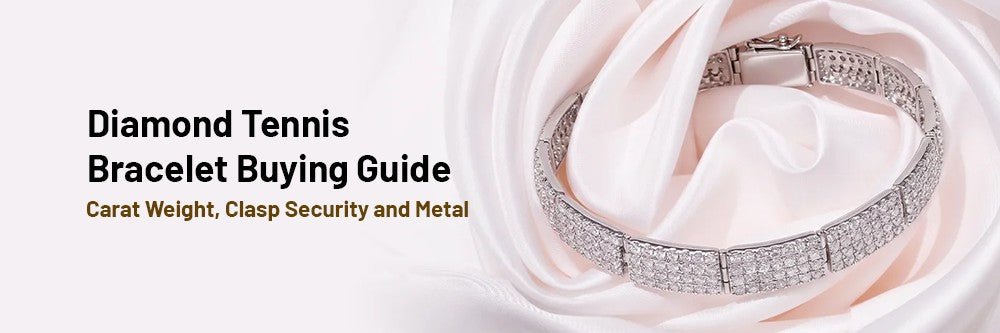
Some jewelry asks you to dress up for it. A diamond tennis bracelet does the opposite. It sits under a shirt cuff at nine in the morning, catches the light over a laptop at noon, and holds its own with a gown at midnight. That ease is the reason it has stayed in fashion for decades, and it is also the reason so many people buy one without asking the right questions.
The right questions are few. How much carat weight makes sense? How secure is the clasp? Which metal will look good in ten years? Answer those three honestly and the rest of the decision falls into place.
What Is a Diamond Tennis Bracelet, and Where Did the Name Come From?
A diamond tennis bracelet is a flexible chain of identical diamonds set in a continuous line, with no pendant, no centerpiece and no break in the sparkle.
Jewelers once called it a line bracelet. The nickname arrived in the late 1970s, when tennis champion Chris Evert stopped a match at the US Open to look for hers after the clasp gave way. The name stuck, and so did the lesson: the clasp matters.
Today the style is worn by every kind of person, in every kind of setting. It is as at home on a wrist that never sees a racket as it was on the court.
How Much Carat Weight Do You Need In a Tennis Bracelet?
The answer depends on the length and on how loud you want the bracelet to be. These figures describe a typical seven-inch piece, since total weight rises with length.
A bracelet around one carat total is delicate. The stones are small and the effect is a fine thread of light, which suits minimal wardrobes and wearers who stack bracelets. Two carats is the most popular everyday weight. It is visible without being showy, and it works with a watch.
Three carats is the classic. The stones are larger, the sparkle carries across a room, and the bracelet reads clearly as fine jewelry. Five carats and above is a statement piece. It is wonderful for the right person, but it needs a confident wardrobe and a secure clasp.
Because a bracelet uses dozens of stones, small differences in quality add up quickly. That is also why lab-grown stones are worth a look. The saving on a piece with this many diamonds can be substantial, and it can free budget for a better clasp or a heavier metal.
Why Is the Clasp the Most Important Part?
Think of the clasp as the part of the bracelet that does the work. The diamonds get the compliments. The clasp keeps them on your wrist.
The most common design is the box clasp. A tongue slides into a small box and locks with a click. On a well-made bracelet, a figure-eight safety latch snaps over the top as a backup, and the best pieces have latches on both sides. Two layers of security matter because the first one can loosen with age.
Test the bracelet before you buy. The tongue should click firmly and resist a gentle tug. The safety latch should close without effort and stay closed. Avoid a thin spring-ring closure on anything expensive, and look for a clasp that is flush with the links so it does not catch on knitwear. In case you are buying online, check the clasp as soon as you receive the product.
Ask, too, what happens if a link or the clasp ever needs repair, and whether the jeweler offers servicing.
How Does the Setting Change Brilliance and Safety?
A setting holds each stone, and in a bracelet that job is repeated across every stone. Four-prong settings grip each diamond at four points, which is the most secure arrangement for everyday wear. Three-prong settings expose more of the stone, so they look brighter and slightly larger, but they leave a little less margin for knocks.
Bezel settings wrap each diamond in a thin rim of metal. They look sleek, they snag nothing, and they protect stone edges, which makes them excellent for people who are hard on their hands. The cost is a touch less light reaching the diamond.
Many tennis bracelets use a low profile and an illusion setting to make each stone look slightly bigger. Whichever style you prefer, look closely at the underside. Clean, even gallery work and smooth links usually point to good craftsmanship.
Which Metal Is Best: Yellow, White, Rose Gold, or Platinum?
Each metal changes the character of the bracelet, and each ages differently.
Yellow gold gives the warmest, most traditional look and flatters most skin tones. White gold is the cooler option and makes diamonds look icy, but it is usually rhodium plated, and that plating wears away. Expect to have it refreshed every year or two, depending on how you live. Rose gold is soft and romantic, and its copper content makes it quite durable. Platinum is naturally white, dense and hypoallergenic, and it costs more.
Purity also changes the wearing experience. Eighteen-karat gold has a richer color but is softer. Fourteen-karat gold contains more alloy, so it is harder and stands up better to daily life, which is why it dominates the tennis bracelet category. If your skin reacts to some metals, ask your jeweler about the alloy in white gold before buying.
How Should a Diamond Tennis Bracelet Fit Your Wrist?
The diamond tennis bracelet should fit close enough that it cannot slide over your hand, and loose enough to move. Measure your wrist with a flexible tape and add about half an inch. The usual finished length is seven inches, although smaller and larger wrists need different sizes.
Check the flex. Good links drape and follow the wrist like a ribbon. A stiff bracelet looks awkward and puts pressure on the clasp. Ask about adjustable lengths as well, since some pieces can add a few links later if your preference changes.
What Should You Look For In the Diamonds?
Consistency counts more than perfection. Each stone should match its neighbors in size, color and brightness, because one dull or tinted diamond is visible in a row of forty. A strong cut grade gives better sparkle than a high clarity grade, and eye-clean stones in the lower clarity bands are normal and sensible at this small size.
Ask for an independent certificate or grading statement for the stones, and ask where they came from.
Why Do Prices Vary So Much For the Same Carat Weight?
Two bracelets with identical carat weight can sit far apart on price, and the reasons are easier to spot than you might think.
Stone quality and color grade is one. The weight and purity of the metal is another, since a heavier fourteen-karat bracelet uses more gold than a lighter one. Clasp engineering, setting depth and how evenly the stones are matched all add cost, and so does origin, because natural diamonds cost more than lab-grown stones of similar grade.
Diamond bracelets for women at very low prices often mean thin metal, loosely matched stones or a flimsy closure. Ask for the weight of the gold, not just the diamonds, and compare like with like.
Are Diamond Bracelets For Women the Only Option?
The phrase describes a shelf, not a rule. Diamond bracelets for women remain the most common category, but tennis bracelets are worn by men, by non-binary people and by anyone who likes the look. Wider and heavier styles are often marketed to men and slimmer ones to women, though the lines are blurring.
Buy for your wrist and your taste. Size, weight and width should fit the person who will wear it, whatever label the retailer uses.
How Do You Wear and Care For a Diamond Tennis Bracelet?
Wear it daily if you like, but take it off for heavy lifting, gardening and contact sports. Clean it with warm water and mild soap, brush gently behind the stones and dry it with a soft cloth. Have the clasp and settings checked once a year. A tiny loose prong is simple to fix before it becomes a lost diamond.
Wrapping Up: What Should You Check Before You Buy?
Check the clasp, the setting, the metal, the certificate and the return policy, in that order. Wear it, if you can, and move your hand around. The right bracelet feels like part of you within a minute, which is worth waiting for.
At Diamond For Good, we carry an extensive inventory of elegant tennis bracelets in a wide range of settings and carat sizes, offering something for everyone.
Frequently Asked Questions
What carat weight is best for a diamond tennis bracelet?
Two to three carats suits most everyday wearers. One carat looks delicate and stackable, while five carats and above makes a bold statement and calls for an exceptionally secure clasp.
How do I know if a tennis bracelet clasp is secure?
Look for a box clasp with a figure-eight safety latch, ideally on both sides. It should click firmly, resist a gentle tug, and let the latch close without any effort.
Is white gold or yellow gold better for a tennis bracelet?
Neither is better. White gold looks cool but needs periodic rhodium replating, while yellow gold is warmer and low maintenance. Choose whichever flatters your skin tone and your wardrobe best.
How do I measure my wrist for a tennis bracelet?
Wrap a flexible tape snugly around your wrist bone, then add about half an inch for comfort. Most bracelets are seven inches, but always confirm the exact length before buying. If you don’t have a flexible tape, simply do the experiment with a piece of string and measure it against a scale.

Leave a comment
This site is protected by hCaptcha and the hCaptcha Privacy Policy and Terms of Service apply.