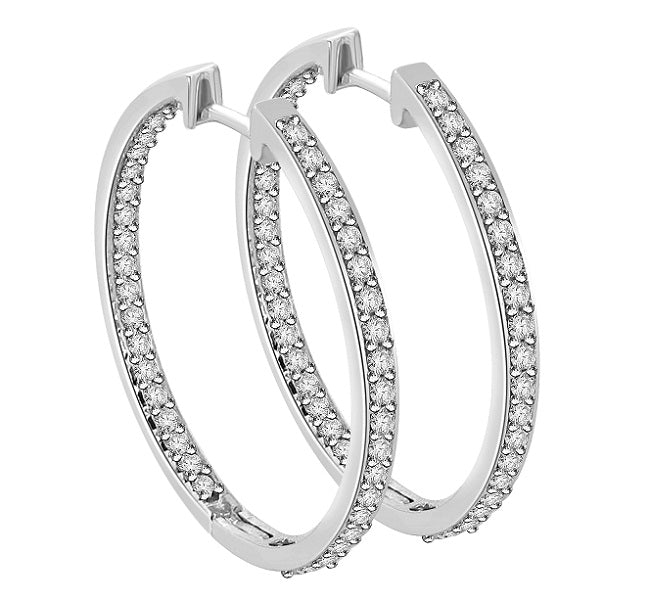
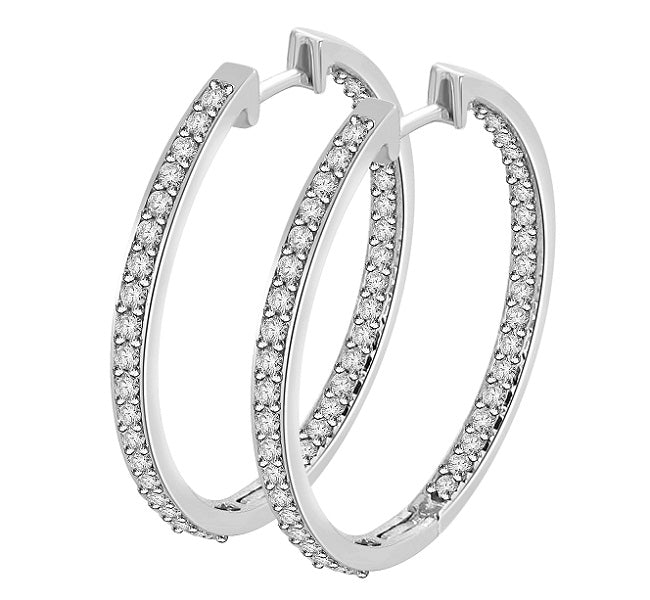
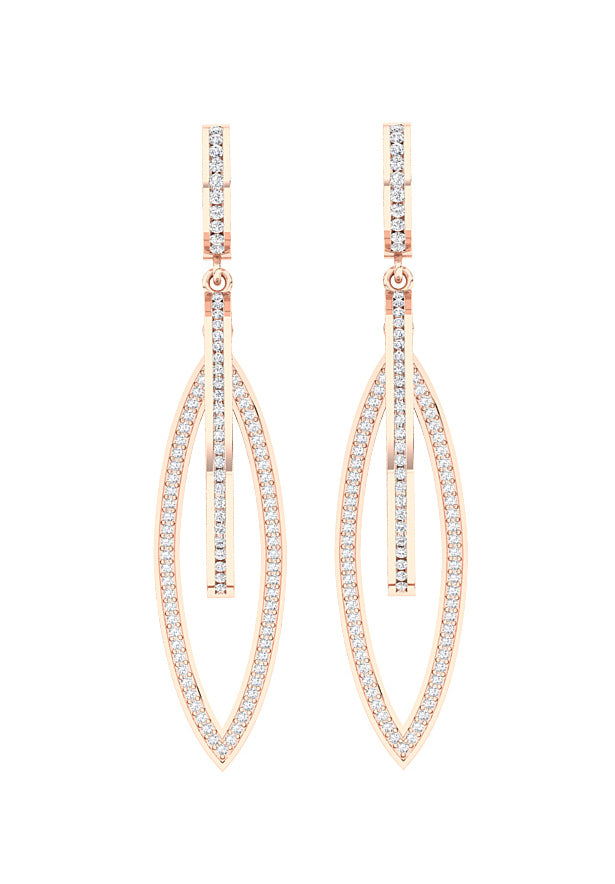
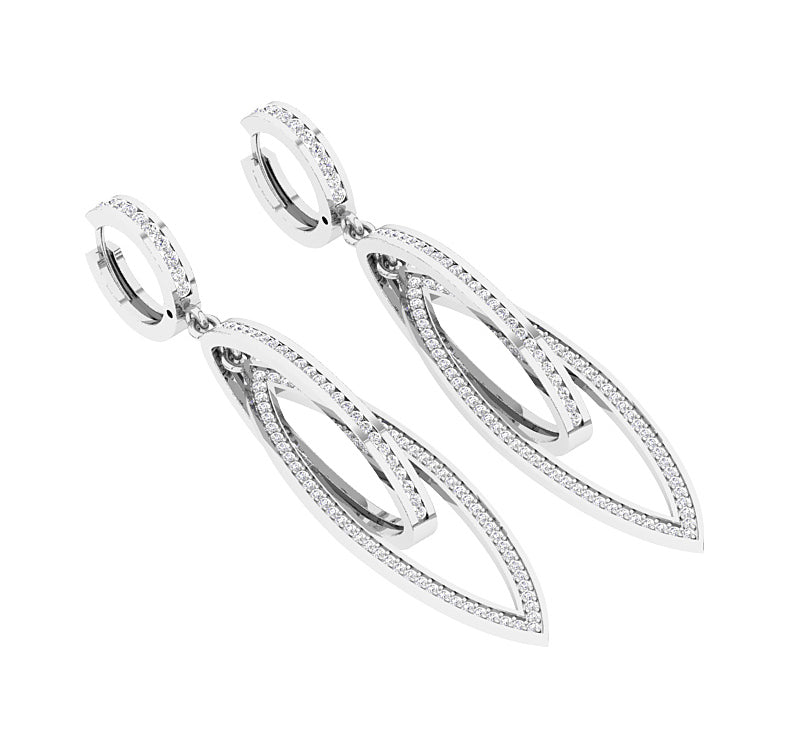
Diamond hoop earrings bring together the shape of a classic hoop and the light of diamonds, creating a style that can feel understated or substantial depending on its size, setting, and stone coverage. Unlike a solitaire stud, a hoop introduces movement and a continuous line around the ear, while diamonds add definition without changing the essential simplicity of the form.
Smaller designs can sit close to the ear and work naturally with everyday jewelry, while larger hoops create more presence. Different diamond settings and placements further change how the earrings appear from the front, side, and while moving.
Choosing the Right Size of Diamond Hoop Earrings
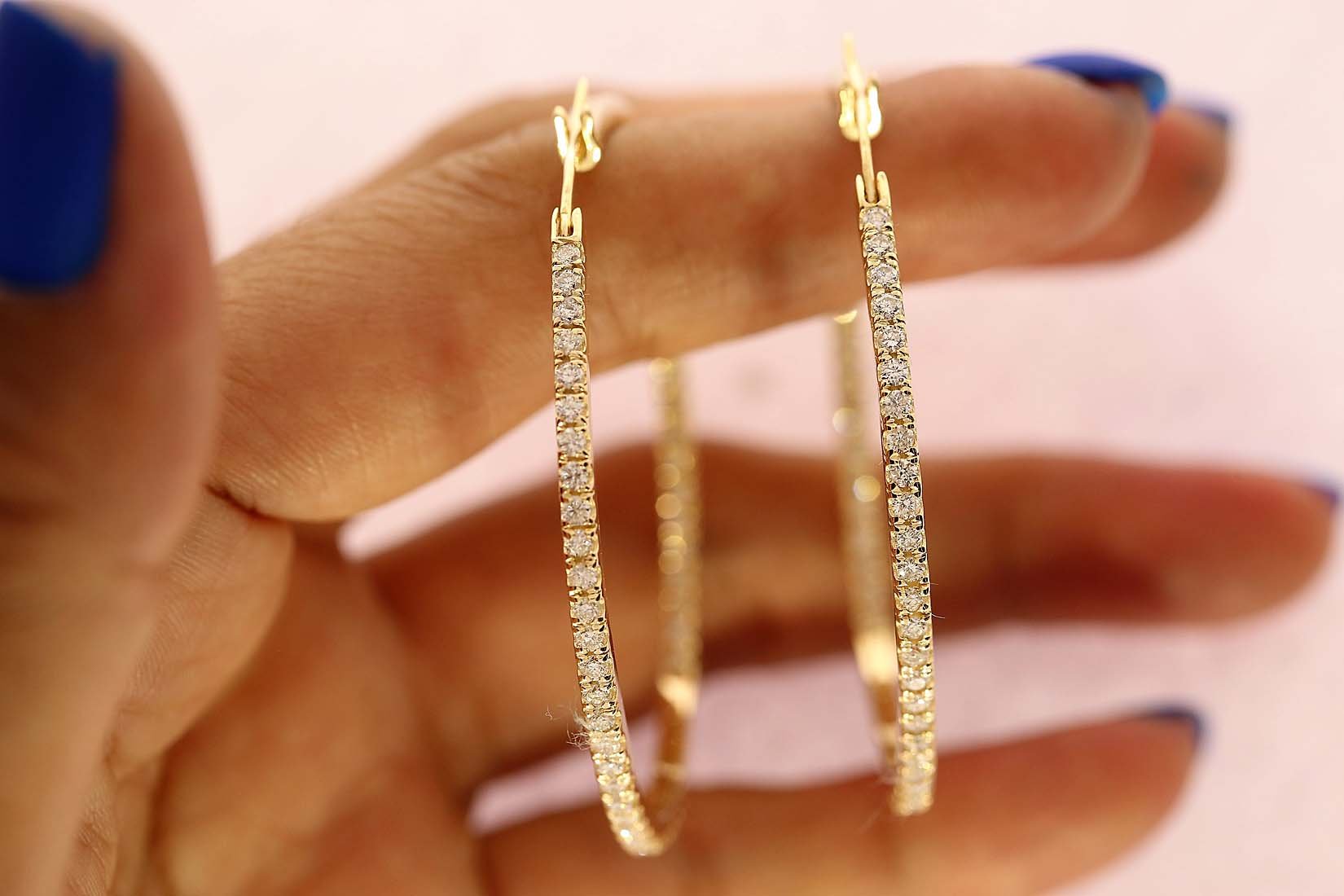
Small hoops sit close to the earlobe and tend to have a quieter presence, making them suitable for regular wear, professional settings, and additional piercings. Medium hoops offer a more visible circle while remaining easy to incorporate into an everyday jewelry collection.
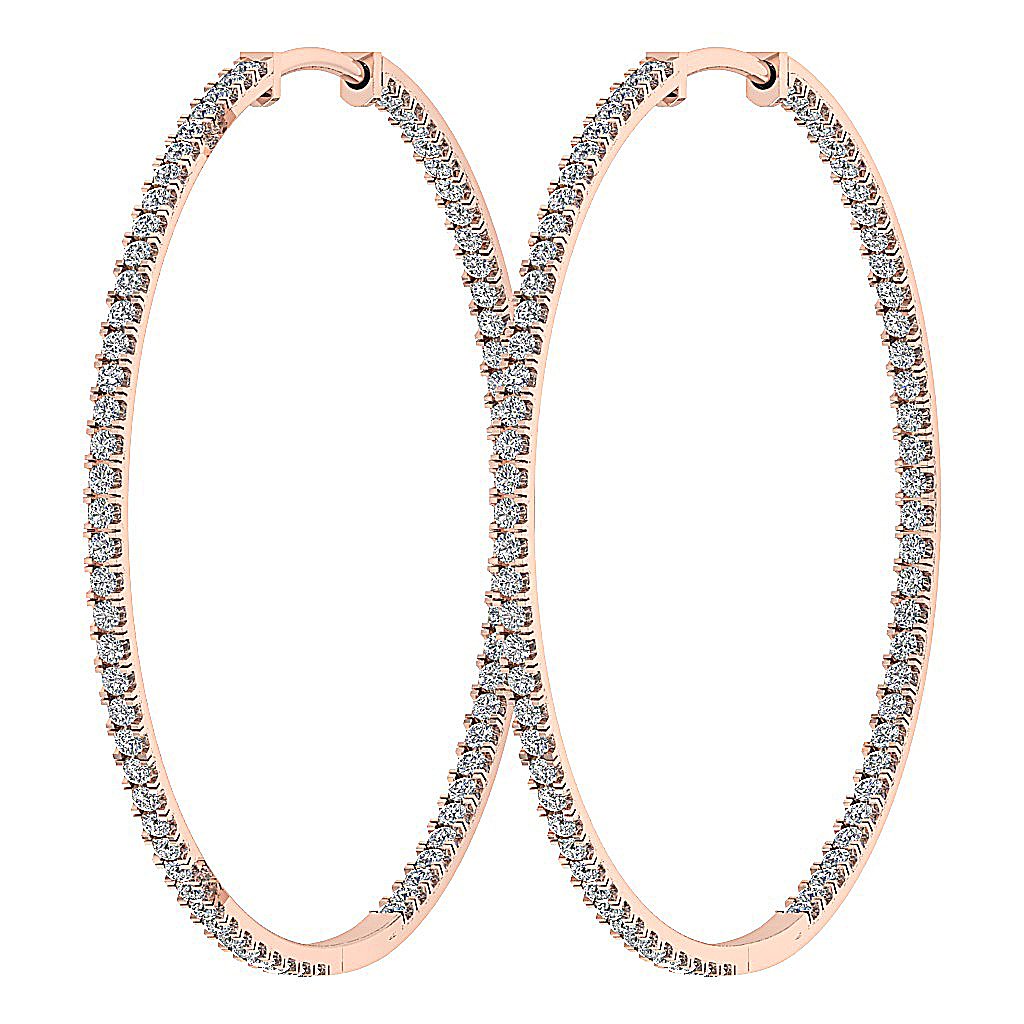
Large diamond hoops create a stronger visual statement. Their greater diameter gives the diamonds more room to catch the light and makes the earrings more noticeable from a distance. They work best for evening dressing or occasions where the earrings are intended to be one of the defining pieces of the look.
The right size depends on more than personal preference. Consider the proportion of the hoop to the ear, the weight of the diamonds, and how often the earrings will be worn. A well-proportioned hoop should feel substantial without becoming uncomfortable over extended wear.
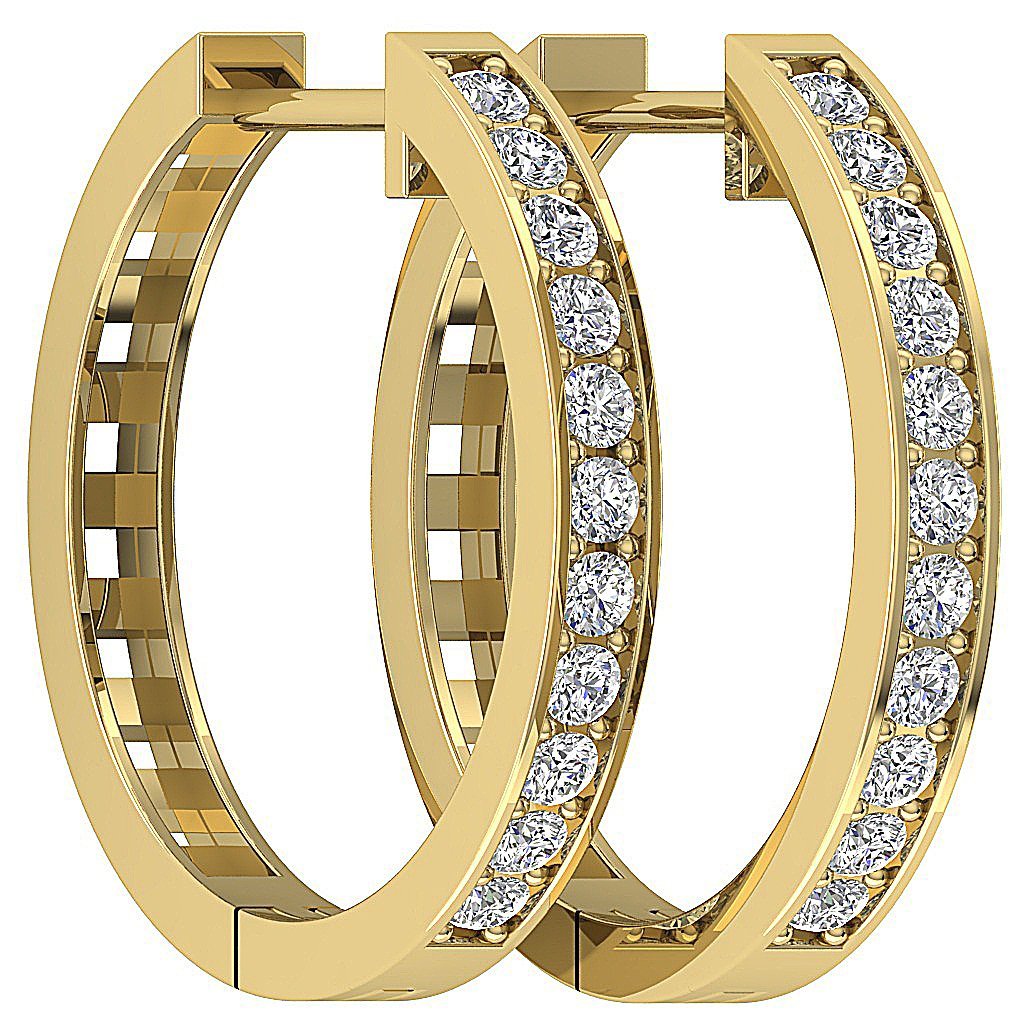
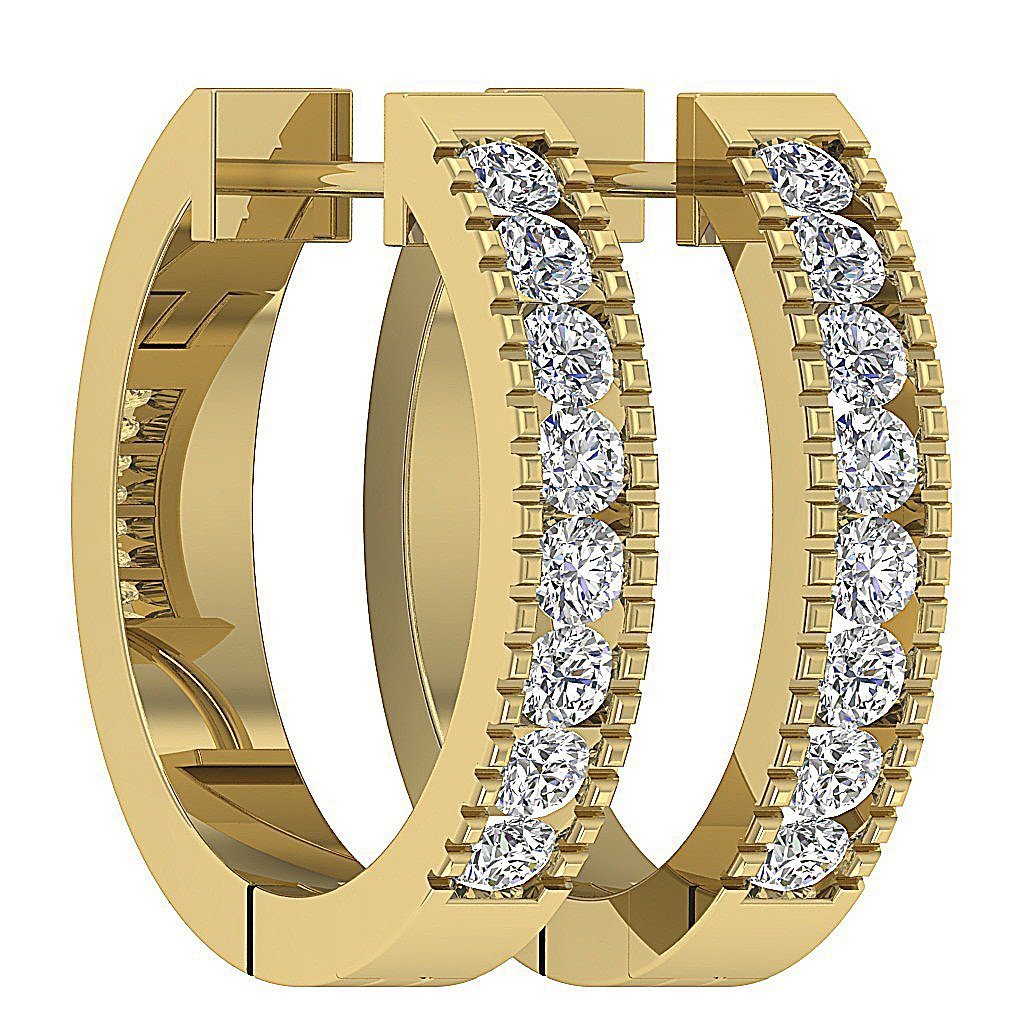
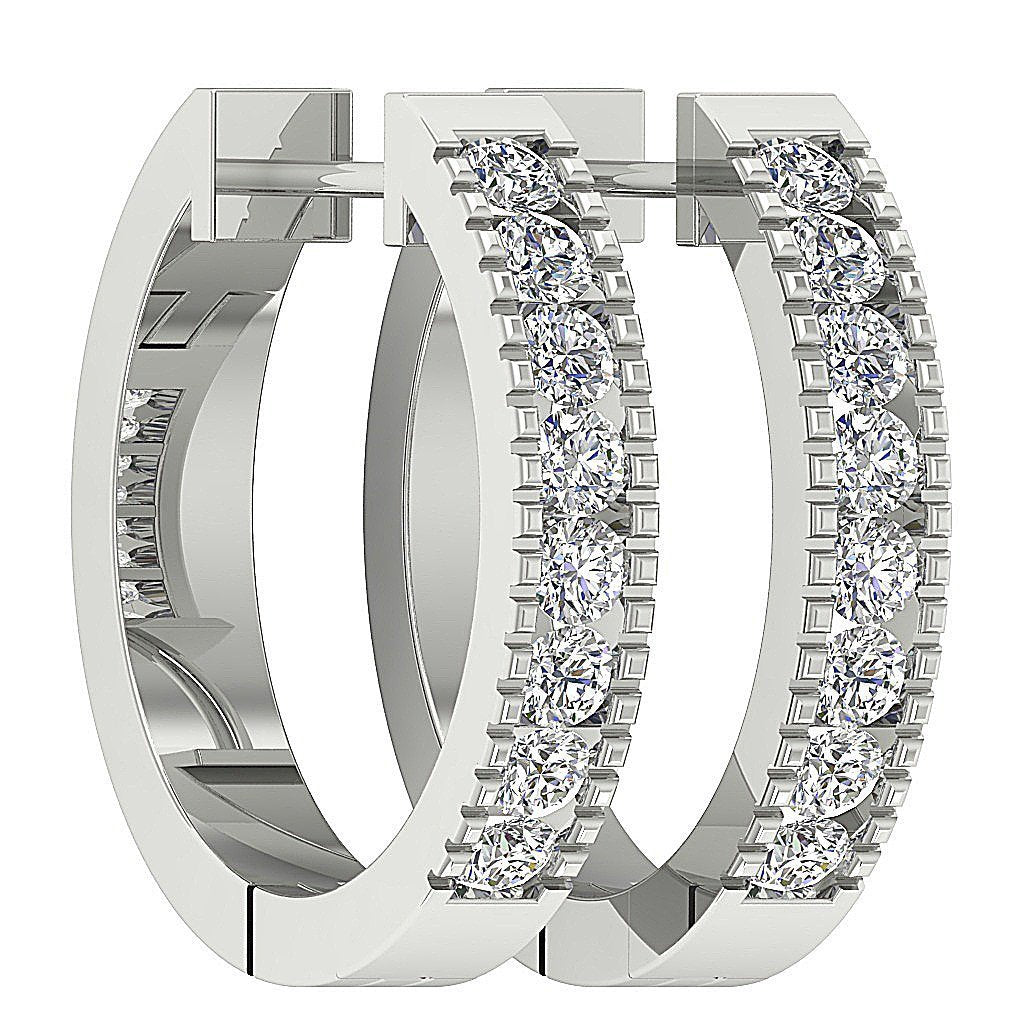
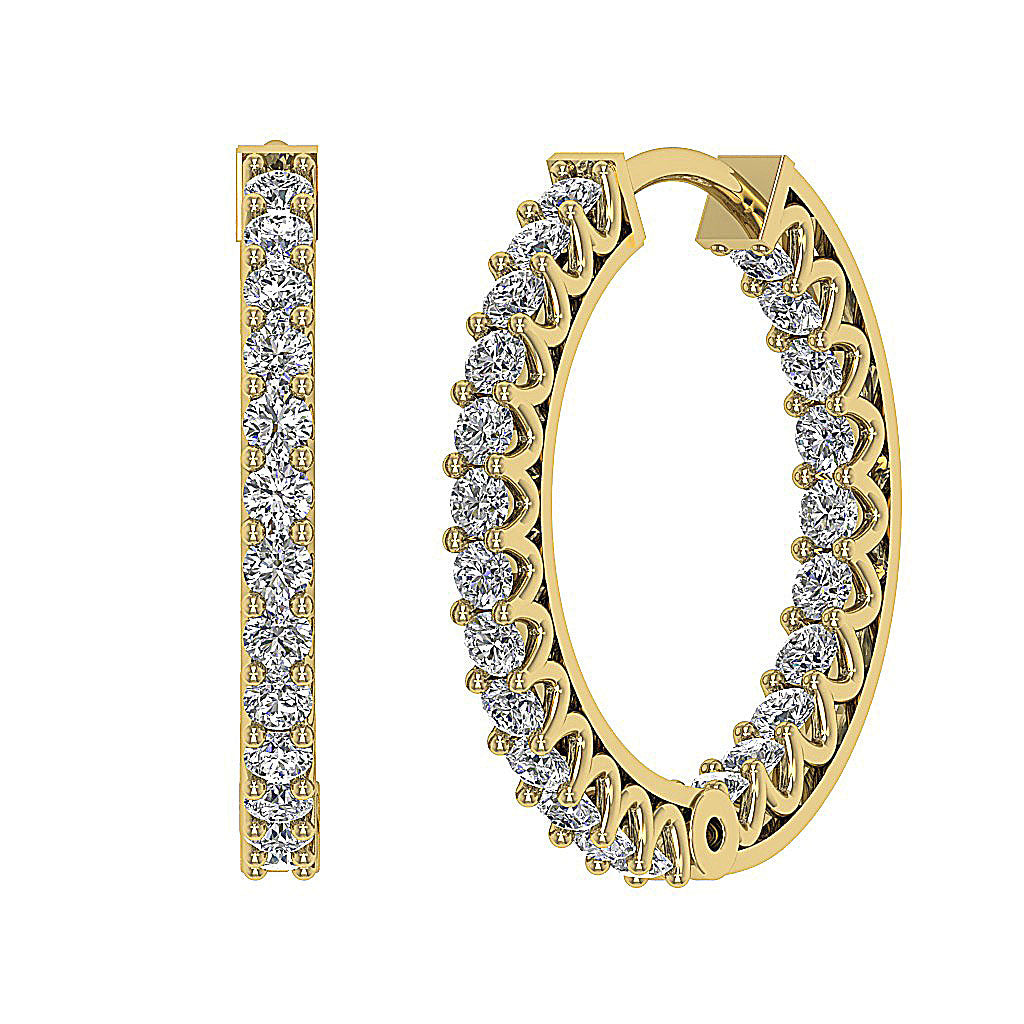
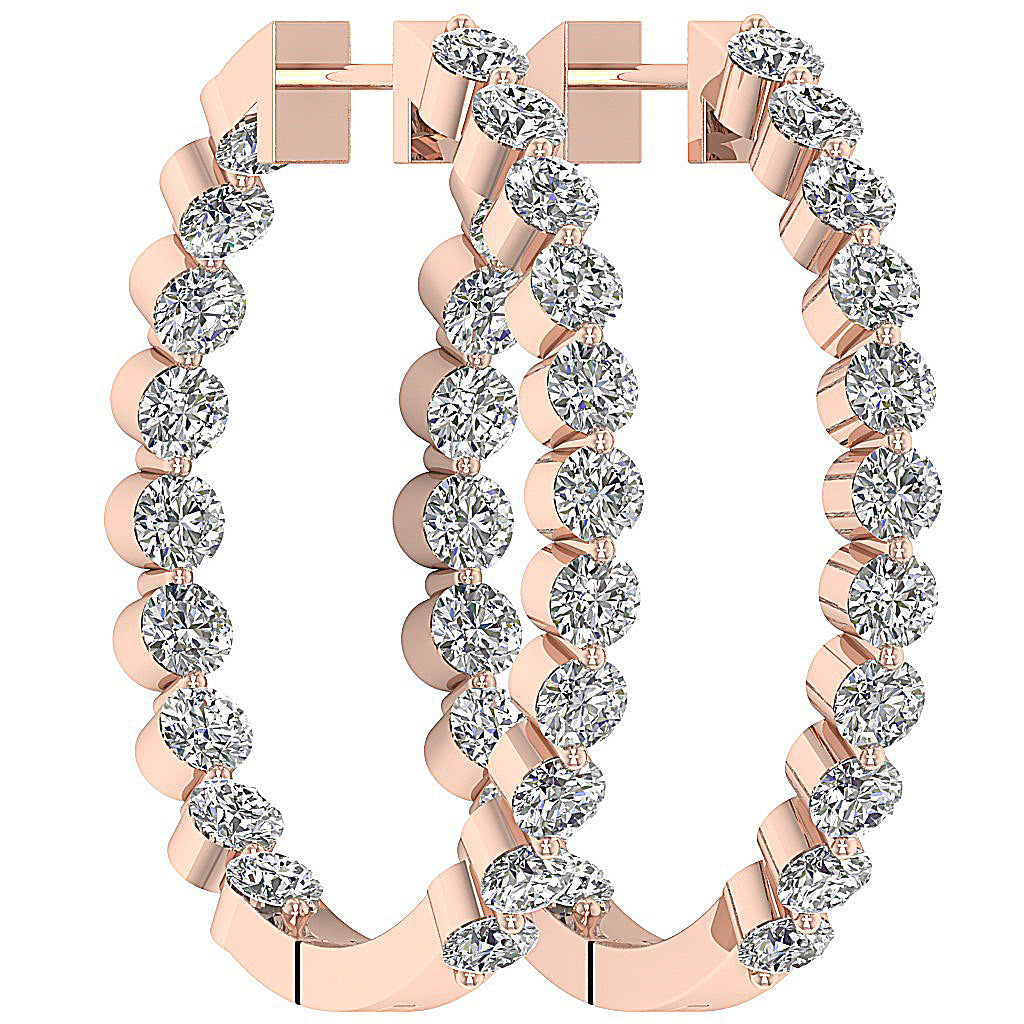
Diamond for Good's collection includes small, medium and larger hoop designs, alongside inside-outside styles. The collection features natural diamonds in round cuts across 14K and 18K gold, with white, yellow, and rose gold options represented across different designs.
Diamond Settings for Hoop Earrings
The setting determines how the diamonds interact with the hoop and how much metal remains visible between the stones.
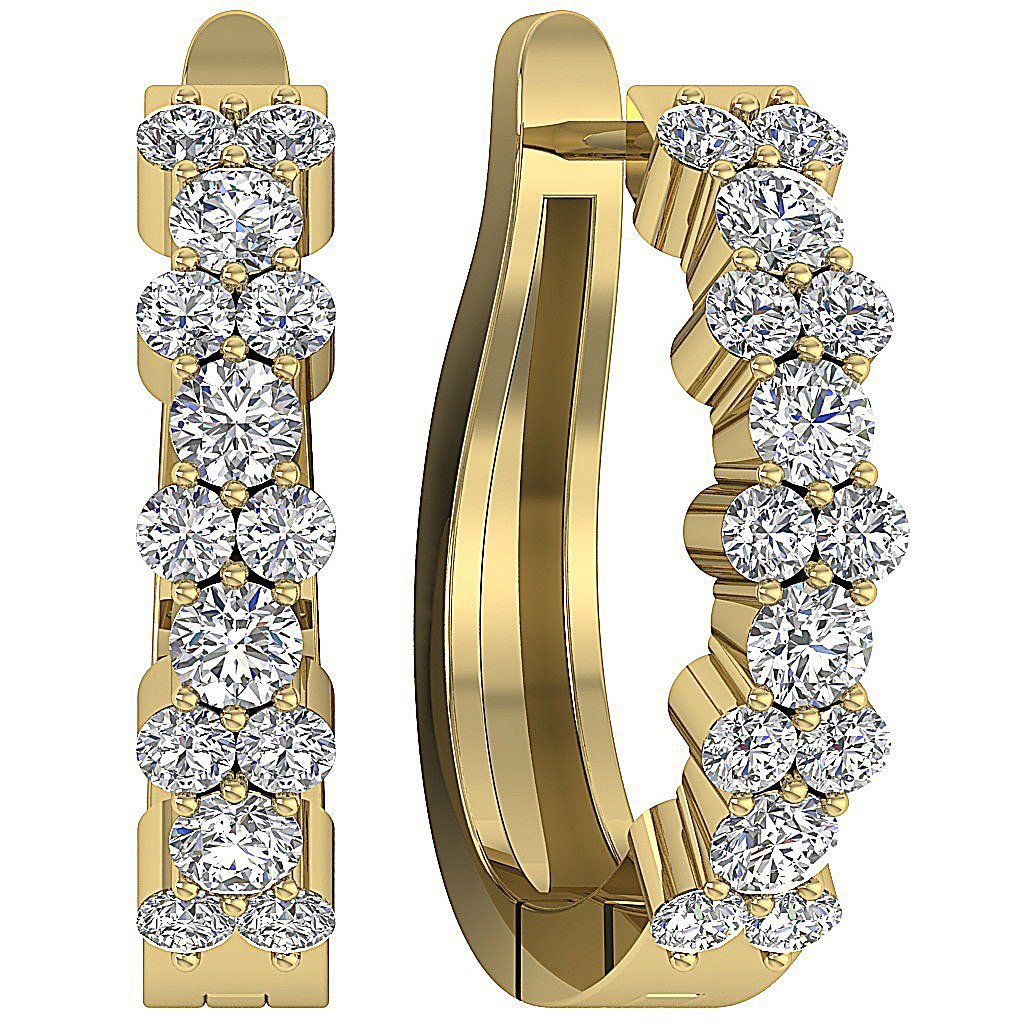
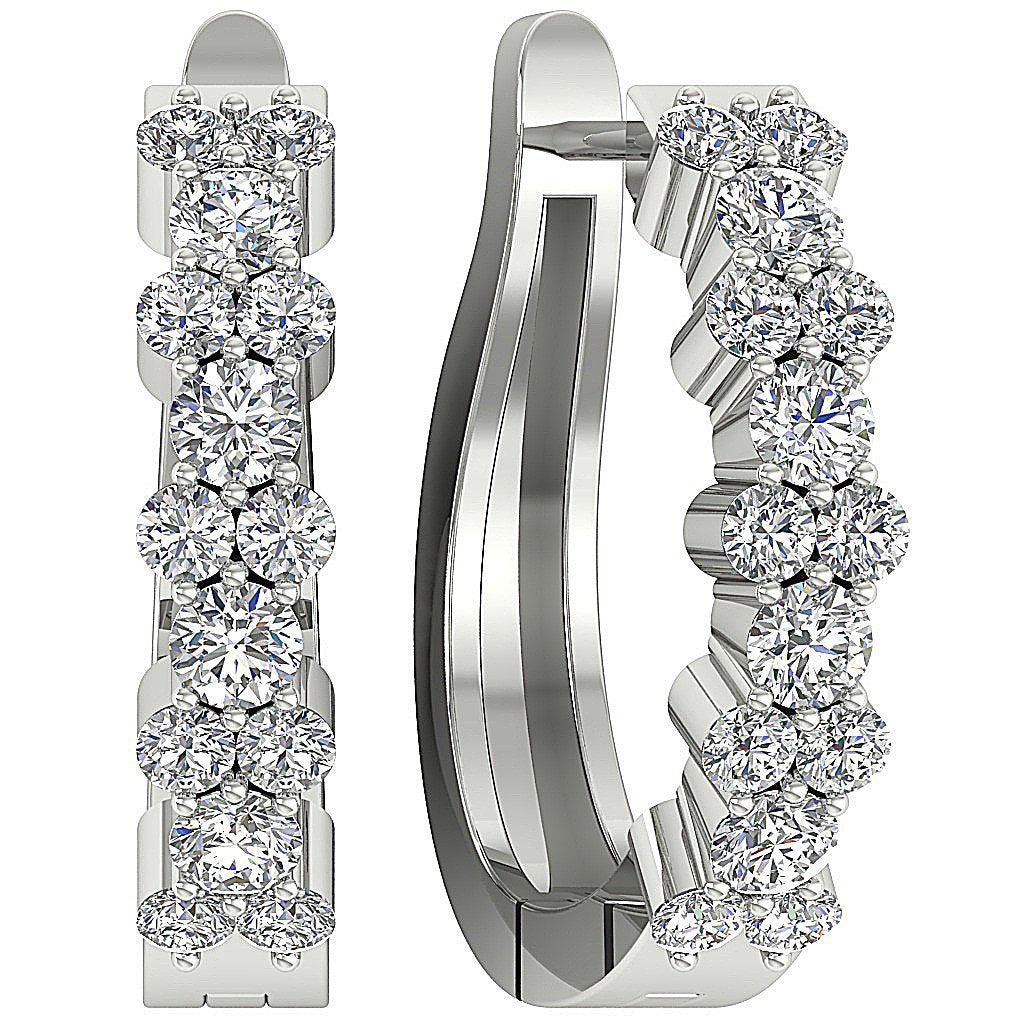
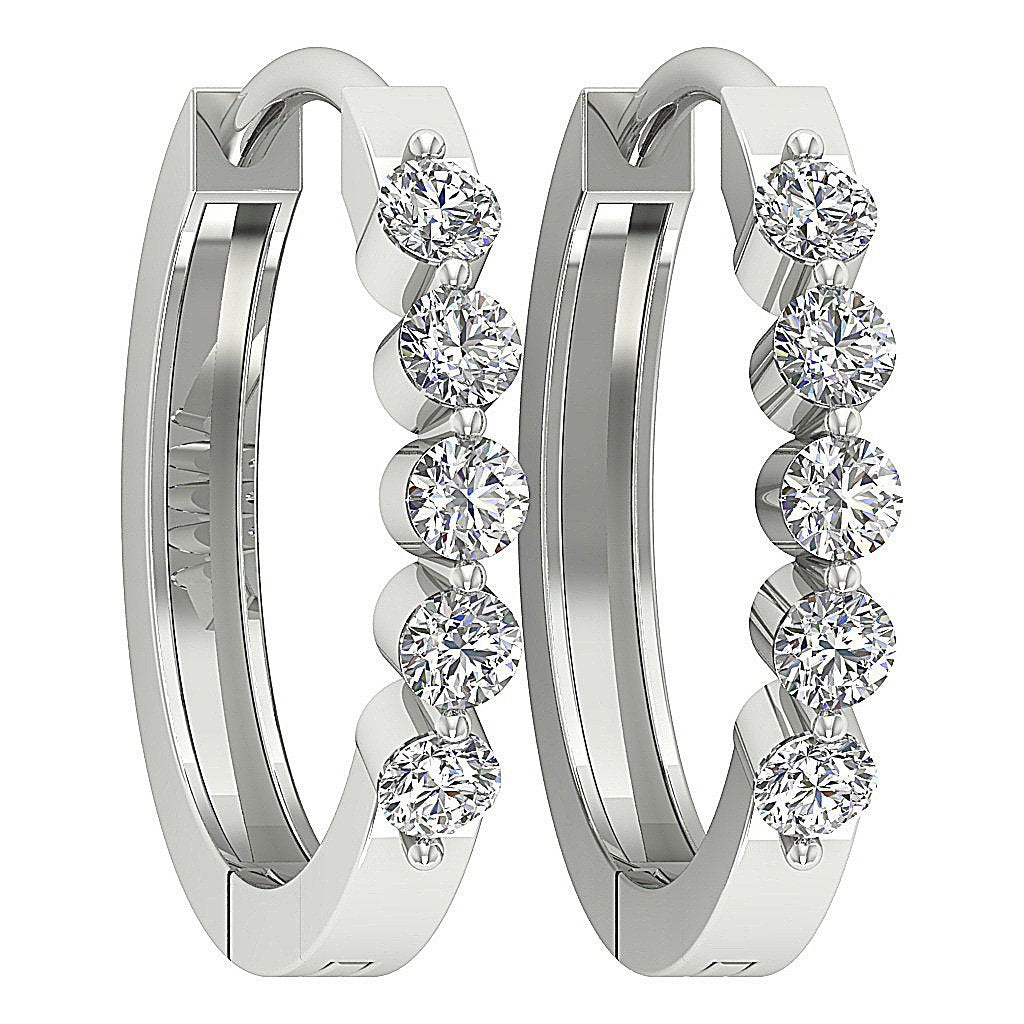
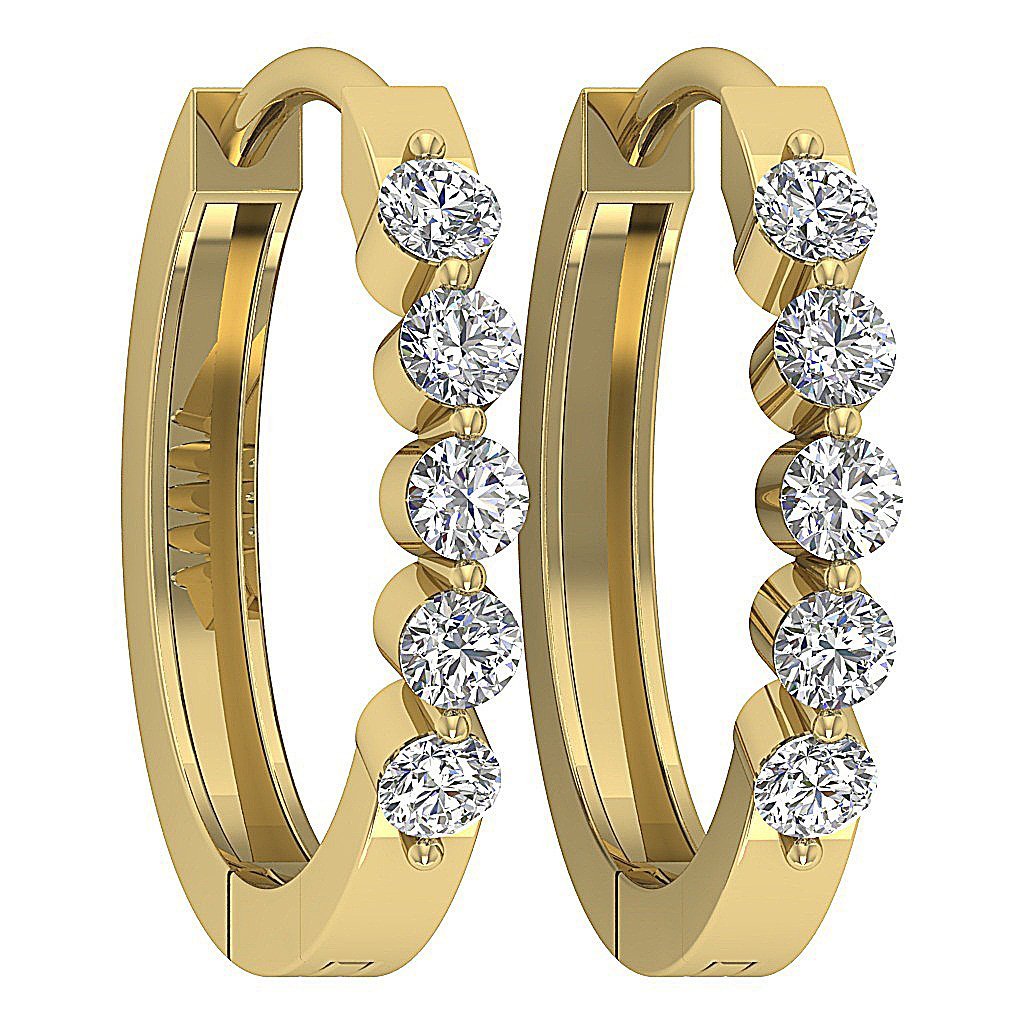
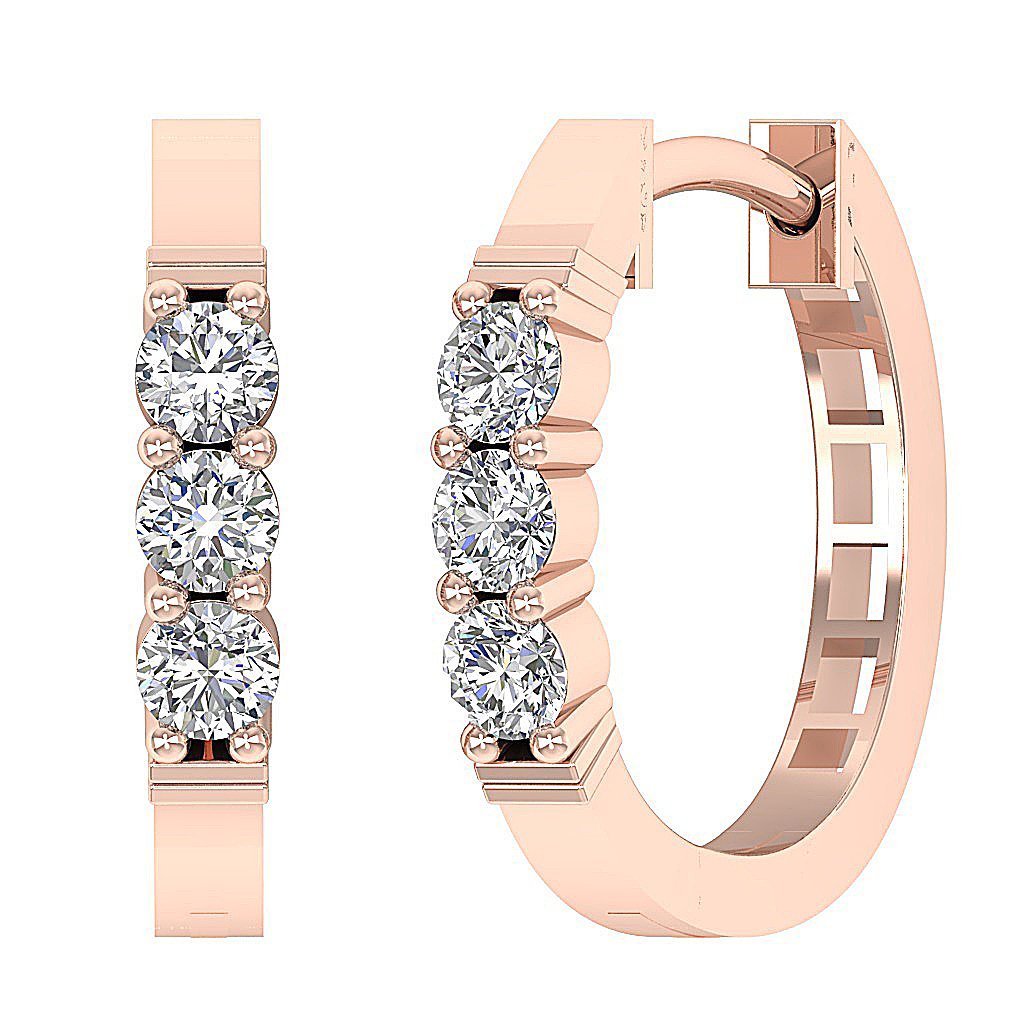
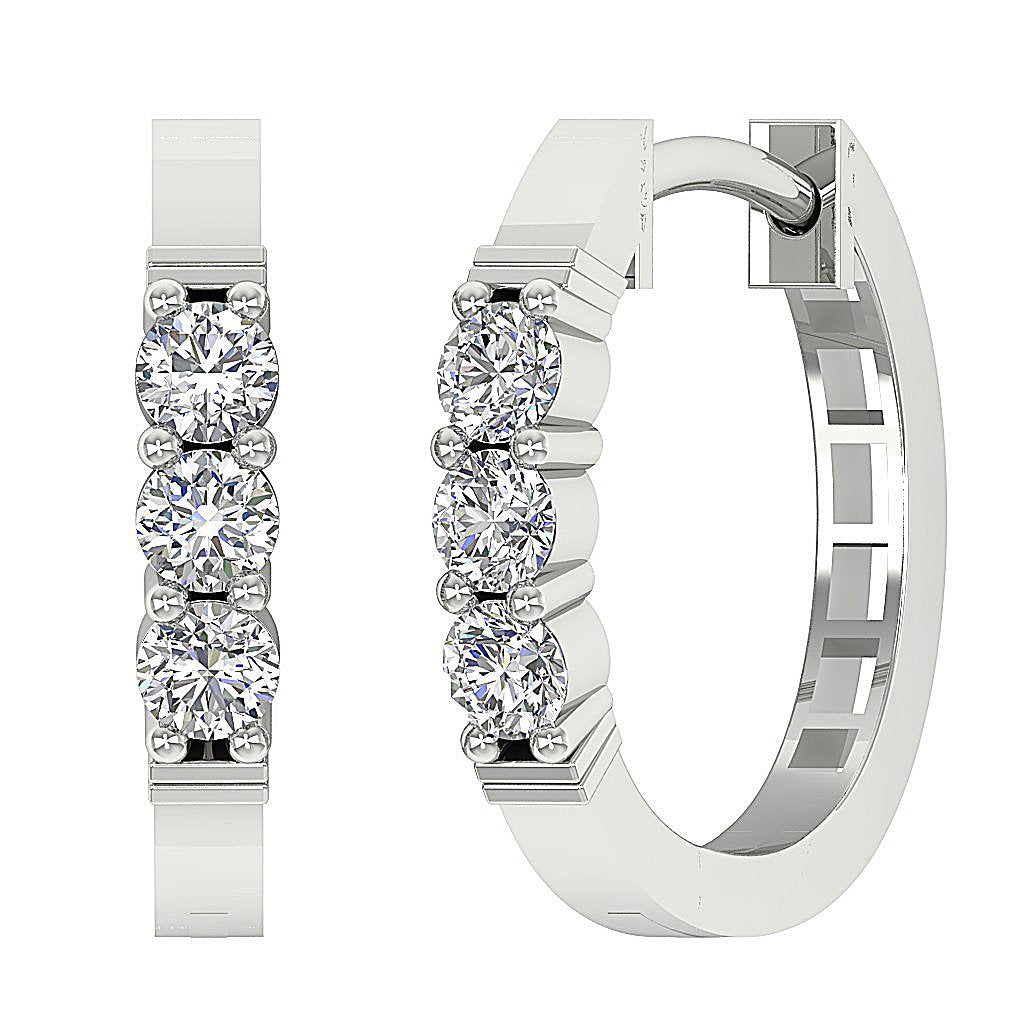
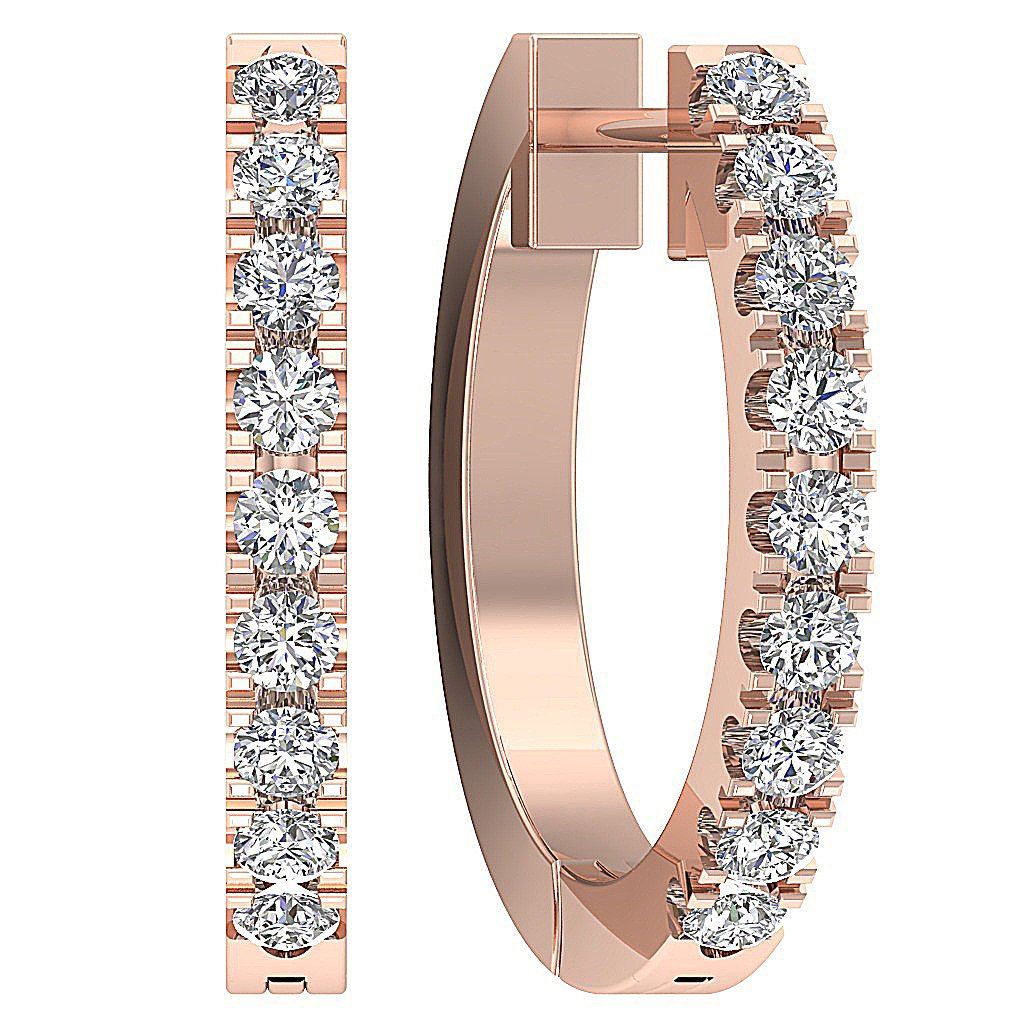
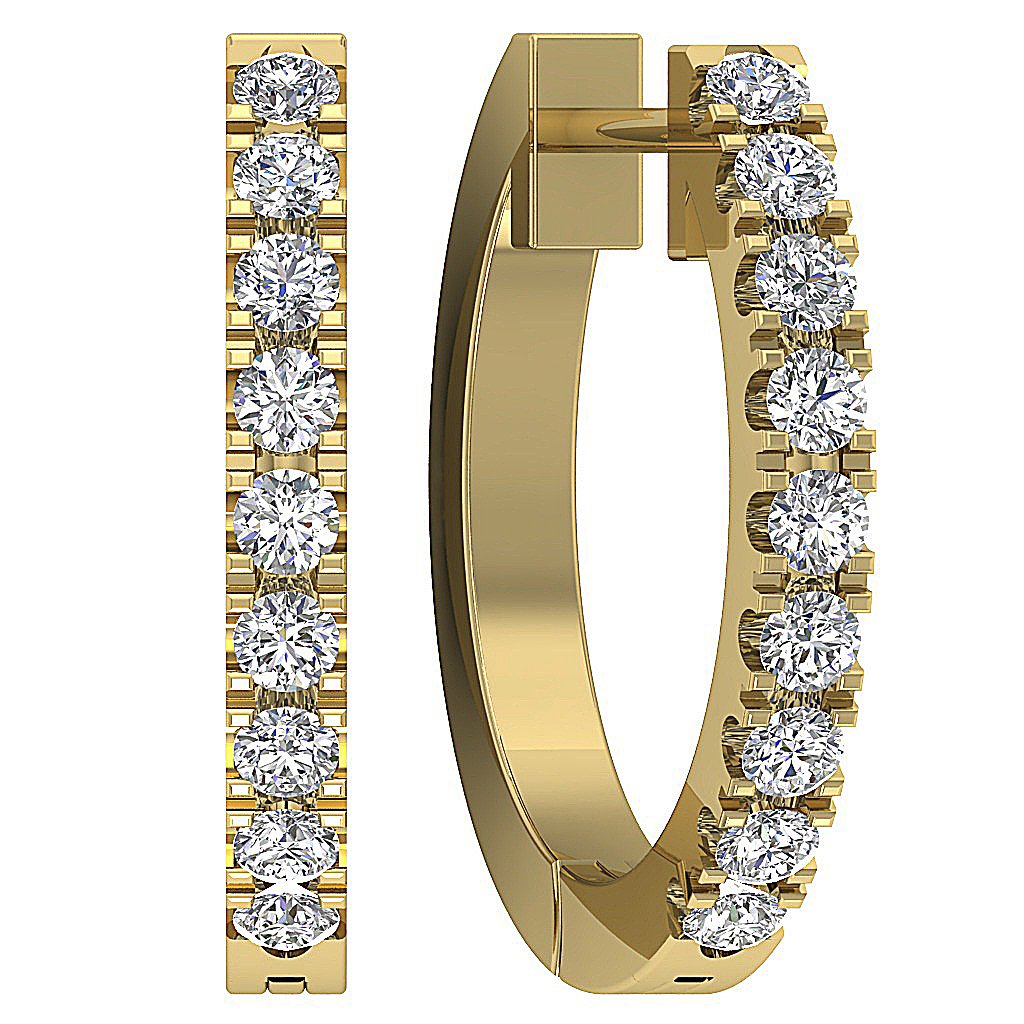
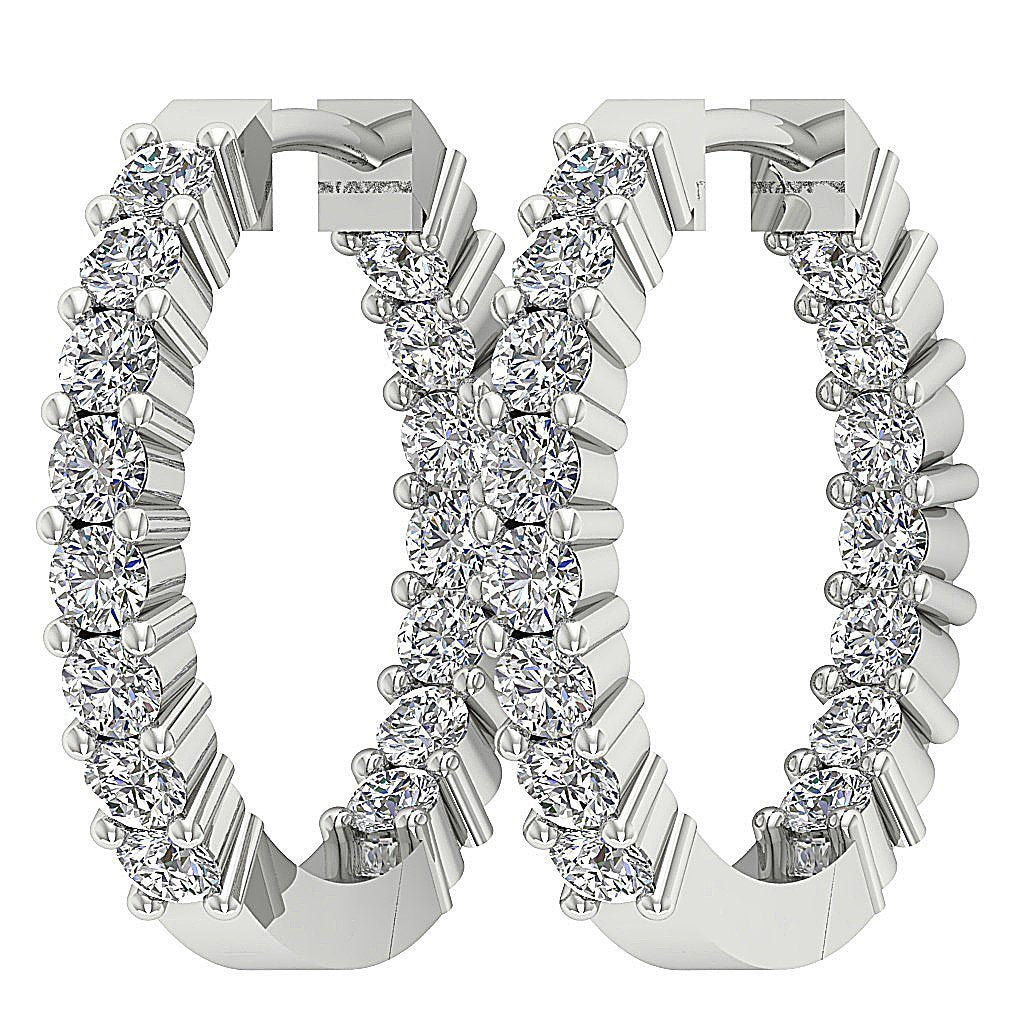
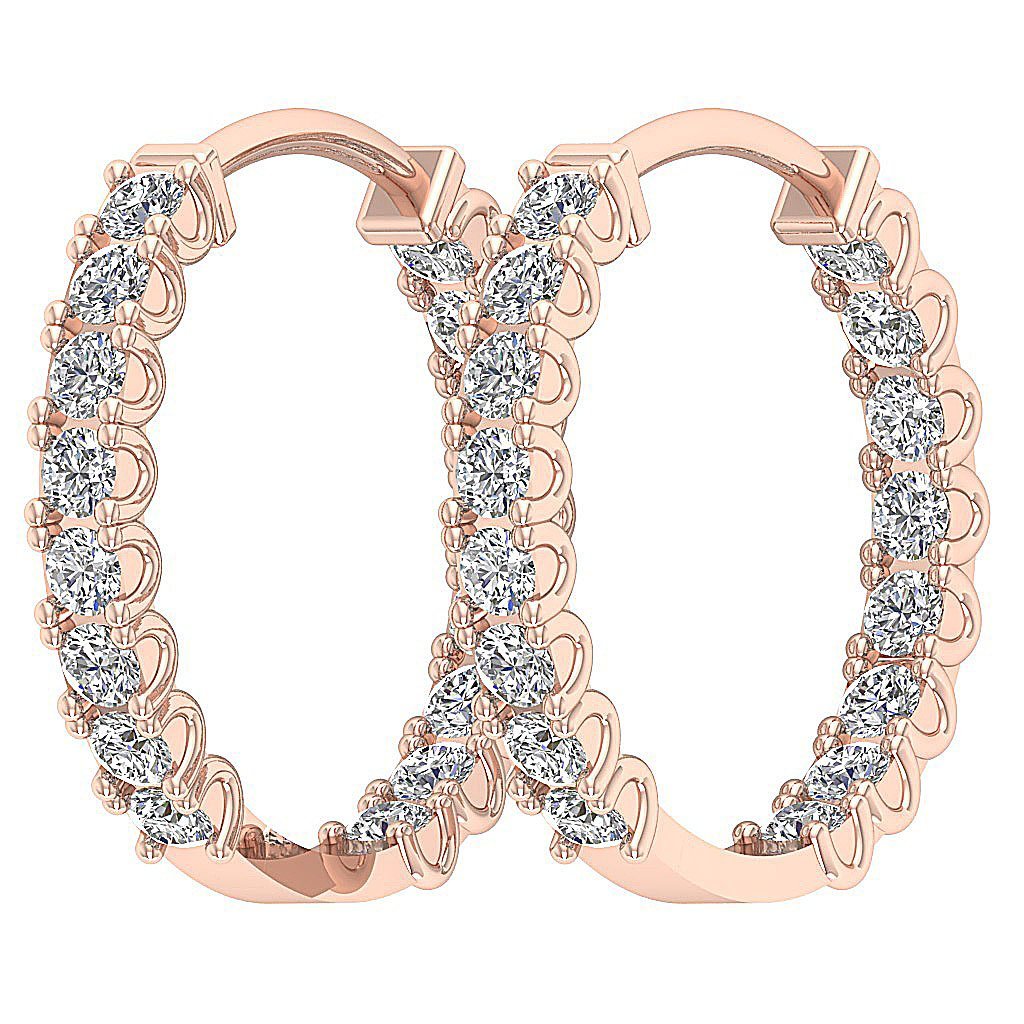
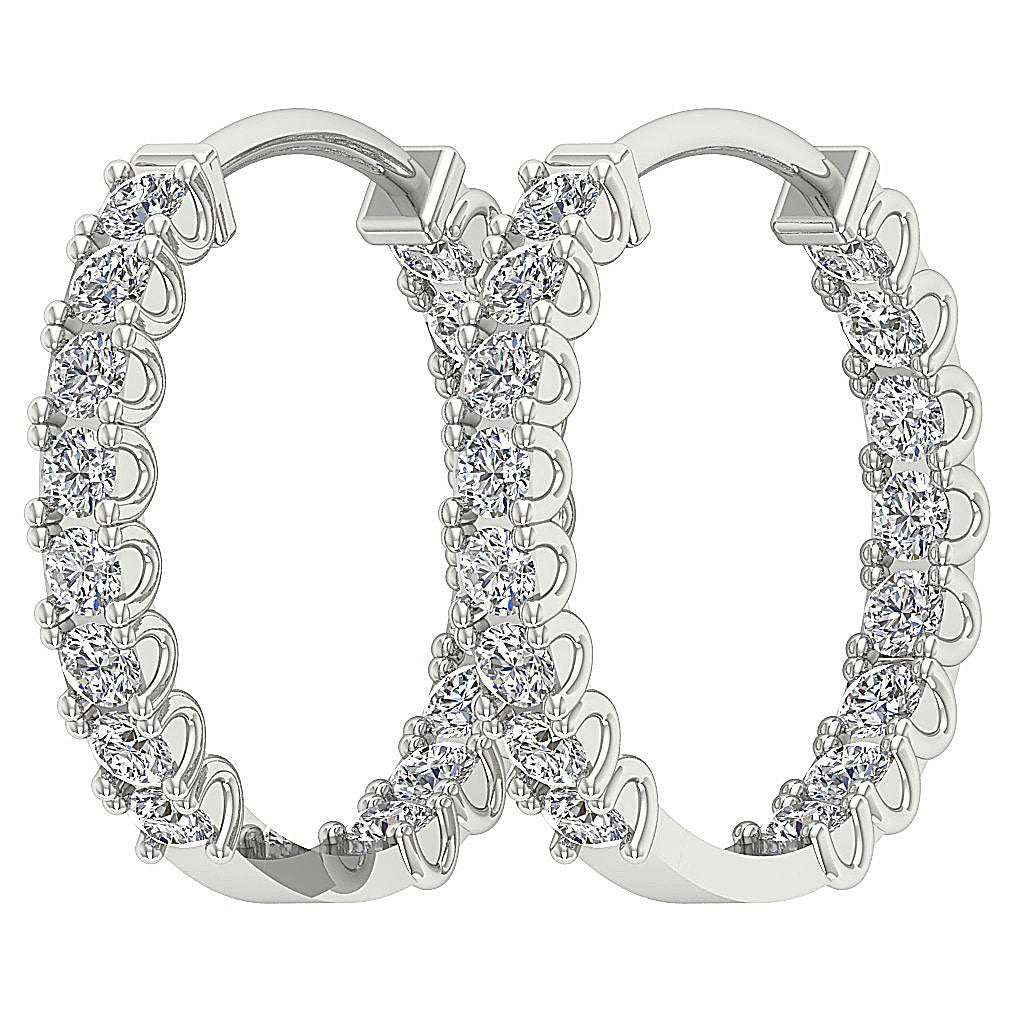
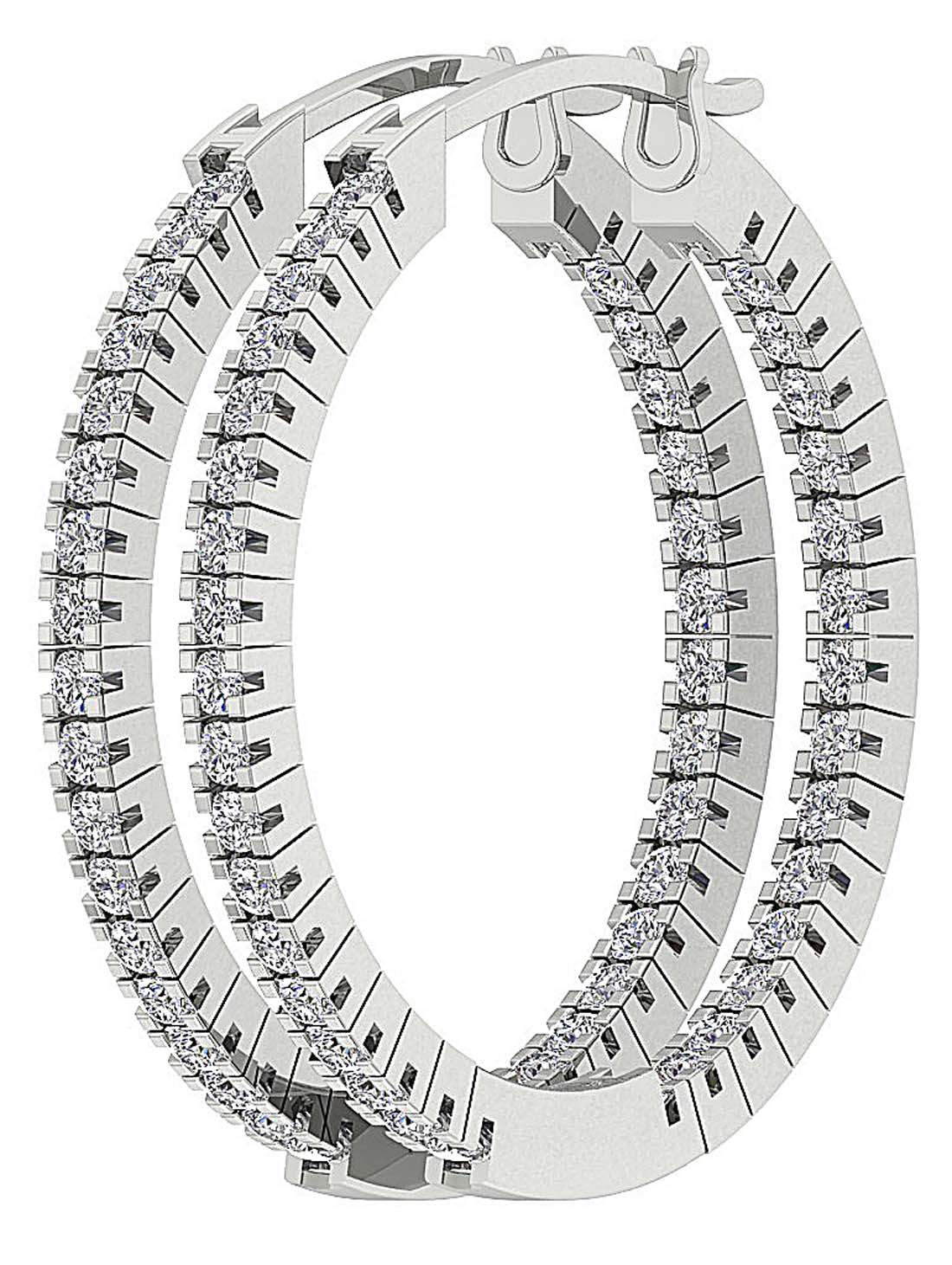
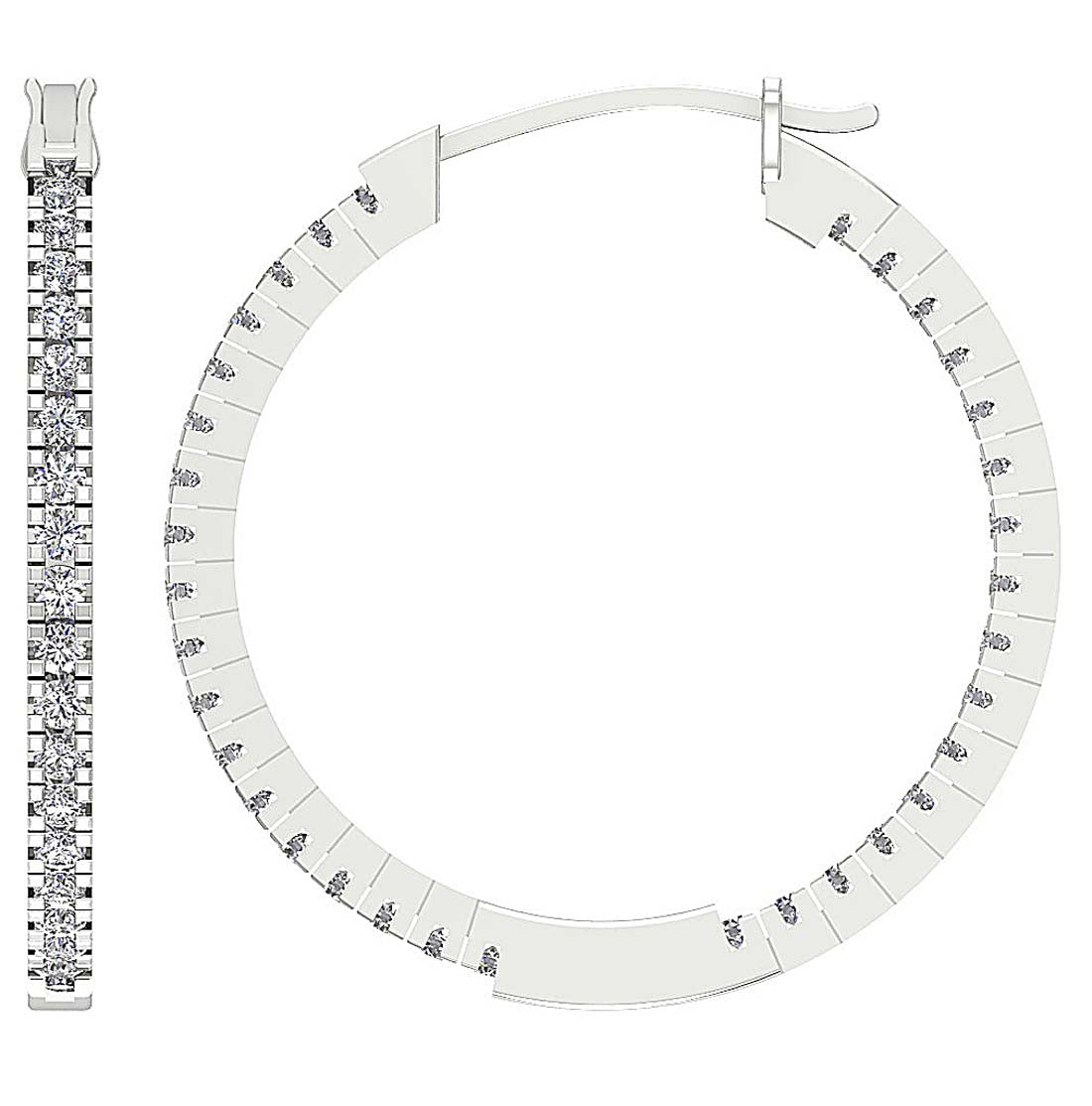
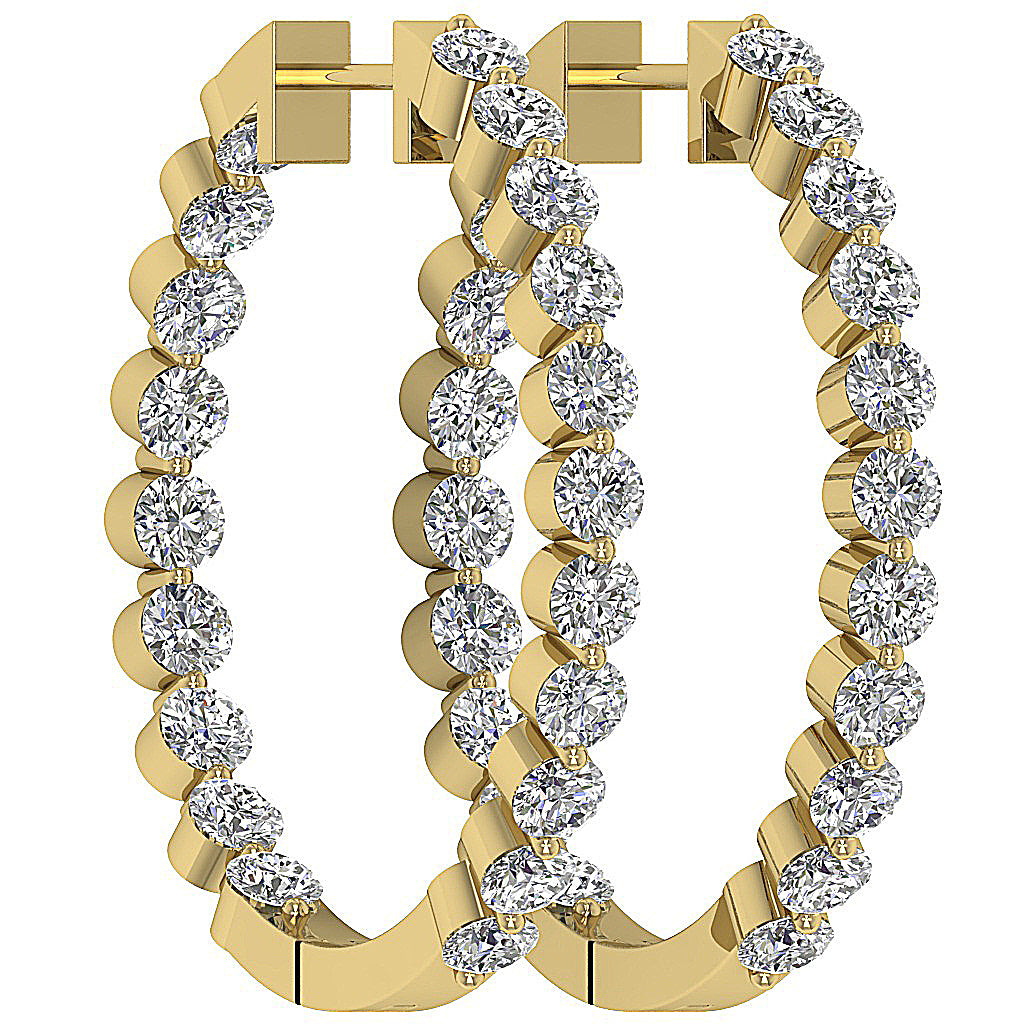
Prong settings hold individual diamonds with small points of metal, leaving more of each stone exposed to light. This can give a diamond hoop a more open appearance and allow the individual stones to contribute strongly to its brilliance. The trade-off is that the diamonds have more exposed edges, making regular inspection important.
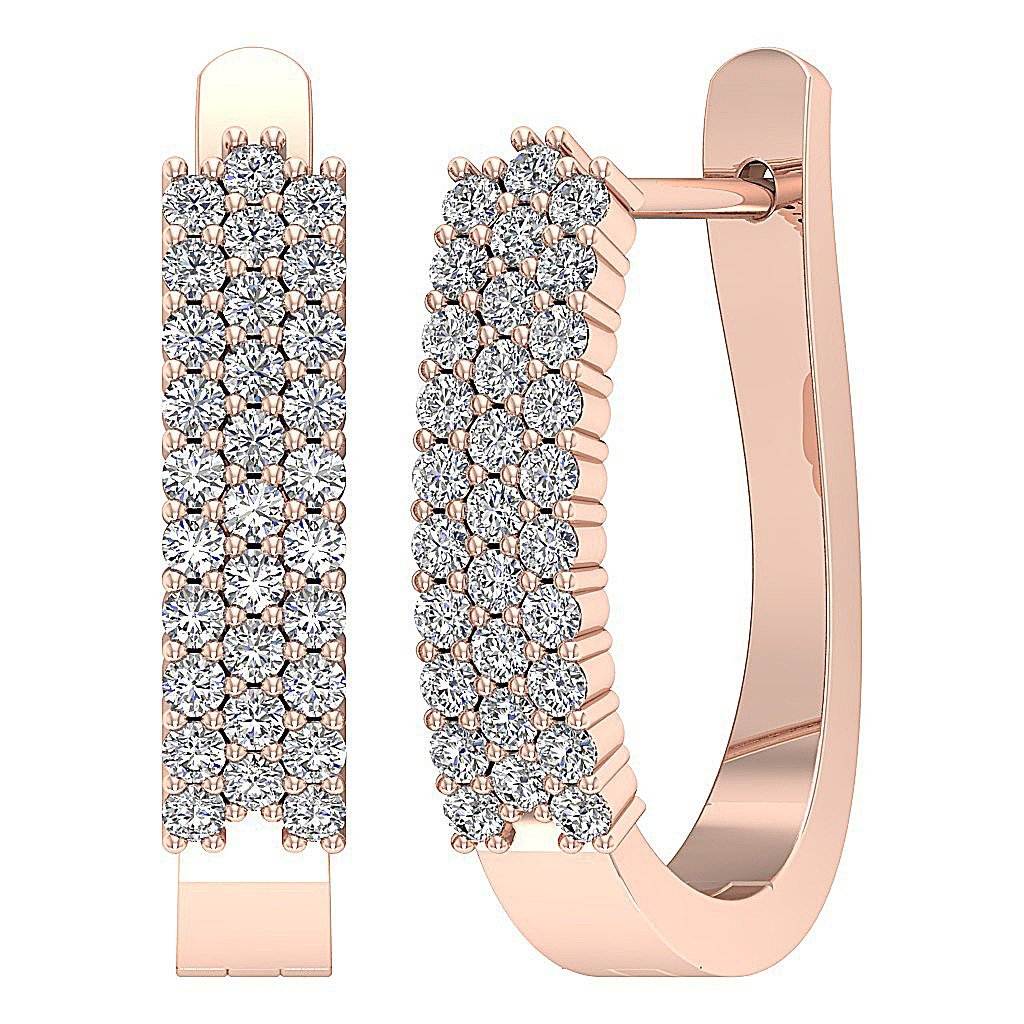
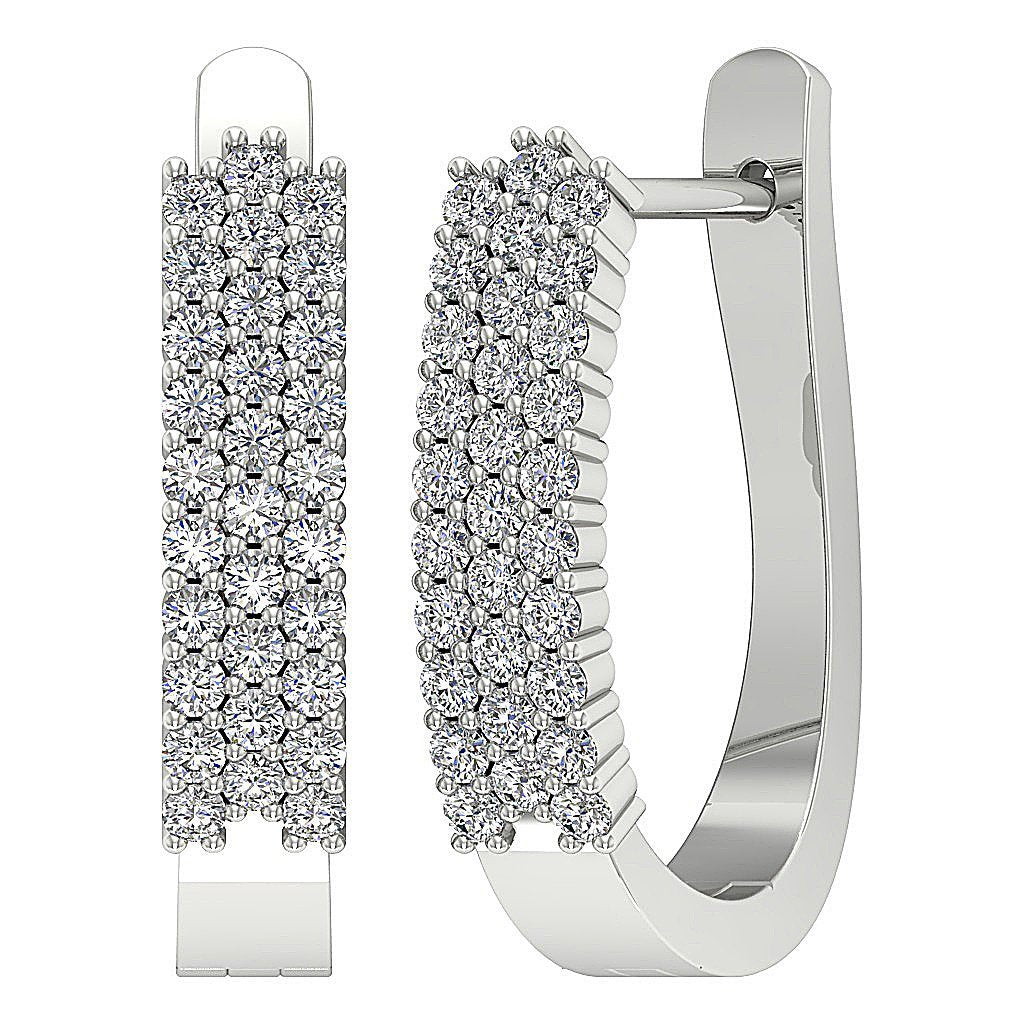
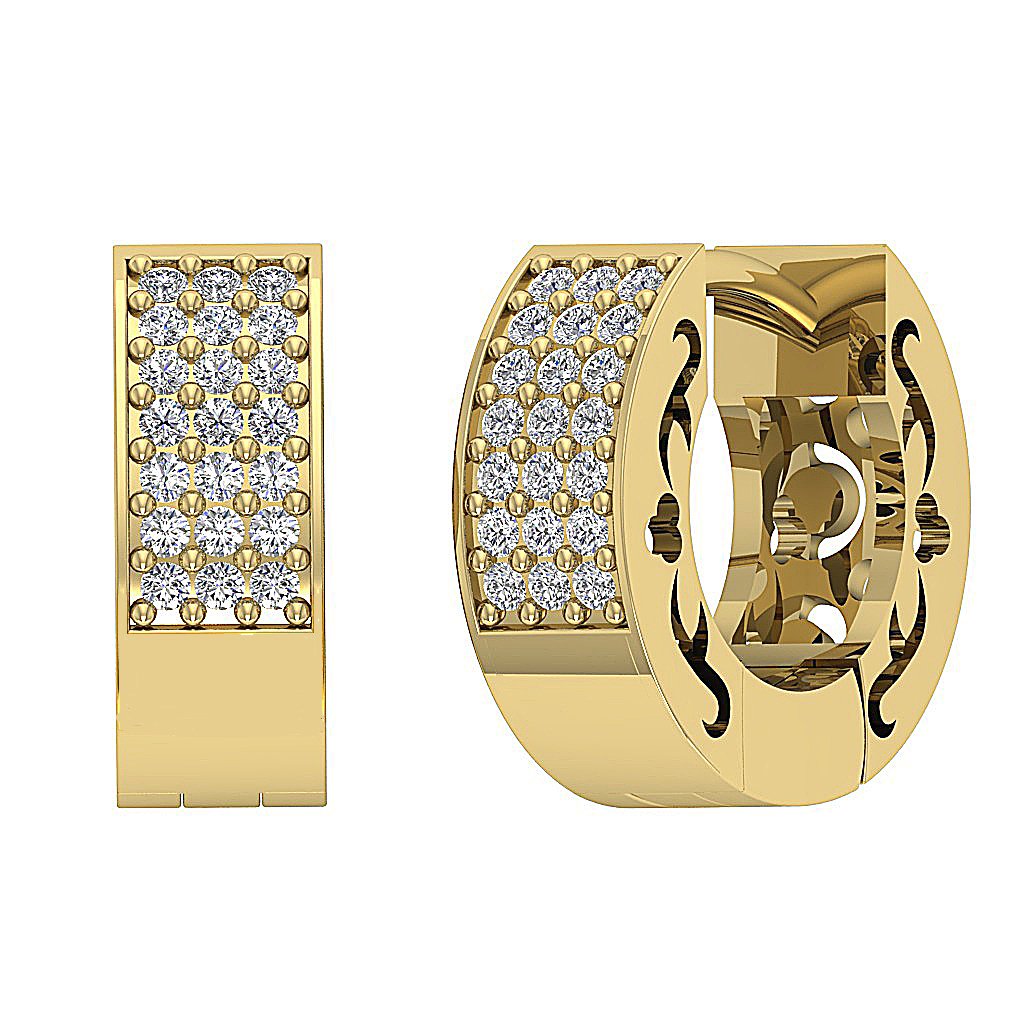
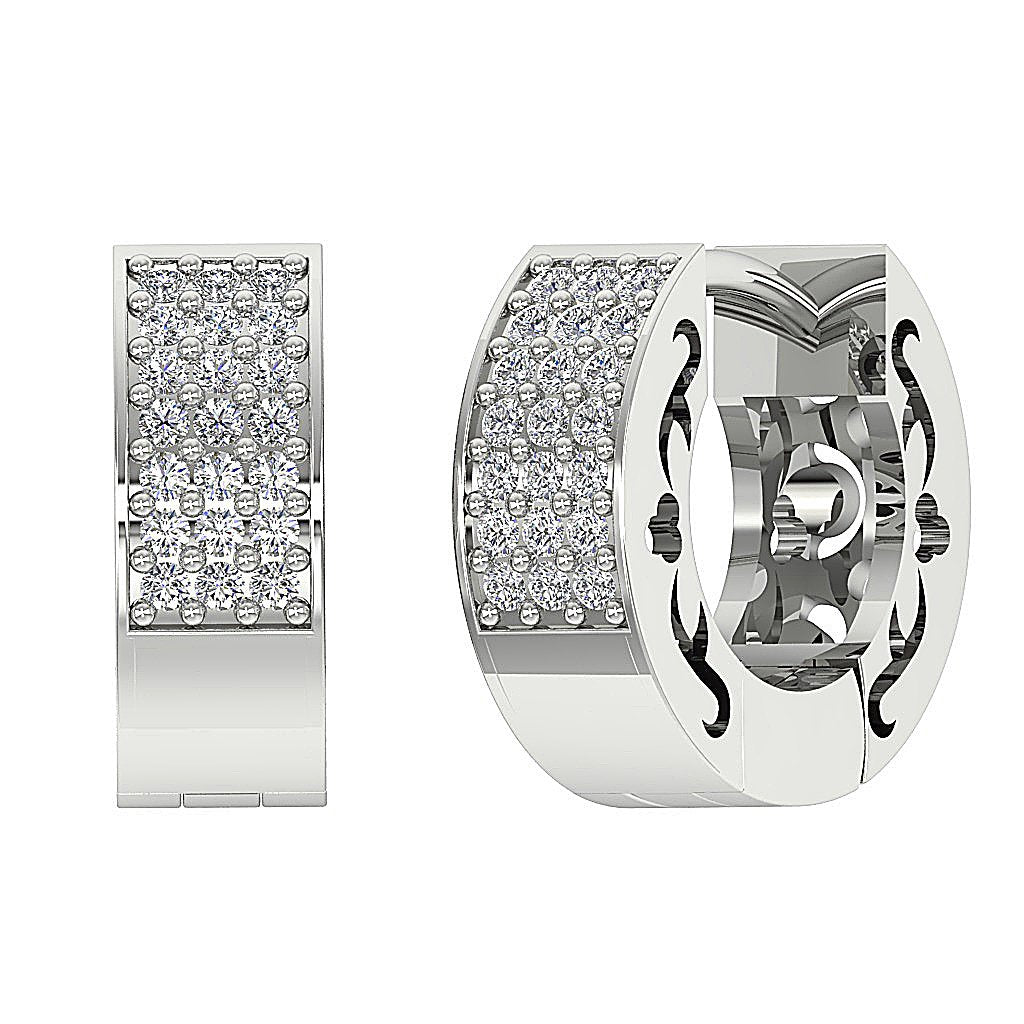
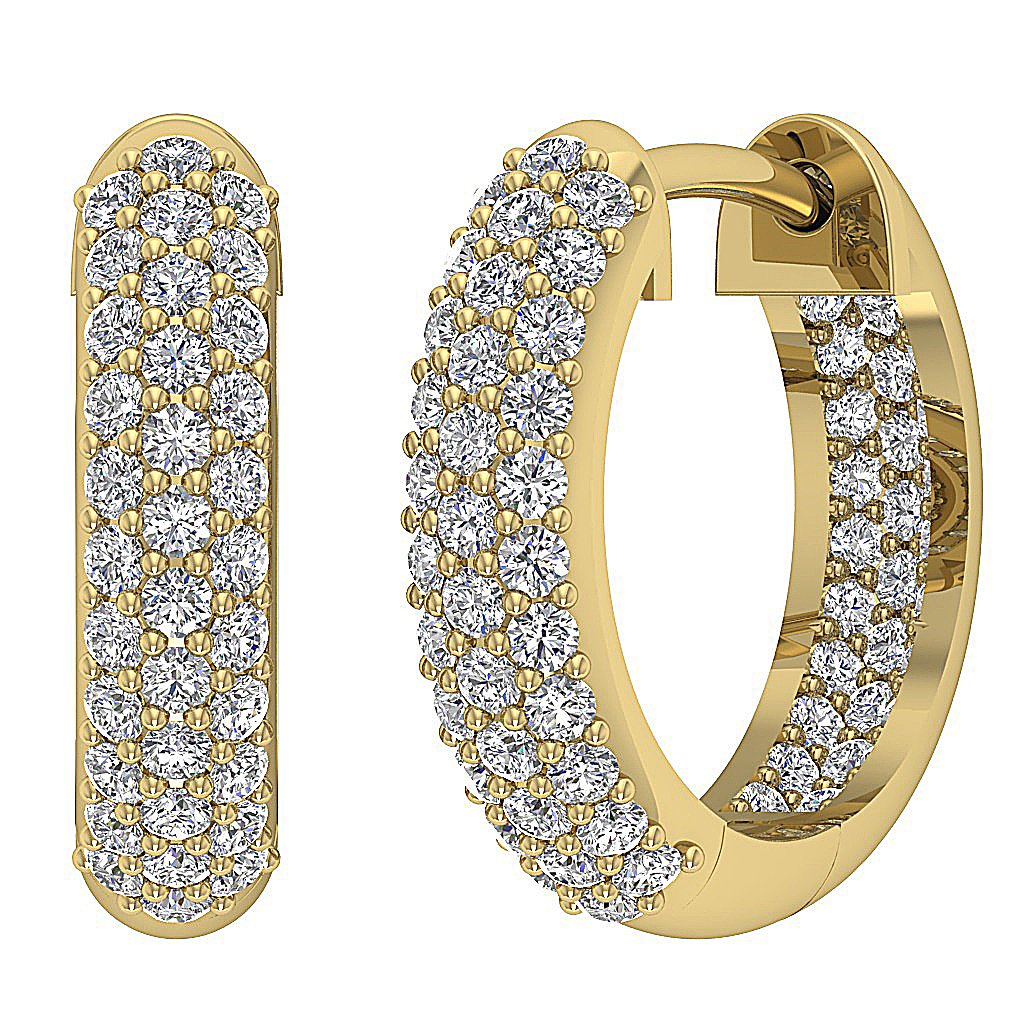
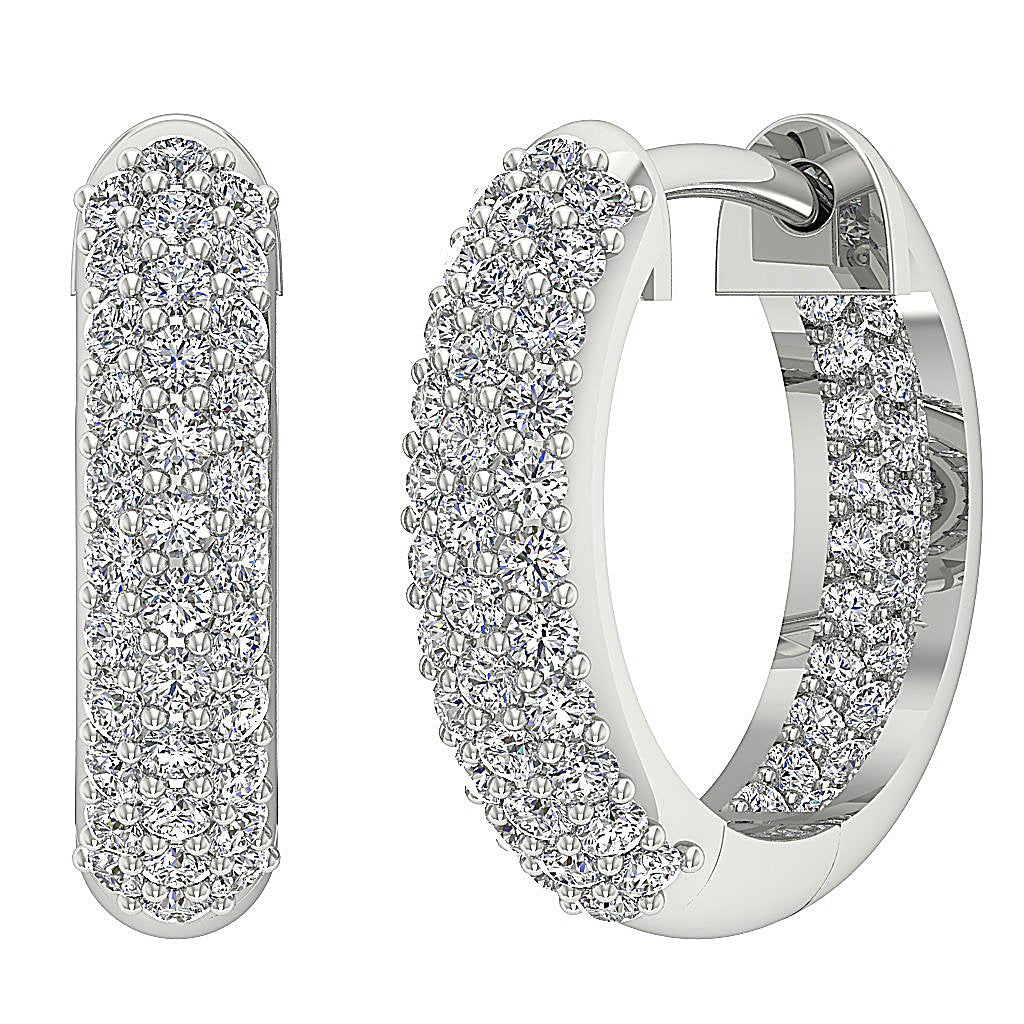
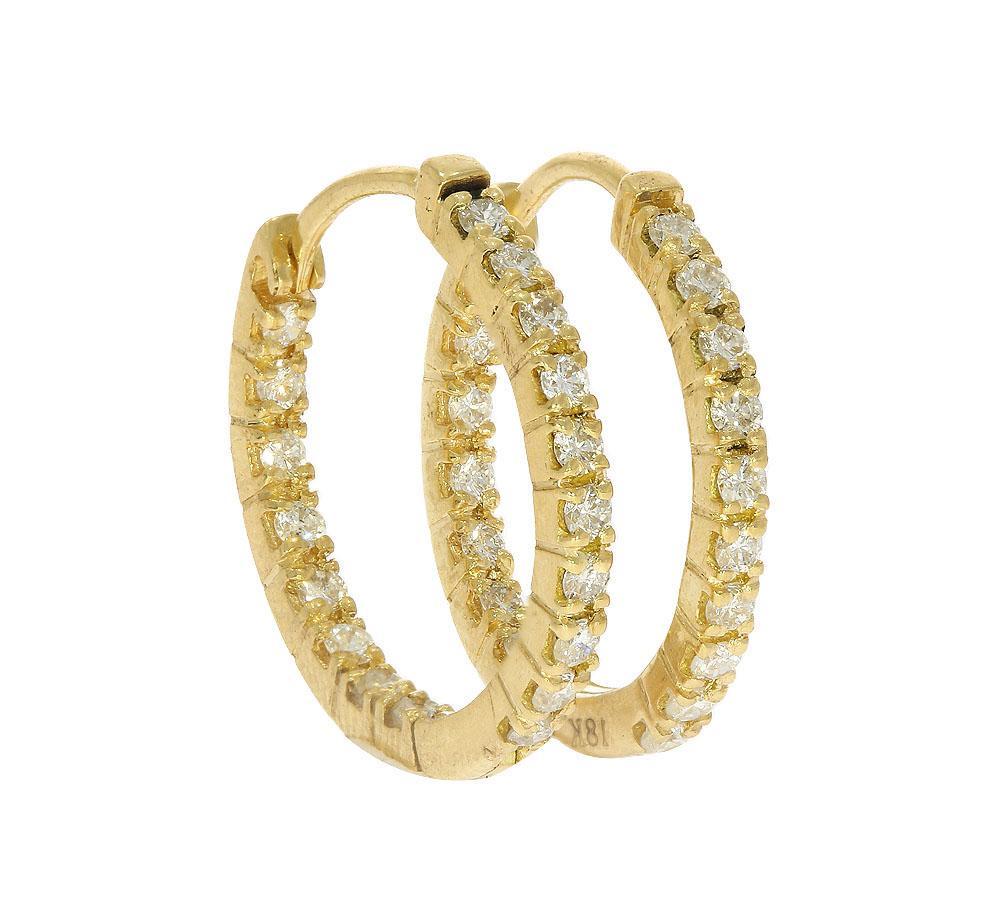
Pavé settings place smaller diamonds closely together along the surface of the hoop. From the front, the individual settings become less prominent, and the diamonds can appear to form a more continuous field of light.
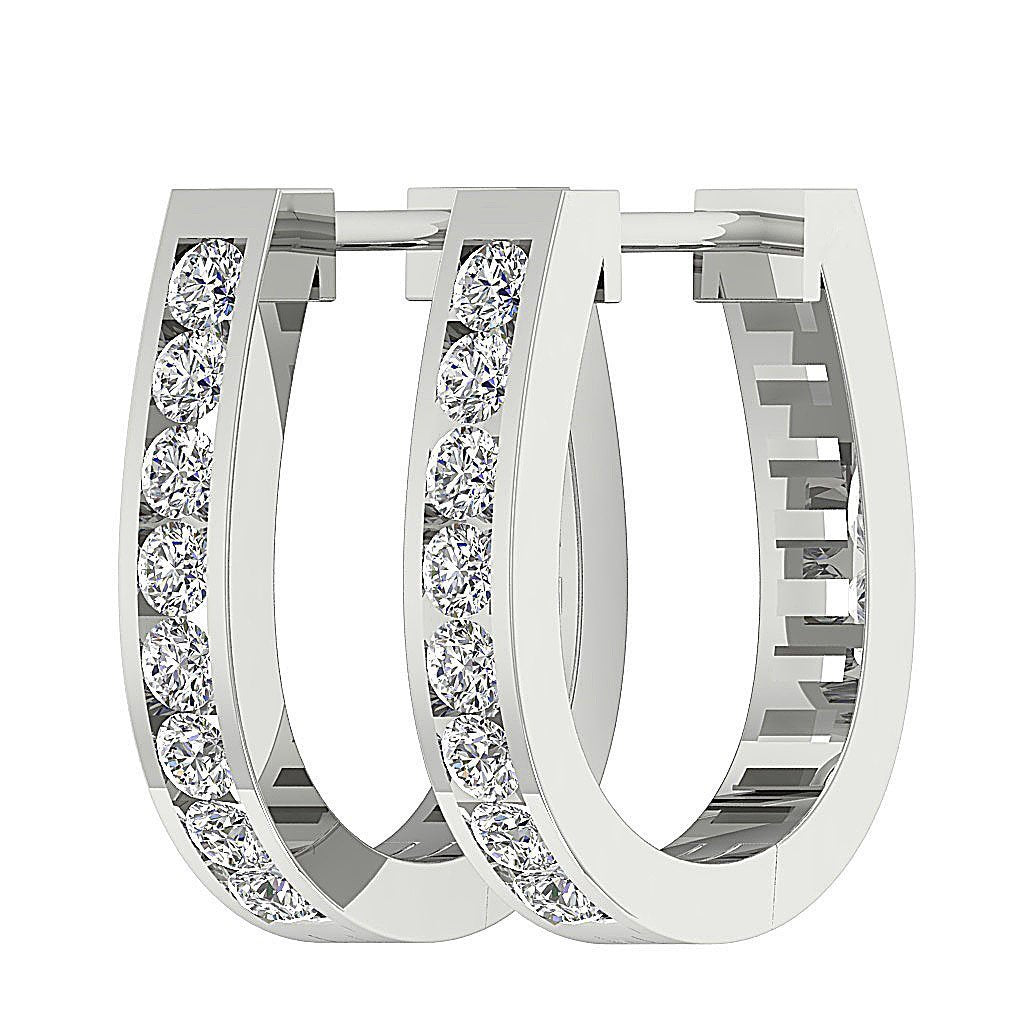
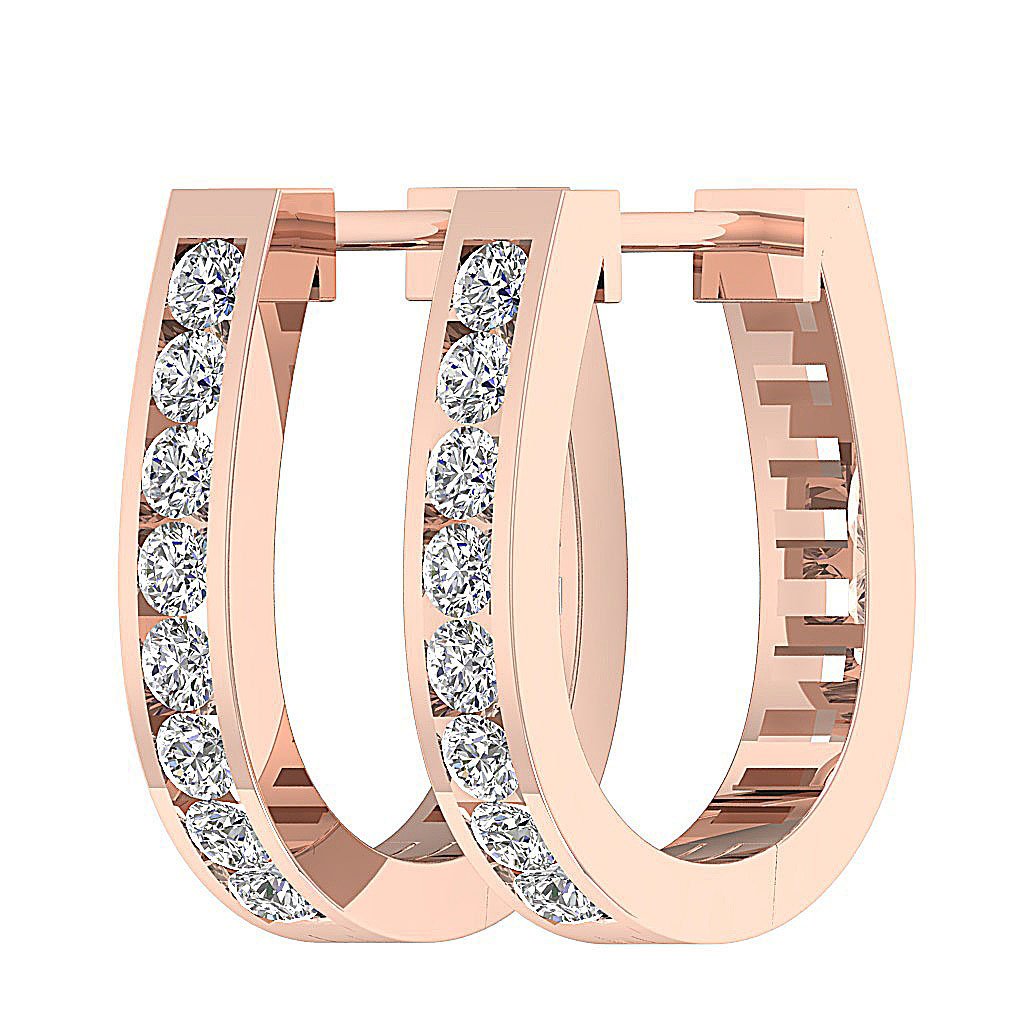
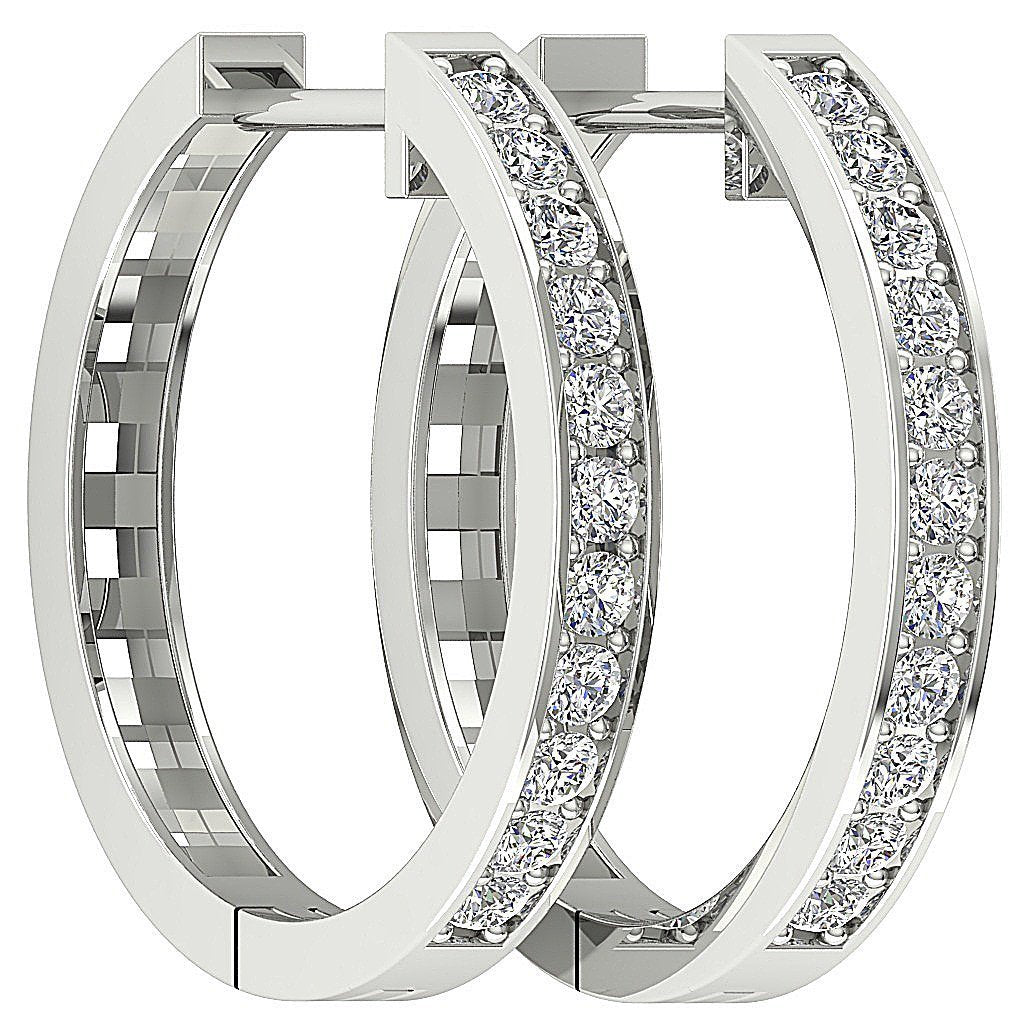
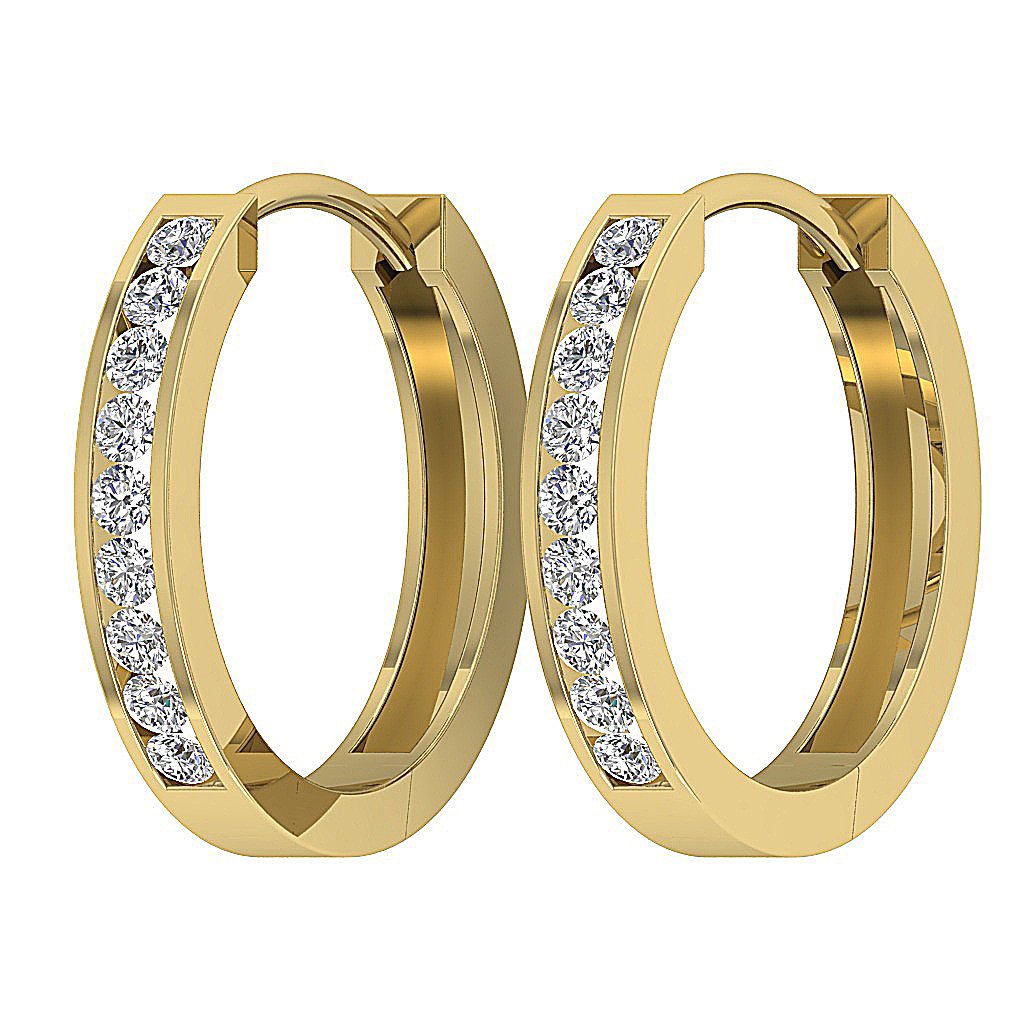
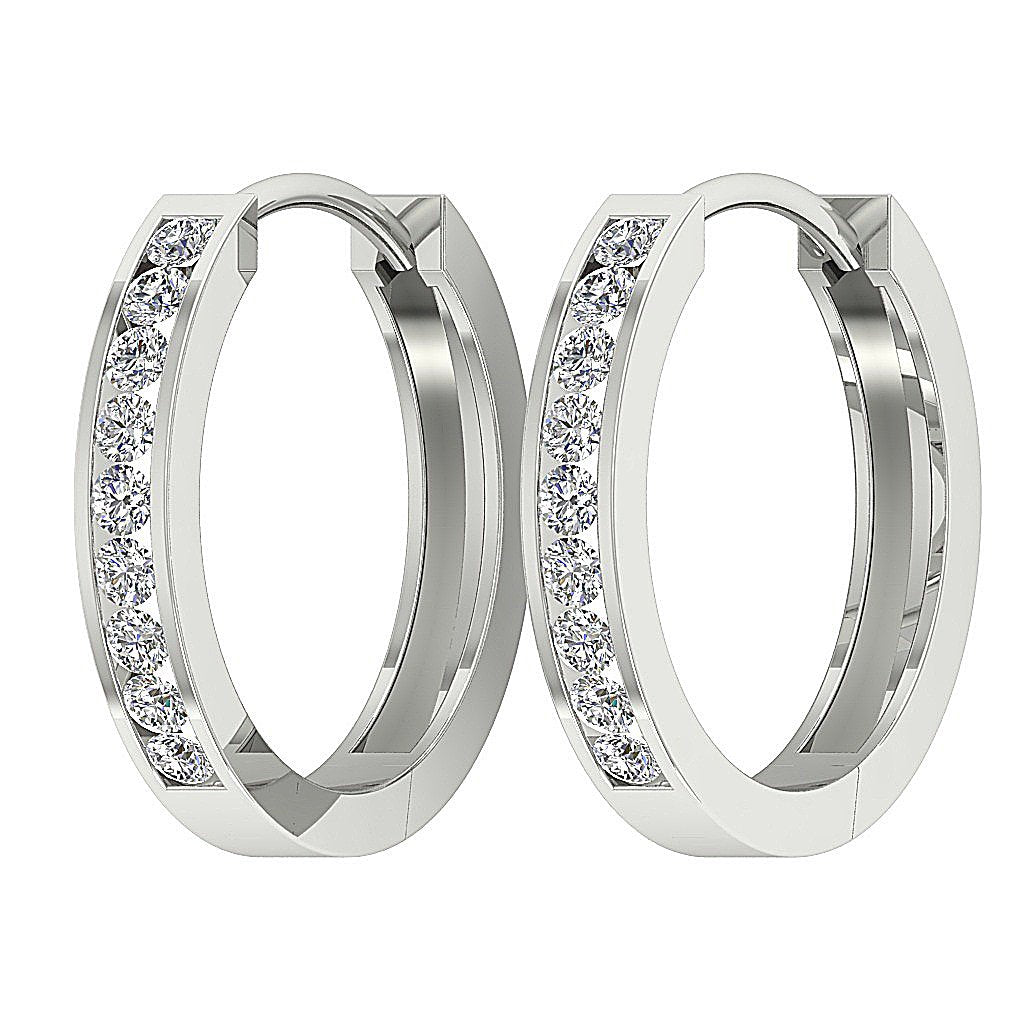
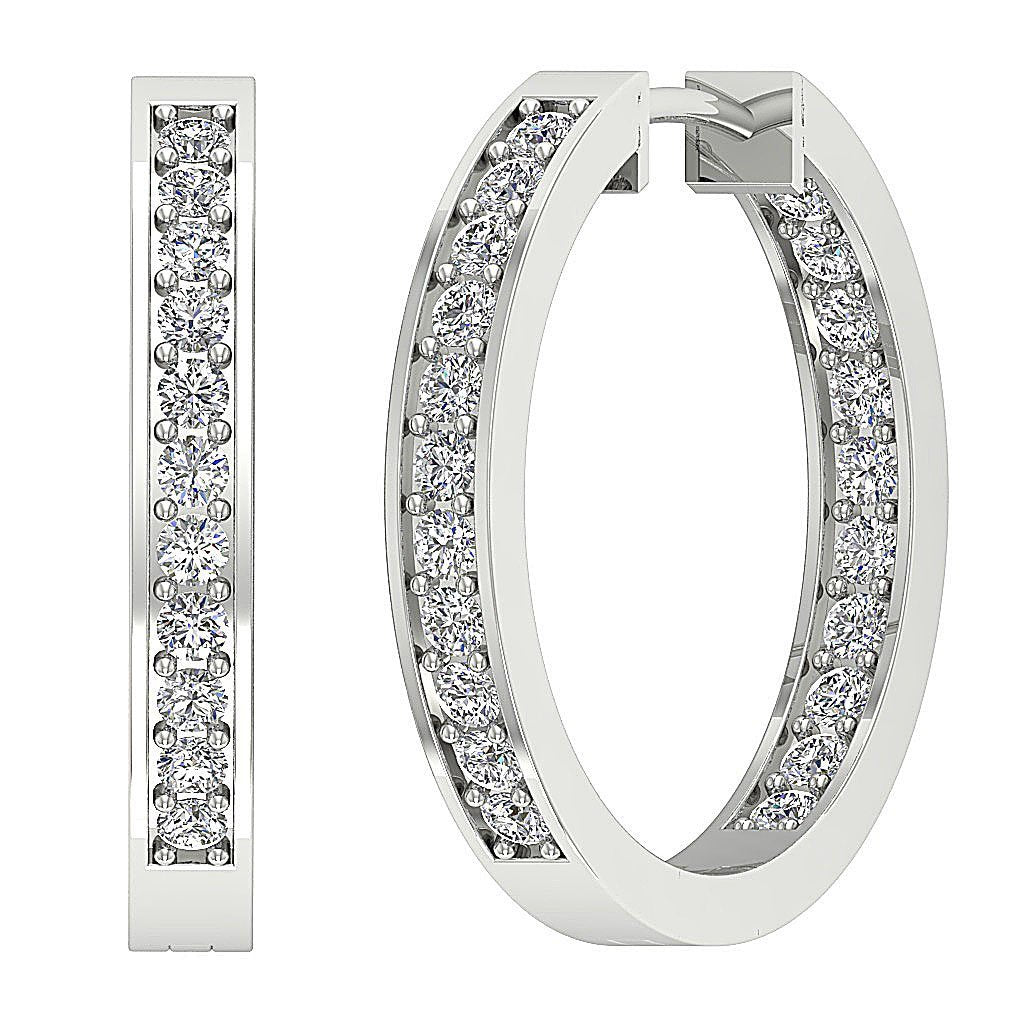
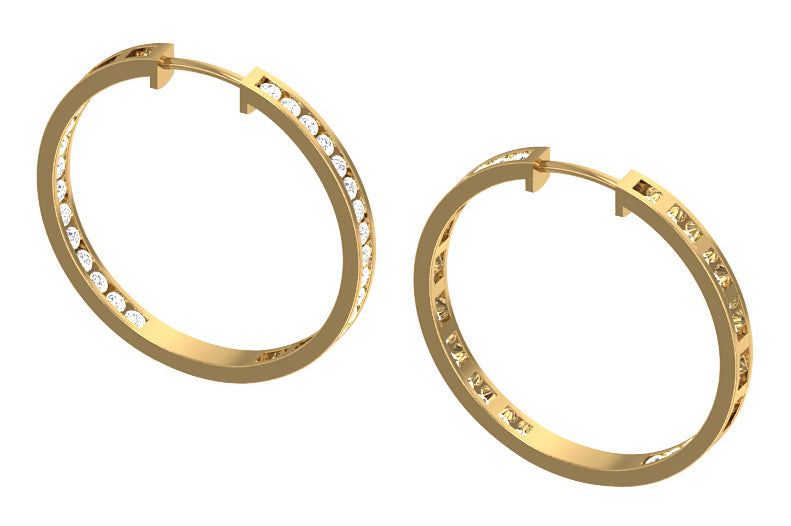
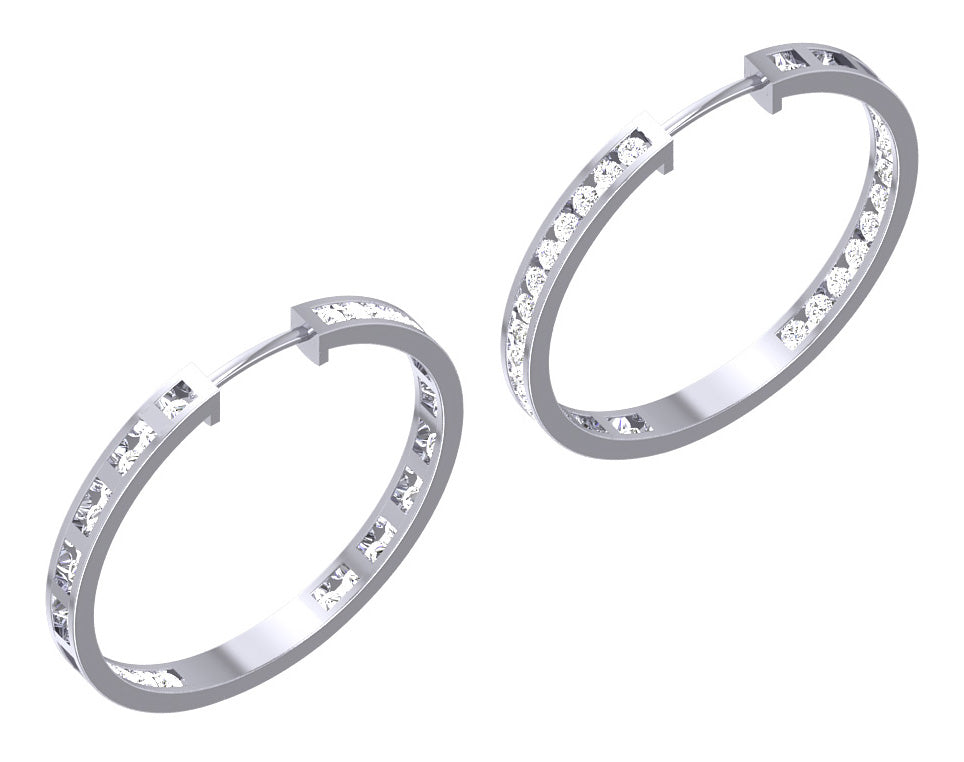
Channel settings hold diamonds between two continuous walls of metal. The result is a clean line across the hoop, with the metal providing support around the stones.
The choice of setting depends on whether the priority is maximum diamond exposure, a continuous surface of brilliance, or a more protected arrangement.
Inside-Outside Diamond Hoops: What Makes Them Different?
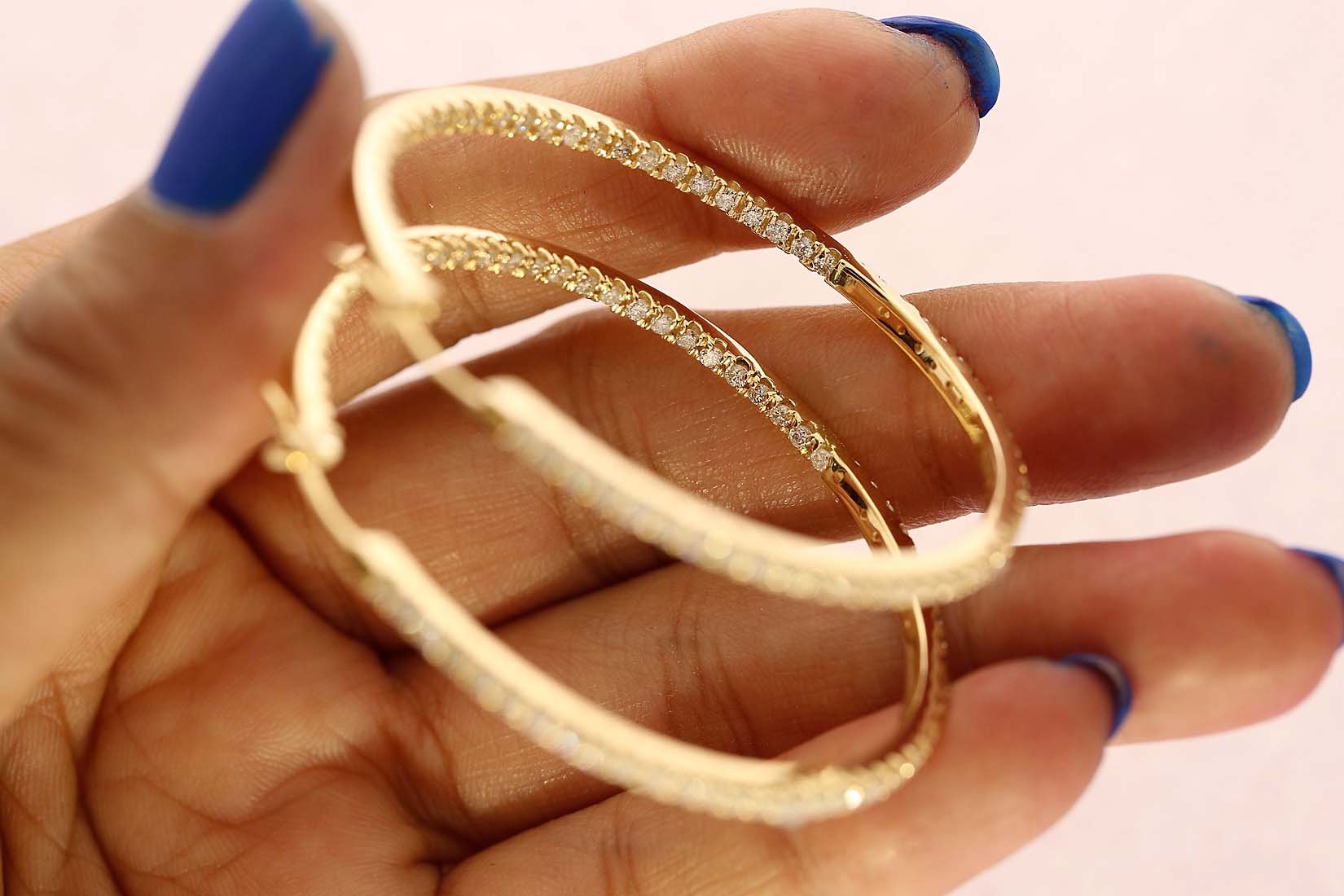
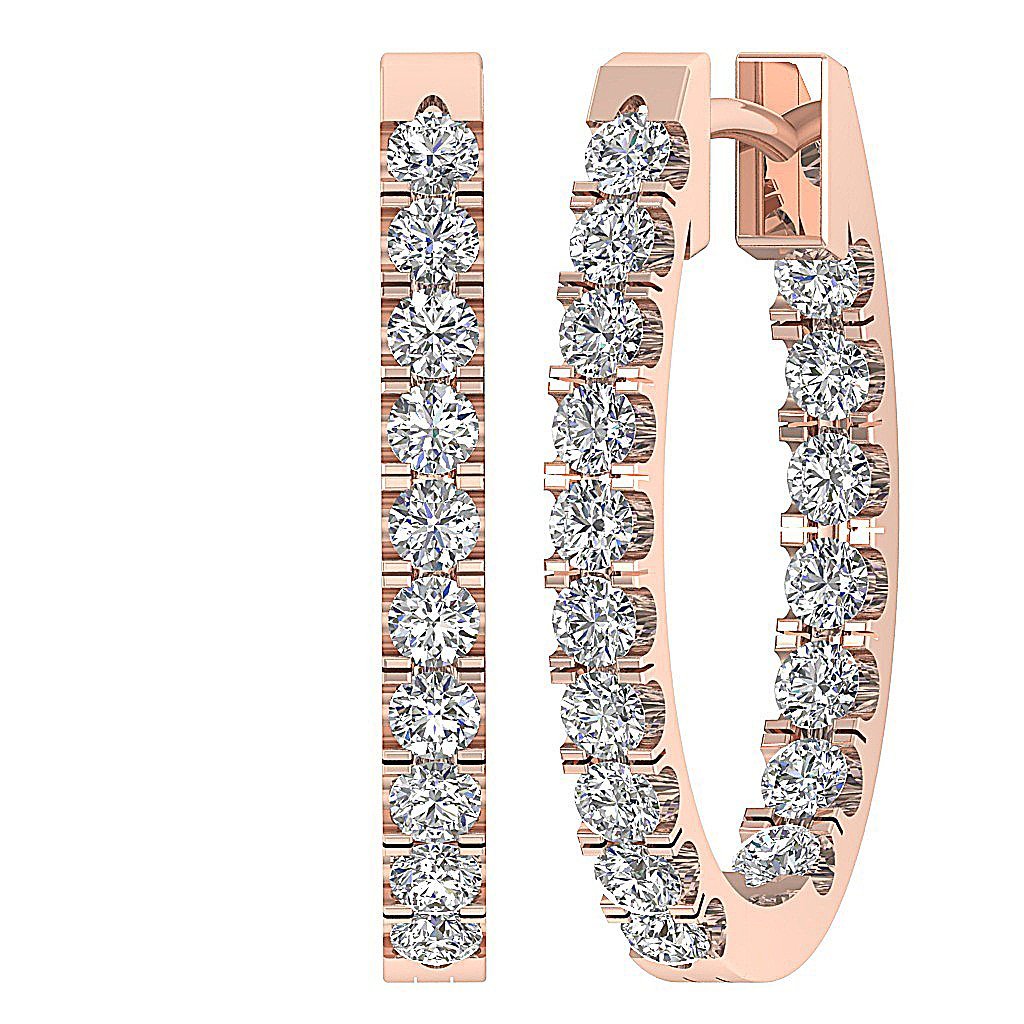
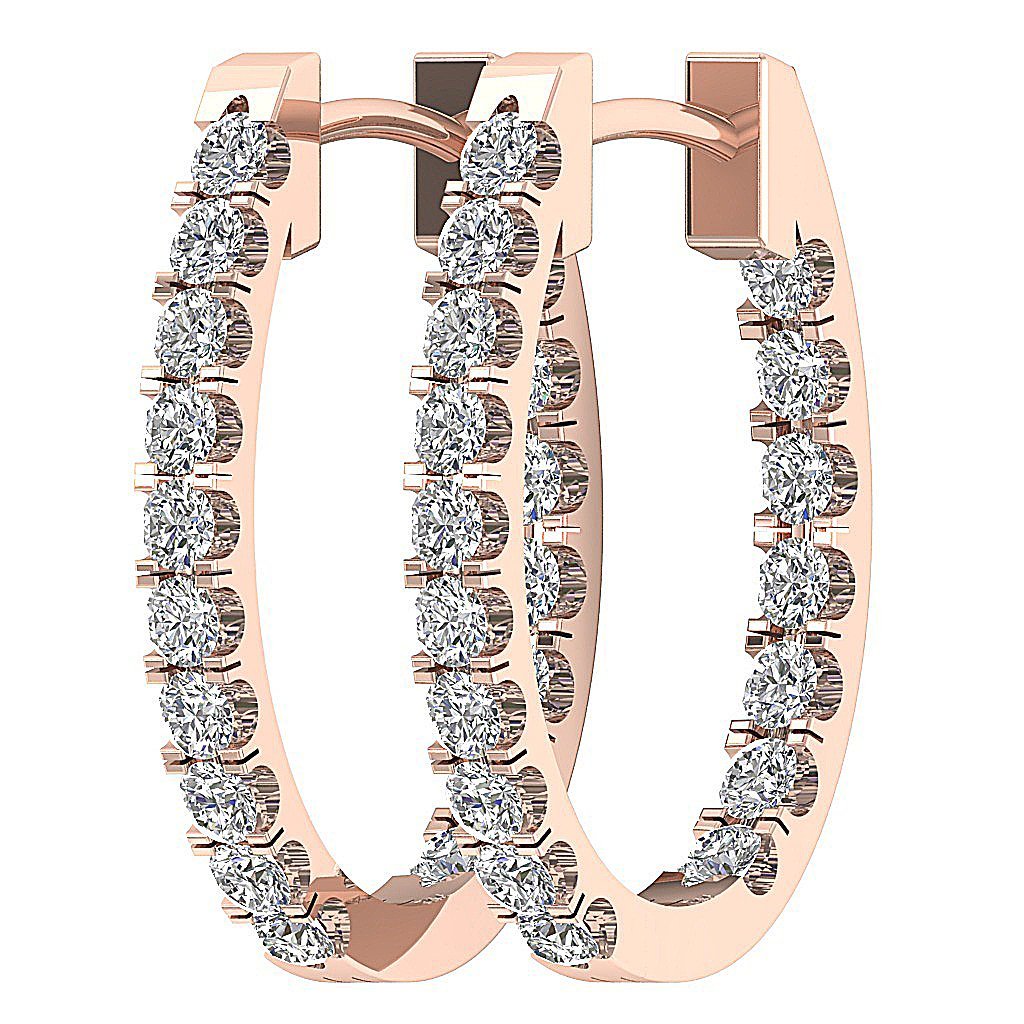
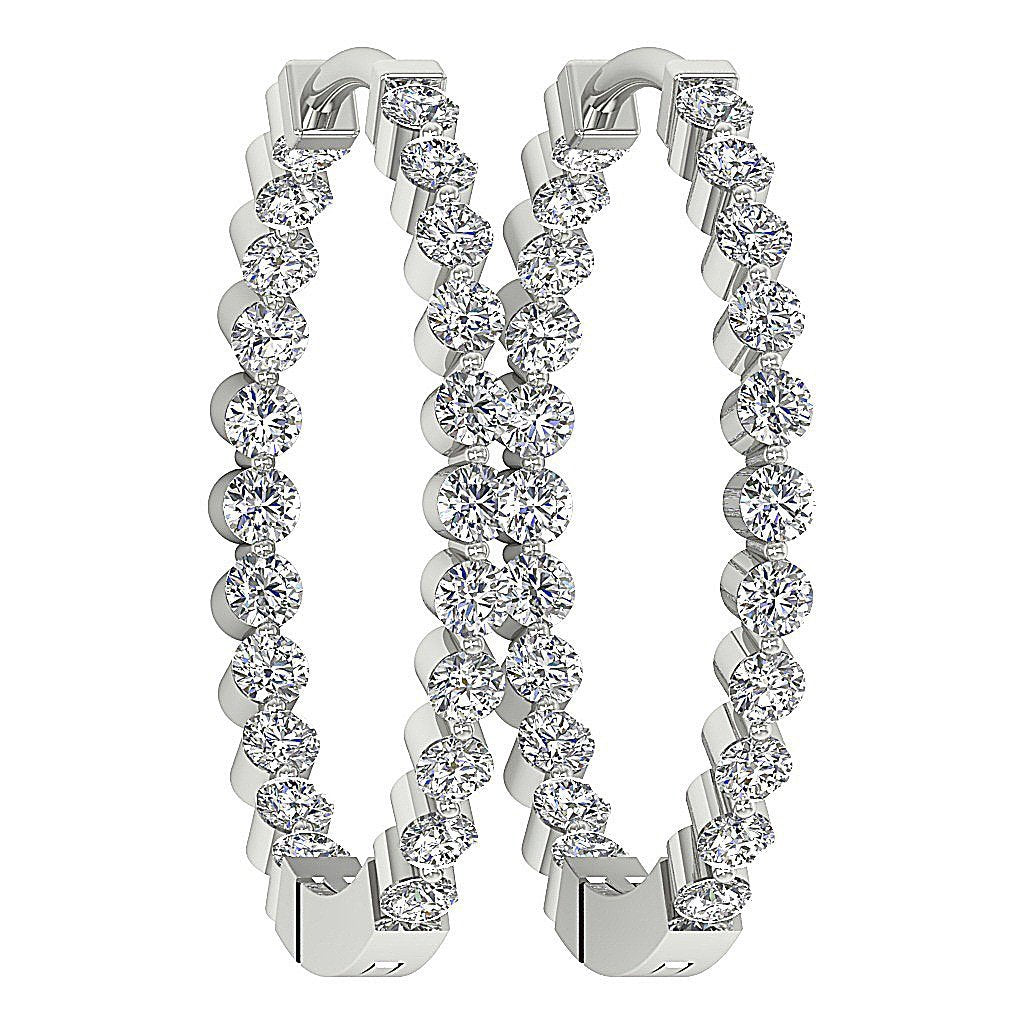
Traditional diamond hoops primarily display their stones toward the front or outer surface of the earring. Inside-outside hoops extend the diamond setting to the inner curve as well, allowing stones to remain visible from more angles.
That difference is noticeable when the earrings move. The inner-facing diamonds can catch light as the wearer turns their head, creating a more dimensional effect than a hoop decorated only on its outer edge.
Choosing the Diamonds for Hoop Earrings
The diamonds in a hoop contribute collectively to its appearance, so consistency becomes particularly important when multiple stones are used. Matching the diamonds reasonably closely in colour, clarity and overall appearance helps create a more even visual line across the earring.
Cut remains important even when the individual stones are relatively small. Well-cut diamonds can interact with light more effectively, helping the hoop maintain brightness as it moves.
Carat weight should also be considered in context. A hoop with a higher total carat weight may have its diamonds distributed over a larger circumference, while a smaller hoop can concentrate a similar amount of diamond weight into a more compact area. Looking at stone placement and hoop dimensions alongside total carat weight gives a more useful picture of the finished appearance.
Choosing Gold Colour for Diamond Hoops
White, yellow and rose gold each create a different relationship between the metal and the diamonds.
White gold tends to create a seamless transition around white diamonds, keeping the focus primarily on the stones. Yellow gold introduces a warmer contrast that can make the diamond detailing feel more defined, while rose gold gives the hoop a softer, warmer character.
Matching the gold colour to rings, necklaces or other earrings can create a more coordinated appearance, while mixing metals can make a hoop feel more contemporary and deliberate.
Styling Diamond Hoops for Different Occasions
Small diamond hoops can function much like an elevated everyday earring. Their compact proportions work with tailored clothing and casual outfits.
Medium hoops occupy a useful middle ground. They have enough scale to be noticed but can still transition between daytime and evening wear. A simple medium hoop can also work well when the rest of the jewelry is kept understated.
Large diamond hoops make a stronger statement and can complement evening clothing, occasion dressing or a look where the earrings are intended to provide the main point of sparkle.
Diamond hoops also work across different jewelry styles. White gold can create a cooler, more discreet appearance, while yellow and rose gold introduce more warmth around the diamonds.
Living With It: Caring for Diamond Hoop Earrings
Diamond hoops should be cleaned regularly with warm water, mild soap and a soft-bristled brush. Work carefully around the settings, particularly where the diamonds meet the metal, as lotion, hair products and everyday residue can accumulate in these narrow areas.
The hinges, clasps and posts deserve attention as well. A hoop can remain visually clean while its fastening mechanism gradually develops wear through repeated opening and closing.
Inspect the diamonds and settings periodically for movement or looseness. Larger hoops and designs with multiple individual stones have more components that can require attention than a simple stud. If a diamond appears loose or a fastening no longer closes securely, have the earrings inspected by a jeweller before wearing them again.
A diamond hoop should feel effortless on the ear: a familiar shape, refined by the light of diamonds and adaptable enough to become part of everyday jewelry or a more considered evening look.